
A well-loved sofa often carries more than just comfort—it holds memories, style, and emotional value. Yet over time, fabric wears out, colors fade, and seams loosen. Rather than replacing it, consider reupholstering. With the right approach, you can breathe new life into your favorite piece while saving money and reducing waste. Reupholstery isn’t reserved for professionals; with patience and precision, homeowners can achieve stunning results in their own garages or living rooms.
Understanding Sofa Reupholstery: What It Is and Why It Matters
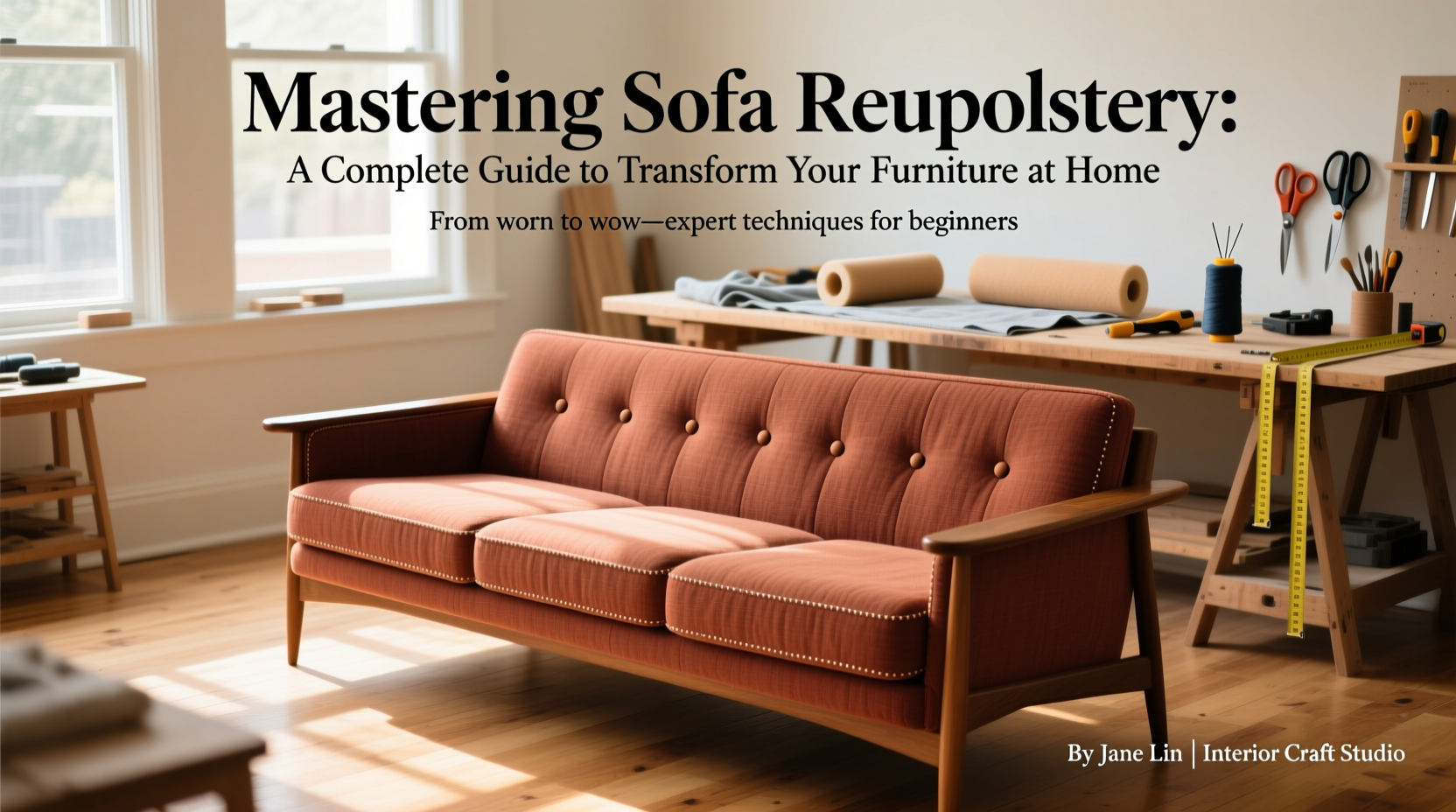
Reupholstery involves removing old fabric from a sofa and replacing it with fresh material, often including updates to padding, springs, and underlying structure. Unlike simple slipcovers, reupholstery transforms the entire aesthetic and tactile experience of a piece. The process preserves the frame—often the most durable part of an older sofa—while allowing for full customization in color, texture, and durability.
This craft blends practicality with creativity. A once-dated floral couch can become a modern statement piece in charcoal linen. Beyond aesthetics, reupholstery supports sustainability by extending furniture lifespan and reducing landfill contributions. According to the EPA, over 12 million tons of furniture are discarded annually in the U.S.—much of which could be restored.
“Reupholstering is not just repair—it’s reinvention. You’re honoring craftsmanship while making something uniquely yours.” — Lila Monroe, Master Upholsterer & Educator
Essential Tools and Materials for DIY Reupholstery
Success begins with preparation. Having the correct tools ensures cleaner results, reduces frustration, and prevents damage to your furniture. While some items may require a modest investment, most are reusable across future projects.
- Staple remover or flat-head screwdriver
- Heavy-duty upholstery stapler (manual or electric)
- Sharp fabric scissors
- Measuring tape and chalk line
- Upholstery needles and heavy-duty thread
- Foam cutter or electric carving knife (for reshaping cushions)
- Webbing stretcher (if replacing seat webbing)
- Dust mask and safety goggles
Fabrics vary widely in suitability. Natural fibers like cotton and linen offer breathability but may wear faster. Synthetic blends provide durability and stain resistance. For high-use sofas, consider performance fabrics such as Crypton or Sunbrella, which resist spills, UV fading, and abrasion.
Step-by-Step Guide to Reupholstering Your Sofa
Follow this structured sequence to ensure accuracy and efficiency. Allow two to four days depending on complexity and drying times.
- Disassemble the Sofa: Remove cushions, legs, and any detachable arms or backrests. Take photos at each stage to reference during reassembly.
- Strip Old Fabric: Use a staple remover to carefully peel away fabric, preserving original patterns if possible. Save fabric swatches for matching trim or piping.
- Inspect and Repair Frame: Check joints for wobbling. Tighten screws, reinforce loose corners with wood glue, and replace broken slats or webbing.
- Replace Padding: Cut new foam to match original dimensions. Layer with Dacron wrap for a smoother finish. Secure with spray adhesive.
- Measure and Cut New Fabric: Lay pieces flat and transfer measurements with chalk. Add 2–3 inches on all sides for pulling and stapling.
- Attach Fabric Sections: Begin with main panels (seat, back, arms), pulling taut and stapling every 2 inches. Work symmetrically to avoid wrinkles.
- Reattach Trim and Details: Replace buttons, nailheads, or decorative borders. Recreate piping using bias tape and cording if needed.
- Reassemble and Evaluate: Reattach legs and cushions. Sit on the sofa to test comfort and adjust tension where necessary.
Choosing the Right Fabric: A Comparison Table
| Fabric Type | Durability (Martindale Score) | Best For | Considerations |
|---|---|---|---|
| Cotton Twill | 15,000–20,000 | Low-traffic living rooms | Prone to fading; requires dry cleaning |
| Linen Blend | 12,000–18,000 | Coastal or rustic interiors | Wrinkles easily; spot clean only |
| Microfiber | 25,000–30,000 | Families with pets/kids | Highly resistant to stains and wear |
| Leather (Top Grain) | 30,000+ | Durable, timeless appeal | Expensive; needs conditioning |
| Sunbrella Acrylic | 27,000–35,000 | Outdoor or sun-exposed areas | Fade-resistant and water-repellent |
Selecting fabric isn’t just about durability—it’s also about drape, grain direction, and pattern alignment. Always order a sample first. View it in your room under natural and artificial light to assess true color and texture.
Real Example: Transforming a 1970s Floral Loveseat
Sarah, a homeowner in Portland, inherited her grandmother’s orange-and-brown floral loveseat. Though structurally sound, the polyester fabric was frayed and outdated. She decided to reupholster it herself using navy-blue Sunbrella fabric.
She began by photographing each section before removal. After reinforcing the frame and replacing sagging seat webbing, she layered new 2-inch high-resilience foam and wrapped it in Dacron. The fabric was cut with extra allowance, especially around the rolled arms. Using an electric stapler, she secured the fabric evenly, starting from the center and working outward.
The final result? A striking mid-century piece that now anchors her minimalist living room. Total cost: $180 (fabric and materials). Comparable retail price for a similar quality sofa: over $1,200.
Common Mistakes and How to Avoid Them
- Skipping the prep work: Failing to inspect the frame leads to premature failure. Always check joints and support systems.
- Pulling fabric too tightly: Over-stretching causes distortion and seam splitting. Aim for snug but not drum-tight.
- Ignoring pattern matching: On prints or stripes, misaligned seams ruin visual flow. Mark pattern repeats clearly before cutting.
- Using the wrong staples: Standard office staples won’t hold. Use 1/4- to 3/8-inch galvanized or stainless steel staples designed for upholstery.
Checklist: Before You Begin Your Reupholstery Project
- ☐ Assess the sofa’s structural integrity
- ☐ Take detailed photos from all angles
- ☐ Measure all fabric panels and note shapes
- ☐ Order fabric with 10–15% extra for errors and matching
- ☐ Gather all tools and safety gear
- ☐ Clear workspace with adequate lighting and ventilation
- ☐ Set aside uninterrupted blocks of time (minimum 2 full days)
Frequently Asked Questions
Can I reupholster a sofa without removing all the old fabric?
No. Leaving old fabric layers creates bulk, uneven surfaces, and adhesion issues. Complete removal ensures a clean foundation and professional finish.
How much fabric do I need for a standard three-seater sofa?
Most average-sized sofas require 14 to 20 yards, depending on arm style, pattern repeat, and cushion count. Always consult a yardage chart specific to your model or use a professional estimator tool.
Is reupholstering worth it compared to buying new?
If the frame is hardwood (like oak or maple) and well-constructed, yes. High-end frames outlast modern particle-board alternatives. Even with material costs, reupholstering typically costs 40–60% less than purchasing a comparable-quality new sofa.
Final Thoughts: Start Small, Build Confidence
Reupholstery rewards attention to detail and a willingness to learn. Begin with a simple ottoman or dining chair before tackling larger pieces. Each project builds muscle memory and design intuition. Mistakes happen—even pros misalign seams—but they’re part of the learning curve.
With growing interest in sustainable living and personalized interiors, mastering reupholstery offers both practical and creative fulfillment. You’re not just repairing furniture—you’re reclaiming craftsmanship, reducing consumption, and creating something truly one-of-a-kind.




 浙公网安备
33010002000092号
浙公网安备
33010002000092号 浙B2-20120091-4
Comments
No comments yet. Why don't you start the discussion?