
Crafting compelling audio is both an art and a science. Whether you're producing music, designing sound for film, or building immersive podcasts, the quality of your sound directly influences how your audience perceives your work. High-quality audio doesn’t happen by accident—it’s the result of deliberate choices in recording, processing, and mixing. This guide walks you through the essential principles and practical steps to elevate your sound from amateur to professional.
Understanding the Foundations of Sound Quality
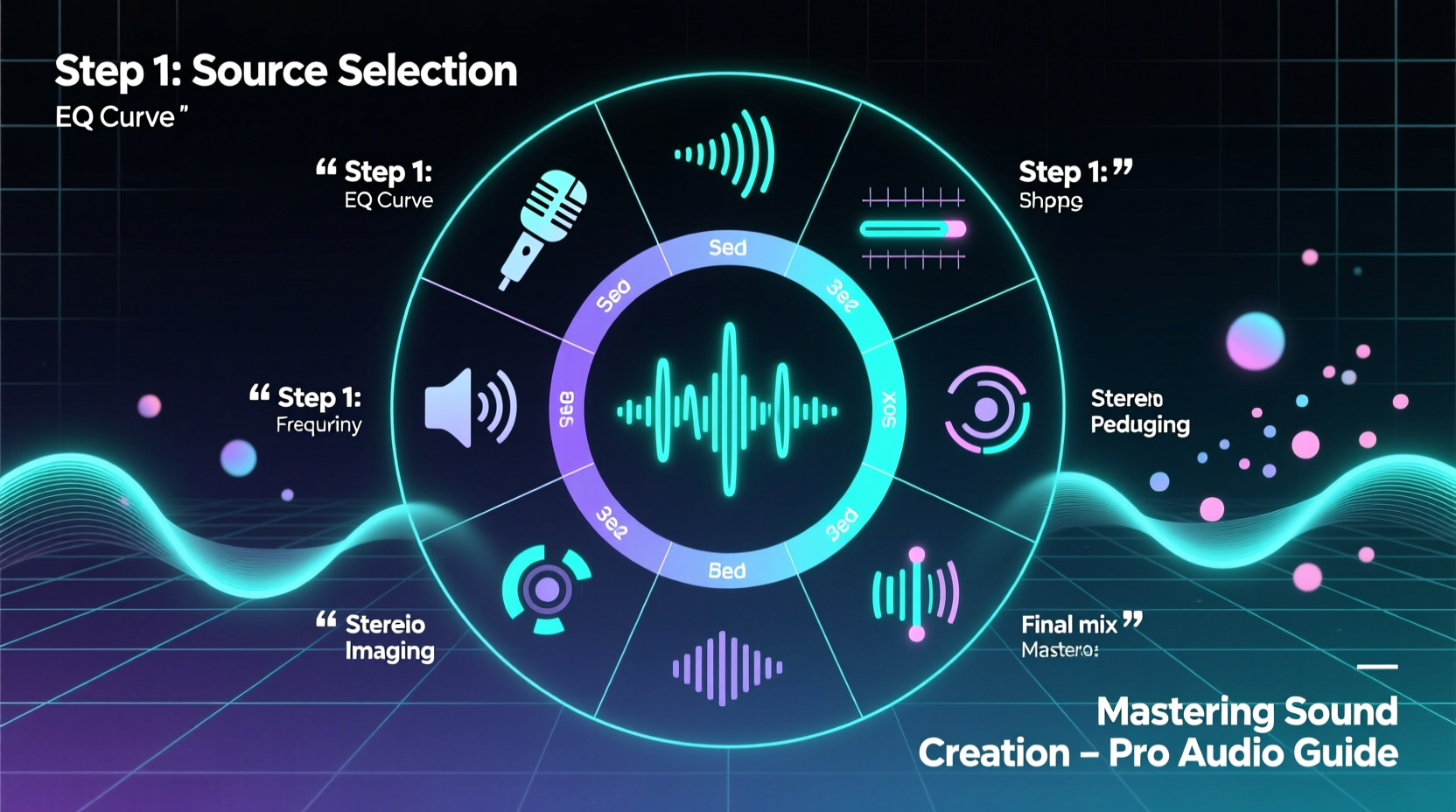
Before diving into tools and techniques, it's crucial to understand what makes audio \"high quality.\" Clarity, dynamic range, frequency balance, and spatial imaging are key components. Poorly recorded or processed audio can suffer from noise, distortion, muddiness, or lack of presence—issues that distract listeners and undermine your message.
Sound quality begins with source material. A well-tuned instrument, a skilled vocalist, and a quiet environment set the stage for success. From there, signal chain integrity—microphones, preamps, converters, and software—must preserve the original performance without adding artifacts.
“Great sound starts before the first microphone is even turned on. It’s about intention, preparation, and attention to detail.” — Lena Torres, Grammy-winning audio engineer
The Step-by-Step Process of Professional Sound Creation
Creating high-quality audio follows a logical workflow. Skipping or rushing any phase compromises the final output. Here’s a proven sequence used by top studios:
- Pre-production Planning: Define the project’s sonic goals. Is the mood dark and cinematic? Bright and energetic? Choose reference tracks that embody the desired aesthetic.
- Source Selection & Preparation: Use instruments in good condition. Tune guitars, replace old drumheads, and ensure vocalists are warmed up. Acoustic treatment in the room reduces unwanted reflections.
- Microphone Selection & Placement: Match mic types (condenser, dynamic, ribbon) to sources. Position them to capture clarity while minimizing bleed and phase issues.
- Recording with Optimal Gain Staging: Set input levels so signals are strong but not clipping. Aim for peaks around -18dBFS to allow headroom for processing.
- Editing & Cleaning: Remove breaths, clicks, and background noise. Align timing where necessary, but preserve natural feel.
- Mixing for Balance & Depth: Adjust levels, pan positions, EQ, compression, and effects to create a cohesive blend. Focus on clarity and emotional impact.
- Mastering for Consistency: Final polish to ensure loudness standards, tonal balance, and playback compatibility across systems.
Essential Tools and Their Roles in Audio Excellence
No amount of technique can compensate for the wrong tools. While software has made production more accessible, understanding gear functionality leads to better decisions.
| Tool Type | Purpose | Common Mistakes |
|---|---|---|
| Audio Interface | Converts analog signals to digital with low latency | Using built-in laptop mic/sound card |
| Condenser Microphone | Captures detailed vocals and acoustic instruments | Placing too close to sound sources causing plosives |
| Digital Audio Workstation (DAW) | Hosts recording, editing, and mixing workflows | Overloading sessions with unused plugins |
| Studio Monitors | Provide accurate frequency response for mixing | Placing near walls causing bass buildup |
| Acoustic Treatment | Controls reflections and standing waves | Relying only on software correction instead of fixing room acoustics |
A Real-World Example: From Bedroom Demo to Broadcast Ready
Consider Maya, an independent musician recording her debut EP in a spare bedroom. Initially, her vocals sounded boxy and distant, and guitar recordings picked up computer fan noise. She followed a structured upgrade path:
- Bought a simple reflection filter and foam panels to tame early reflections.
- Switched from a USB mic to an XLR condenser connected via an audio interface.
- Learned gain staging to avoid digital clipping.
- Used EQ to reduce low-mid buildup and reverb to add space without washing out clarity.
After three months of iterative refinement, her final mix was accepted by a regional radio station for airplay. The transformation wasn’t due to expensive gear—it came from applying core principles consistently.
Checklist for Achieving High-Quality Audio
Use this checklist before, during, and after recording to maintain professional standards:
- ✅ Test microphone placement with headphones before recording
- ✅ Record at 24-bit/48kHz minimum for optimal resolution
- ✅ Label and organize tracks clearly in your DAW
- ✅ Apply high-pass filters to remove unnecessary sub frequencies
- ✅ Use reference tracks throughout mixing to stay on target
- ✅ Take breaks every 30–45 minutes to avoid ear fatigue
- ✅ Export final mixes in WAV format at -1dB peak to prevent inter-sample clipping
Frequently Asked Questions
Do I need expensive equipment to make high-quality audio?
Not necessarily. Many professional-sounding records have been made with modest gear. What matters most is technique, room treatment, and critical listening. A $200 microphone used correctly will outperform a $1,000 mic placed poorly.
How do I know if my mix is balanced?
Test your mix on multiple systems—earbuds, car speakers, studio monitors. If the vocals are consistently clear, the bass is tight but present, and no single element overpowers, you’re on the right track. Use spectrum analyzers as a guide, but trust your ears above all.
What’s the biggest mistake beginners make in sound creation?
Over-processing. Adding too much reverb, compression, or EQ in an attempt to “fix” a poor recording rarely works. Focus first on capturing the best possible source sound. Clean recordings require less correction and translate better across devices.
Final Thoughts: Mastery Through Practice and Patience
Mastering sound creation isn’t about chasing the latest plugin or mimicking trends. It’s about developing a refined ear, building reliable workflows, and respecting the physics of sound. Every decision—from mic choice to fader level—affects the listener’s experience. Treat each project as an opportunity to learn, and don’t be afraid to experiment within a structured framework.
High-quality audio is achievable for anyone willing to invest time in learning and refining their craft. Start small, focus on one skill at a time, and gradually integrate advanced techniques. Over time, your ability to shape sound with precision and emotion will grow.




 浙公网安备
33010002000092号
浙公网安备
33010002000092号 浙B2-20120091-4
Comments
No comments yet. Why don't you start the discussion?