
In a world where attention is fragmented and demands are constant, the ability to act quickly—without sacrificing quality—is a rare competitive advantage. Speed isn't just about doing things faster; it's about reducing friction, eliminating delays, and making intelligent decisions under pressure. Whether you're managing projects, building habits, or navigating daily tasks, mastering speed can dramatically improve your productivity and peace of mind.
True speed comes from clarity, preparation, and systems—not from rushing. This guide explores proven strategies to help you move fast while staying focused, effective, and sustainable.
The Psychology of Speed and Efficiency
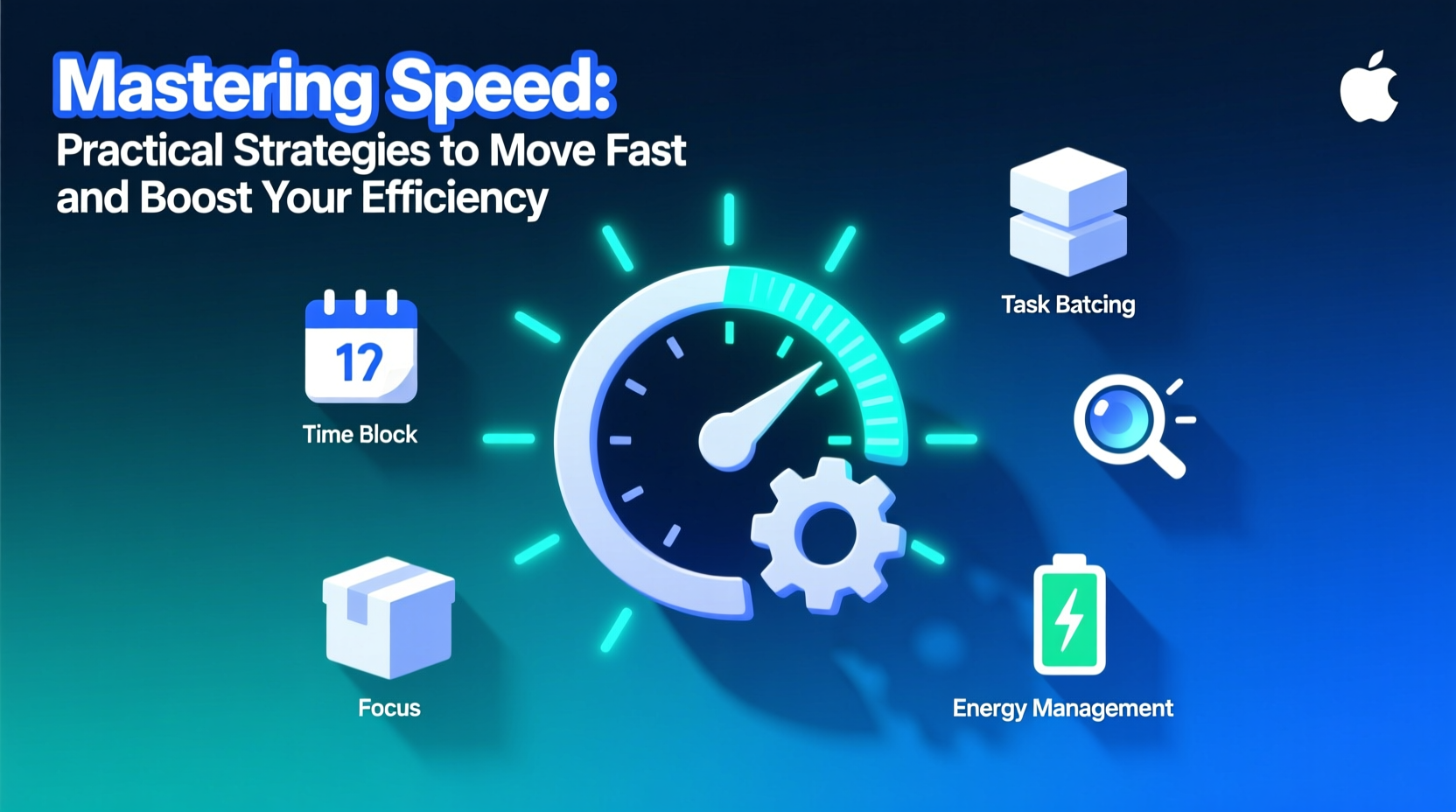
Many people equate speed with stress. They push themselves to do more in less time, only to burn out or make costly mistakes. But high performers understand that real speed is rooted in mental agility and emotional control. Research in cognitive psychology shows that decision fatigue, distraction, and lack of clear priorities are the primary enemies of momentum.
When your environment is cluttered or your goals are vague, your brain spends energy on filtering noise instead of executing actions. The fastest workers aren’t necessarily the busiest—they’re the ones who’ve minimized internal and external resistance.
“Speed is not just about motion. It’s about alignment between intention, action, and environment.” — Dr. Lena Torres, Cognitive Performance Researcher
To move fast without spinning your wheels, start by designing your workflow around three principles: simplicity, consistency, and anticipation.
Eliminate Friction with System Design
Friction slows everything down. It shows up as unnecessary steps, unclear instructions, redundant approvals, or tools that don’t integrate well. Reducing friction requires intentional system design—mapping out how tasks flow from start to finish and removing bottlenecks.
For example, a writer who manually formats every blog post wastes 15–20 minutes per article. By creating a template with pre-formatted headings, image placeholders, and standard call-to-actions, that time drops to under two minutes. That’s a 90% reduction in setup time—freeing up hours each month.
Common sources of friction include:
- Switching between too many apps
- Repeating manual data entry
- Lack of standardized processes
- Email overload and unstructured communication
Start by auditing your most frequent workflows. Ask: Where do I pause? Where do I get stuck? Then redesign those points for smoother throughput.
Step-by-Step Guide to Accelerating Daily Output
Moving fast consistently isn’t magic—it’s method. Follow this six-step process to build speed into your routine:
- Define Your Critical Few Tasks: Each day, identify 1–3 high-leverage activities that drive disproportionate results. Focus your energy there first.
- Time-Block Execution Windows: Schedule 90-minute blocks for deep work. Turn off notifications and commit fully during these periods.
- Preload Your Next Day: Before ending your workday, outline tomorrow’s top tasks and gather necessary materials. This reduces startup lag.
- Use the Two-Minute Rule: If a task takes less than two minutes, do it immediately. Small wins build momentum.
- Batch Similar Activities: Group emails, calls, errands, or creative work into dedicated batches to minimize context switching.
- Review and Reset Weekly: Spend 30 minutes every Friday assessing what slowed you down and adjusting systems accordingly.
This sequence builds rhythm and predictability—both essential for sustained speed.
Do’s and Don’ts of High-Speed Productivity
| Do | Don’t |
|---|---|
| Plan your day the night before | Start working without a clear priority list |
| Use keyboard shortcuts and automation tools | Manually repeat tasks that can be automated |
| Set boundaries for meetings (e.g., 25 or 50 mins) | Allow meetings to expand unnecessarily |
| Measure output, not just activity | Confuse busyness with progress |
| Take short breaks every 60–90 minutes | Work through fatigue without recovery |
Efficiency isn’t about doing more; it’s about doing what matters with precision and pace. These guidelines help maintain both quality and velocity.
Real Example: How a Startup Team Cut Project Delivery Time by 40%
A mid-sized tech startup was struggling to launch new features on schedule. Their average development cycle was 12 weeks. After conducting a workflow analysis, they discovered that 30% of delays came from misaligned handoffs between design, engineering, and QA teams.
They implemented three changes:
- Created shared project dashboards with real-time status updates
- Introduced 15-minute daily syncs focused only on blockers
- Standardized handoff checklists between departments
Within two months, their average delivery time dropped to 7 weeks. The team didn’t work longer hours—they simply reduced rework and improved coordination. This case illustrates that speed gains often come from better structure, not more effort.
Actionable Checklist: Build Speed Into Your Routine
Use this checklist weekly to maintain high-velocity performance:
- ☐ Define top 3 priorities every morning
- ☐ Schedule at least one 90-minute focus block
- ☐ Automate or delegate one repetitive task
- ☐ Clear inbox using the two-minute rule
- ☐ Review yesterday’s progress and adjust today’s plan
- ☐ Shut down work with a 5-minute reset for tomorrow
- ☐ Reflect weekly: What caused delays? How can systems improve?
Consistently applying even half of these actions creates compound gains over time.
Frequently Asked Questions
Isn’t moving fast risky? Won’t I make more mistakes?
Speed amplifies both strengths and weaknesses. If your foundation—clarity of goal, reliable systems, and self-awareness—is strong, then moving fast increases accuracy through repetition and feedback. Rushing without preparation leads to errors. But disciplined speed, built on routines and reflection, actually reduces mistakes by minimizing indecision and hesitation.
How do I balance speed with creativity?
Creativity thrives within constraints. Paradoxically, imposing time limits (like 20-minute brainstorming sprints) often boosts originality. The key is to separate generative phases from refinement phases. Move fast when exploring ideas; slow down when editing or finalizing. This rhythm prevents perfectionism from stalling momentum.
Can these strategies work for teams, not just individuals?
Absolutely. In fact, team-wide adoption multiplies the benefits. Shared calendars, standardized templates, and transparent workflows allow entire groups to operate at higher velocity. The critical factor is alignment: everyone must understand the objectives, timelines, and handoff expectations. When coordinated, teams can achieve sprint-like agility without chaos.
Conclusion: Speed as a Sustainable Skill
Mastering speed isn’t about burning out or cutting corners. It’s about cultivating a mindset of continuous improvement, where every second saved becomes fuel for greater impact. The strategies outlined here—system design, friction reduction, structured workflows, and disciplined review—are accessible to anyone willing to invest in them.
Start small. Pick one bottleneck in your day and redesign it. Test a new habit for five days. Measure the difference. Over time, these micro-adjustments compound into remarkable gains in efficiency and confidence.




 浙公网安备
33010002000092号
浙公网安备
33010002000092号 浙B2-20120091-4
Comments
No comments yet. Why don't you start the discussion?