
Finding the perfect sports watch isn’t just about features or brand reputation—it’s about fit. A poorly sized watch can lead to discomfort, inaccurate heart rate readings, chafing during long runs, or even missed data during critical training sessions. Whether you're a weekend jogger or a seasoned triathlete, understanding how to match your wrist dimensions with the right watch design is essential. This guide breaks down the anatomy of fit, provides actionable measurement techniques, and offers real-world insights to help you choose wisely.
Why Watch Fit Matters More Than You Think
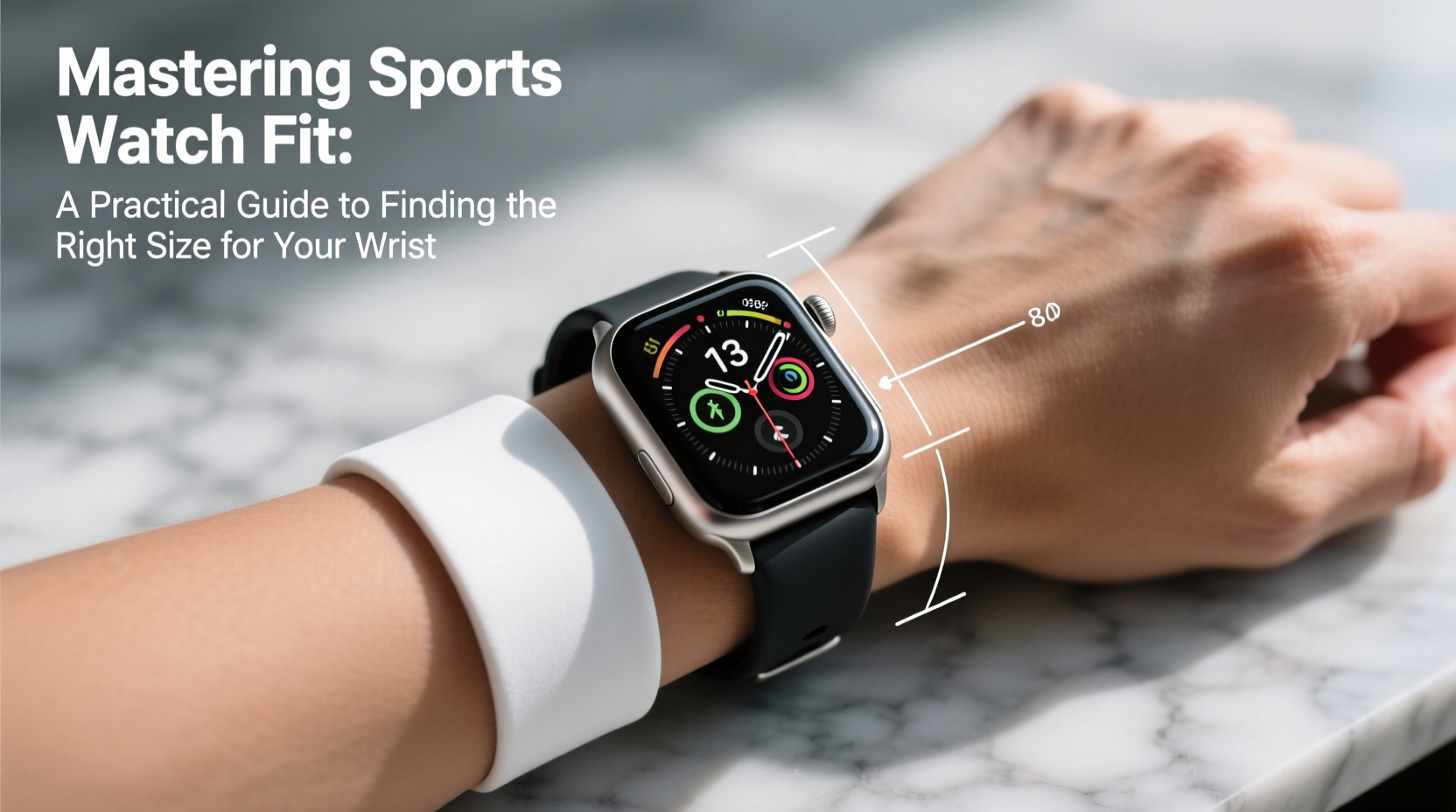
A sports watch is more than a timepiece; it's a performance tool. It tracks your heart rate, monitors sleep, logs GPS routes, and sometimes even guides breathing exercises. But all these functions rely on consistent skin contact and stable positioning. If the band is too loose, the optical sensor loses accuracy. If it’s too tight, circulation is restricted, leading to numbness or irritation—especially during extended wear.
The ideal fit allows for slight movement without slipping, maintains sensor contact, and feels unobtrusive. Many athletes overlook this detail until discomfort sets in. Yet, a well-fitted watch becomes an extension of the body, not a distraction.
“Fit directly impacts biometric accuracy. Even a 2mm gap between sensor and skin can skew heart rate data by up to 15% during high-intensity intervals.” — Dr. Lena Torres, Biomechanics Researcher at SportsTech Lab Zurich
How to Measure Your Wrist Correctly
Before selecting a watch, measure your wrist accurately. Avoid guessing based on clothing size or previous devices. Use a flexible measuring tape, not a rigid ruler.
- Wrap the tape around the narrowest part of your wrist, just below the wrist bone.
- Keep the tape snug but not tight—allow enough space to slide a finger underneath.
- Record the measurement in millimeters (preferred) or inches.
- Repeat on both wrists if they differ significantly.
Most manufacturers provide recommended wrist size ranges for their bands. For example, a \"medium\" band may suit wrists from 140–180mm, while \"large\" covers 170–210mm. Overlap means you might need to assess thickness and case width as well.
Choosing the Right Case Size and Band Type
Wrist circumference alone doesn’t tell the whole story. The watch case diameter and thickness play a crucial role in perceived fit and comfort.
Smaller wrists (under 160mm) often struggle with oversized smartwatches designed for broader forearms. A 47mm case may dominate a slim wrist, causing imbalance and increasing the risk of snagging. Conversely, larger wrists (over 190mm) may find 38–42mm cases sit too close to the hand, limiting sensor access and reducing stability.
Band material also affects fit. Here’s a comparison:
| Band Type | Best For | Pros | Cons |
|---|---|---|---|
| Silicone Rubber | Running, swimming, HIIT | Flexible, sweat-resistant, affordable | Can trap moisture, may degrade over time |
| Nylon (NATO/Perforated) | Daily wear, hot climates | Breathable, lightweight, secure | Less precise fit, harder to clean |
| Stainless Steel/Mesh | Formal settings, cooler weather | Durable, adjustable, stylish | Heavier, less suitable for intense workouts |
| Hybrid Textile (e.g., recycled polyester) | All-around use | Eco-friendly, soft, quick-drying | Premium cost, limited availability |
Select a band that adapts to temperature and activity. For multisport use, interchangeable quick-release bands offer versatility across environments.
Step-by-Step: Achieving the Ideal Fit
Follow this sequence to ensure optimal positioning and comfort:
- Put on the watch with the band adjusted to its middle hole initially.
- Position it 1–2 fingers above the wrist bone—this ensures consistent blood flow and sensor alignment.
- Check mobility: The watch should rotate slightly but not flip over during arm swings.
- Test during motion: Shake your arm, simulate running form, or do jumping jacks. Does it stay in place?
- Verify sensor contact: Look for a steady green light under the device—intermittent blinking suggests poor adhesion.
- Adjust the band: Tighten only until the watch remains stable without indenting the skin.
During endurance events, consider wearing compression sleeves beneath the watch to stabilize fit without tightening the band excessively.
Real Example: From Chafing to Comfort
Mark, a marathon runner from Portland, used his GPS watch religiously but consistently developed red marks and rashes after long runs. He assumed it was sweat irritation. After switching detergents and cleaning routines with no improvement, he reevaluated fit.
His wrist measured 158mm—on the smaller end—and he was using a 46mm watch with a default medium band. The case hung slightly off-center, causing friction with each stride. By switching to a 42mm model with a perforated nylon band and adjusting the placement higher on the forearm, the issue resolved completely. His heart rate data also became more consistent across efforts.
This case underscores that fit isn’t just about comfort—it influences performance metrics and long-term usability.
Checklist: Before You Buy or Wear Your Sports Watch
- ✅ Measure your wrist accurately in millimeters
- ✅ Check manufacturer’s recommended size range
- ✅ Try different case sizes if possible (in-store or rental)
- ✅ Ensure the sensor rests flat against the skin
- ✅ Confirm the band doesn’t pinch or slip during movement
- ✅ Test in real conditions: heat, cold, rain, sweat
- ✅ Verify compatibility with replacement bands for seasonal rotation
Frequently Asked Questions
How tight should my sports watch be?
Tight enough to prevent sliding during exercise, but loose enough to allow one finger between the band and skin. You should feel secure, not constricted. Numbness or persistent red marks indicate it’s too tight.
Can I wear my watch on my dominant hand?
Yes, but many athletes prefer the non-dominant hand to reduce impact exposure and avoid interference during tasks like lifting or writing. Choose based on personal comfort and usage patterns.
What if my wrist size falls between band options?
Opt for models with micro-adjustable bands or third-party aftermarket options. Some brands offer small/large band kits separately. Alternatively, prioritize watches with multiple attachment points or sliding buckles for finer tuning.
Final Thoughts: Precision Starts With Fit
A sports watch is only as reliable as its fit. No matter how advanced the technology—be it ECG monitoring, blood oxygen tracking, or AI-powered recovery scores—it depends on consistent, correct placement. Taking the time to measure, test, and adjust ensures you get accurate data, lasting comfort, and confidence in every mile logged.




 浙公网安备
33010002000092号
浙公网安备
33010002000092号 浙B2-20120091-4
Comments
No comments yet. Why don't you start the discussion?