
A color block bag—defined by its bold use of two or more solid, contrasting colors in geometric sections—is more than just an accessory. It’s a statement. When styled intentionally, it can anchor an entire look, inject energy into neutral ensembles, or harmonize with complex patterns. Yet many hesitate to incorporate such a vibrant piece, fearing clashing tones or overwhelming proportions. The truth is, mastering the art of pairing a color block bag with any outfit lies not in rigid rules, but in understanding color theory, balance, and personal expression.
With thoughtful coordination, a color block bag becomes a versatile tool rather than a stylistic risk. Whether you're dressing for work, a weekend brunch, or a night out, this guide explores creative, practical approaches to integrating these dynamic accessories seamlessly into your wardrobe.
The Power of Color Blocking in Fashion
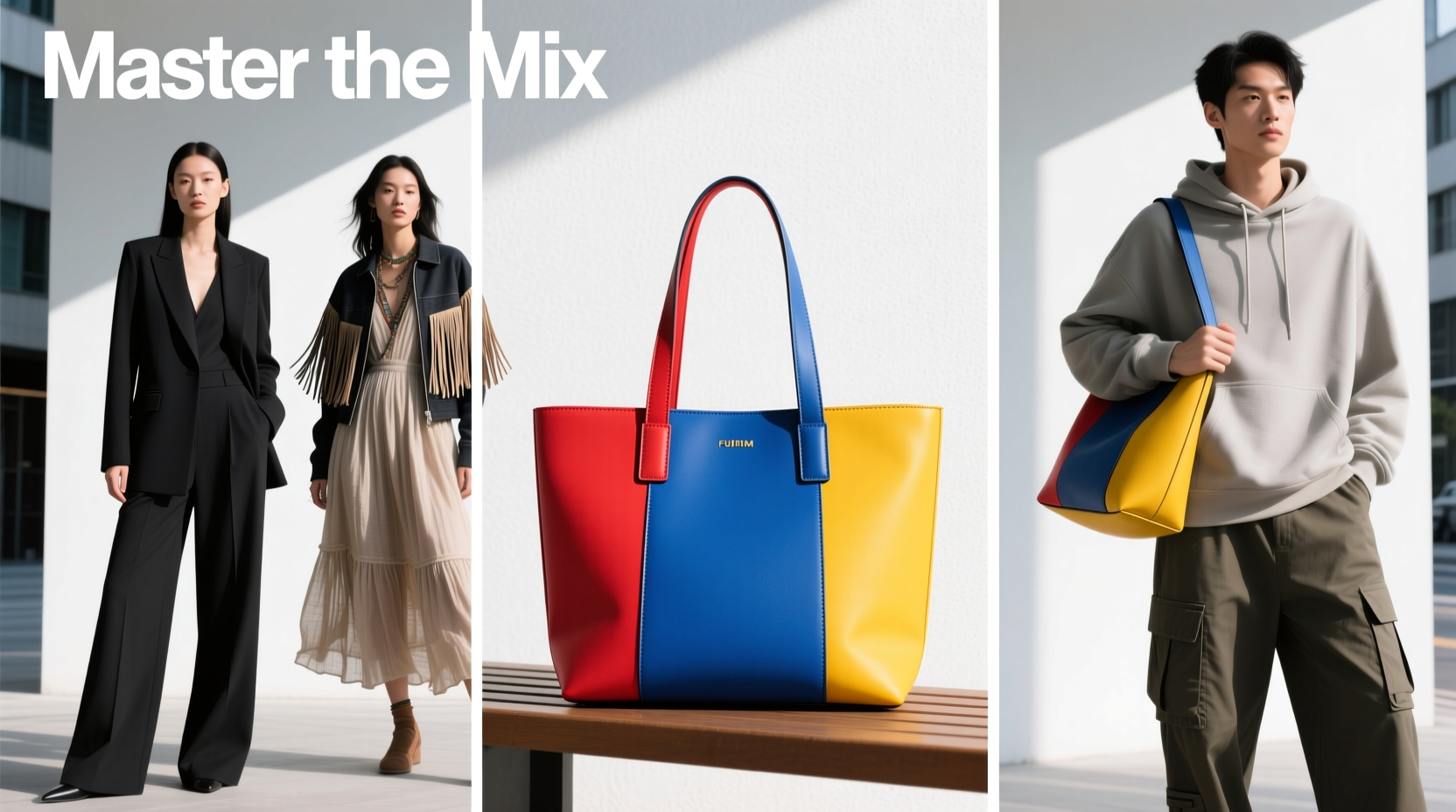
Color blocking as a design principle emerged in modern art and later influenced mid-century fashion. Today, it thrives in accessories because it offers visual contrast without relying on prints or textures. A well-designed color block bag typically uses complementary, analogous, or triadic color schemes, making it inherently balanced—even when bold.
The key to leveraging this balance lies in recognizing which colors dominate your bag and how they interact with your clothing. For instance, a bag featuring cobalt blue and mustard yellow creates a high-contrast, energetic duo. If your outfit includes either hue—even subtly—you’ve already established a foundation for cohesion.
“Color isn’t decoration—it’s communication. A color block bag tells people you’re intentional about your style.” — Lena Torres, Fashion Stylist & Creative Director at Atelier Mode
Strategies for Matching with Outfits
Matching a color block bag doesn’t mean replicating every shade exactly. Instead, focus on harmony through repetition, contrast, and proportion. Below are five proven strategies.
1. Pull One Color from the Bag into Your Outfit
This is the simplest and most effective method. Identify the dominant or most vibrant color in your bag and echo it in your clothing. This could be a navy blouse, a rust-colored skirt, or even socks or shoes in one of the bag’s hues.
2. Neutralize with Monochrome Base Layers
Pair your color block bag with a monochromatic outfit—such as all black, white, beige, or gray—to let the bag shine. This approach works especially well in professional settings where bold accessories add personality without overstepping dress codes.
For example, a charcoal gray tailored suit paired with a red-and-teal color block tote instantly elevates a corporate look while maintaining sophistication.
3. Complement Without Matching Exactly
You don’t need an exact color match. Instead, choose garments in shades that sit adjacent to or contrast beautifully with the bag’s palette. A coral and mint bag pairs elegantly with a dusty rose dress—the warmth of coral complements the pink, while mint adds freshness.
4. Use the Bag as a Transition Piece Between Clashing Outfits
In advanced styling, a color block bag can bridge two seemingly incompatible colors in your outfit. Suppose you’re wearing a purple top and orange pants—a combination that risks looking chaotic. A bag that features both purple and orange (or a transitional hue like burnt sienna) visually connects the pieces, creating intentional contrast rather than disarray.
5. Match Texture, Not Just Color
When in doubt, align materials. A matte-finish color block bag made of canvas pairs better with denim and cotton, while a glossy leather version suits silk blouses or tailored wool coats. Even if the colors aren’t perfectly matched, consistent texture language enhances cohesion.
Do’s and Don’ts: Matching Color Block Bags
| Do | Don’t |
|---|---|
| Use one color from the bag in your outfit (even in small doses) | Wear all the bag’s colors in large proportions—this can overwhelm |
| Balance bold bags with simple silhouettes | Pair with another heavily patterned item unless carefully coordinated |
| Let the bag be the focal point in minimalist outfits | Match every color exactly—it can look costume-like |
| Consider undertones (warm vs. cool) when selecting coordinating clothes | Ignore seasonal palettes—bright blocks suit summer; deeper tones fit fall |
Real-Life Example: Olivia’s Weekend Look
Olivia, a graphic designer in Portland, owns a color block crossbody with panels of olive green and terracotta. She often wears wide-leg cream trousers and a light gray sweater—safe, neutral choices. To refresh her go-to weekend outfit, she decided to integrate her bag more intentionally.
She added a terracotta silk scarf tied loosely around her neck and swapped her white sneakers for olive-green loafers. Suddenly, the bag wasn’t just carried—it was connected. The colors flowed across her silhouette, creating a curated, artistic impression without changing her core wardrobe.
“I used to think I needed more clothes,” Olivia says. “But really, I just needed to see how the pieces could talk to each other.”
Step-by-Step Guide: Styling Your Color Block Bag in 5 Minutes
- Assess your bag’s color palette: Name each major color and identify the dominant one.
- Check your outfit: Does it contain any of those colors? Even hints count—socks, shoes, buttons.
- Add a connector: If no match exists, grab a small accessory (scarf, belt, earrings) in one bag color.
- Adjust proportions: Keep the rest of your outfit simple if the bag is large or highly contrasted.
- Final check: Step back and view your reflection. Does the bag feel like part of the story, or separate?
Frequently Asked Questions
Can I wear a color block bag with a printed outfit?
Yes, but proceed with caution. Choose prints that include one of the bag’s colors. For example, a floral dress with hints of cobalt blue works well with a cobalt-and-white color block satchel. Avoid competing patterns—stripes with geometric bags, for instance, can clash visually.
What if my bag has too many colors to match?
Focus on just one. You don’t need to incorporate every hue. Select the color that resonates most with your skin tone or personal preference and build from there. Sometimes, letting two colors remain “unmatched” adds playful spontaneity.
Are color block bags appropriate for formal events?
They can be, depending on design and material. A structured color block clutch in luxe leather with refined color pairings (like burgundy and cream) fits evening events. Avoid overly casual fabrics like nylon or loud combinations like neon pink and electric green in formal settings.
Creative Checklist: Maximize Your Color Block Bag’s Potential
- ✅ Identify the primary and secondary colors in your bag
- ✅ Keep a set of neutral basics that let the bag stand out
- ✅ Invest in small accessories (shoes, scarves, jewelry) in common accent colors
- ✅ Rotate bags seasonally—bright blocks for spring/summer, earthy combos for fall/winter
- ✅ Take photos of successful pairings to build a mental style library
- ✅ Experiment with unexpected contrasts—sometimes clashing creates intrigue
- ✅ Store bags properly to preserve color vibrancy (avoid sunlight and moisture)
Conclusion: Make Bold Choices with Confidence
Mastering style isn’t about avoiding mistakes—it’s about making bold choices with intention. A color block bag is not merely an afterthought; it’s a design element that can unify, energize, and define your look. By understanding how to echo, contrast, and balance its colors within your outfit, you transform what might seem like a risky accessory into a cornerstone of self-expression.
Start small. Try one new pairing this week. Notice how people respond. Pay attention to how you feel when your bag isn’t just carried, but integrated. Fashion is personal, evolving, and deeply creative. Let your color block bag be the spark that reminds you of that truth.




 浙公网安备
33010002000092号
浙公网安备
33010002000092号 浙B2-20120091-4
Comments
No comments yet. Why don't you start the discussion?