
The 2x2 Rubik’s Cube may look simpler than its 3x3 cousin, but don’t be fooled—speed, precision, and smart technique still matter. Whether you’re a beginner looking to solve it for the first time or an intermediate solver aiming to cut seconds off your time, mastering the 2x2 requires more than just random twists. With the right approach, you can solve it in under 10 seconds consistently. This guide breaks down practical, proven techniques that build both speed and confidence.
Understanding the 2x2: Simpler Structure, Smarter Strategy
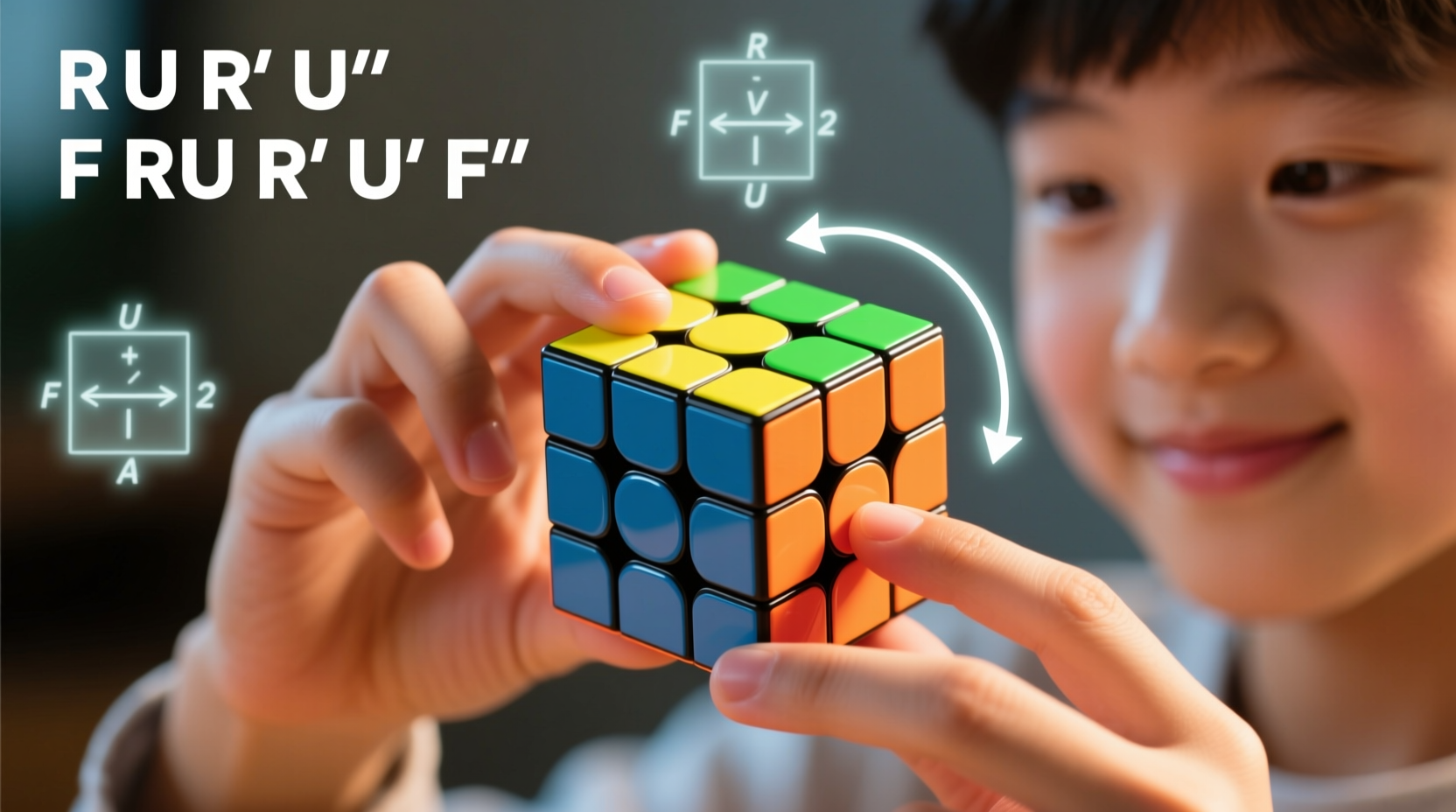
The 2x2 Rubik’s Cube consists of 8 corner pieces with no edge or center pieces. Unlike the 3x3, every piece is a corner, which means each move affects three sides at once. Because there are fewer pieces—only about 3.6 million possible combinations compared to over 43 quintillion on the 3x3—the puzzle is more manageable. But this also means inefficiency is magnified. One wrong turn can undo progress quickly.
Solving the 2x2 effectively relies on understanding layer-by-layer progression and recognizing patterns. Most solvers use adaptations of the Ortega or EG (Erik-Gunnar) methods after mastering the beginner’s layer-first approach. The key is not just solving it—but doing so efficiently.
Step-by-Step Guide: From First Solve to Sub-15 Seconds
Start with a structured method before advancing to speed-focused techniques. Here’s a reliable five-step process to go from novice to consistent sub-20-second solves.
- Solve the first face (usually white): Pick a color to start—most choose white. Find a white corner and build the entire face by matching adjacent colors. Don’t worry about side alignment yet; focus only on getting all four white stickers together on one side.
- Flip the cube: Once the first face is complete, turn the cube so the solved face is on the bottom. Now you’ll work on orienting the top layer.
- Orient the top layer (OLL): Use algorithms to make the top face a single color. There are seven common OLL cases for the 2x2. Learning just two or three basic ones (like the “Sune” and “Anti-Sune”) gets you through most scenarios.
- Permute the top layer (PLL): After the top is one color, some corners will still be in the wrong position. Apply a permutation algorithm to fix their positions without disturbing the colors. The T-Perm and Y-Perm are essential here.
- Practice lookahead: As you improve, focus on recognizing the next step while executing the current one. This reduces pauses and dramatically increases speed.
Common Algorithms to Memorize
| Purpose | Algorithm (Notation) | Mnemonic / Name |
|---|---|---|
| OLL - Sune | R U R' U R U2 R' | \"Right Up Right Prime...\" |
| OLL - Anti-Sune | R U2 R' U' R U' R' | Reverse flow of Sune |
| PLL - T-Perm | R U R' F' R U R' U' R' F R2 U' R' | Swaps two adjacent corners |
| PLL - Y-Perm | F R U' R' F R' F' R U R U' R' | Swaps diagonal corners |
“Speed isn’t built on frantic turning—it’s built on pattern recognition and efficient execution.” — Lucas Etter, Former World Record Holder (2x2)
Upgrade Your Game: The Ortega Method Explained
Once you can reliably solve the 2x2 in under 30 seconds using the beginner method, it’s time to level up. The Ortega method is the most popular intermediate technique because it cuts steps and leverages fewer, more powerful algorithms.
Ortega works in three stages:
- Step 1: Solve one full face (not necessarily a full layer—just one solid color).
- Step 2: Orient the opposite face using one of 7 OLL algorithms.
- Step 3: Permute both layers simultaneously using one of 5 PBL (Permutation of Both Layers) algorithms.
This method skips aligning the first layer entirely, focusing instead on orientation first, then fixing positions across both layers at once. With only 12 total algorithms to learn (compared to dozens in full EG), Ortega offers a high return on effort.
Mini Case Study: From 45 Seconds to 9 Seconds in 6 Weeks
Jamal, a college student new to cubing, struggled to break the 30-second barrier using a random, intuitive method. After learning the beginner layer-by-layer approach and drilling OLL/PLL algorithms for 15 minutes daily, his average dropped to 22 seconds within two weeks. He then adopted the Ortega method, focusing on mastering the PBL cases. By week six, he was averaging 11 seconds, with a personal best of 8.7. His breakthrough came not from faster hands, but from reduced move count and better inspection planning.
His routine: 10 timed solves every morning, reviewing slow solves to identify hesitation points. He used online timers like CSTimer.net and recorded his sessions to track progress.
Do’s and Don’ts of 2x2 Speed Solving
| Do’s | Don’ts |
|---|---|
| Use finger tricks: Push with index fingers for fast U and R turns. | Re-grip constantly—minimize hand shifts between moves. |
| Inspect for 5–10 seconds before starting to plan your first face. | Start turning immediately—wasting inspection time hurts performance. |
| Lubricate your cube regularly for smoother rotations. | Over-tighten screws—this restricts movement and causes lockups. |
| Practice slowly at first to ensure accuracy before increasing speed. | Repeat mistakes rapidly—bad habits form quickly if uncorrected. |
Checklist: Your 2x2 Mastery Roadmap
- ✅ Master solving one face intuitively (no algorithms needed).
- ✅ Learn 3 basic OLL algorithms (Sune, Anti-Sune, H-Perm).
- ✅ Memorize T-Perm and Y-Perm for top-layer correction.
- ✅ Transition to the Ortega method and learn all 5 PBL cases.
- ✅ Drill algorithms daily for muscle memory.
- ✅ Use a timer app to track averages and consistency.
- ✅ Optimize your cube with lubricant and tension adjustment.
- ✅ Analyze slow solves to eliminate pauses and inefficient moves.
FAQ: Common Questions About 2x2 Solving
How long does it take to get good at the 2x2?
With consistent 15–20 minute daily practice, most beginners reach sub-20 seconds within 2–3 weeks. Advancing to sub-10 typically takes 2–3 months of focused training, especially when adopting Ortega or beginning EG.
Can I use 3x3 methods on the 2x2?
Yes—with limitations. The absence of edges and centers means CFOP (the standard 3x3 method) can't be applied directly. However, OLL and PLL algorithms from 3x3 work perfectly on the 2x2 since they affect only corners. Many early learners borrow these to accelerate progress.
What’s the world record for the 2x2?
As of 2024, the official World Cube Association (WCA) single solve record is 0.49 seconds, set by Maciej Czapiewski. The average-of-five record is around 1.2 seconds. While these times seem impossible, they demonstrate how optimized the 2x2 has become.
Beyond Speed: Building Long-Term Skill and Confidence
Fast solving isn’t just about memorizing algorithms—it’s about developing spatial awareness, pattern recognition, and mental agility. The 2x2 is an ideal tool for building these skills due to its simplicity and quick solve cycles. Each attempt reinforces neural pathways associated with problem-solving under constraints.
Top solvers emphasize consistency over peak performance. Averages matter more than singles. Recording your progress, reviewing inefficiencies, and staying patient with plateaus lead to sustainable improvement. Consider joining local cubing communities or online forums like Reddit’s r/Cubers to exchange tips and stay motivated.
“The 2x2 is deceptively deep. It teaches efficiency faster than any other cube.” — Feliks Zemdegs, Multiple-WCA-Record Holder
Conclusion: Start Solving Smarter Today
Mastering the 2x2 Rubik’s Cube isn’t reserved for prodigies or math geniuses. It’s accessible to anyone willing to learn structured techniques and practice deliberately. Begin with the basics, embrace the Ortega method, refine your algorithms, and optimize your hardware. Every second saved comes from smarter choices—not just faster fingers.




 浙公网安备
33010002000092号
浙公网安备
33010002000092号 浙B2-20120091-4
Comments
No comments yet. Why don't you start the discussion?