
A sleek, polished updo is one of the most versatile hairstyles—ideal for work, special occasions, or lazy days when you want to look put together without spending hours in front of the mirror. The claw clip has made a powerful comeback, not just as a nostalgic accessory but as a functional, elegant solution for securing hair with ease. Yet, many people struggle with slippage, uneven tension, or styles that fall apart within minutes. The key lies not in the clip itself, but in technique. With the right approach, anyone can master a secure, flattering updo using a claw clip—regardless of hair length, thickness, or texture.
Why the Claw Clip Deserves a Permanent Spot in Your Routine
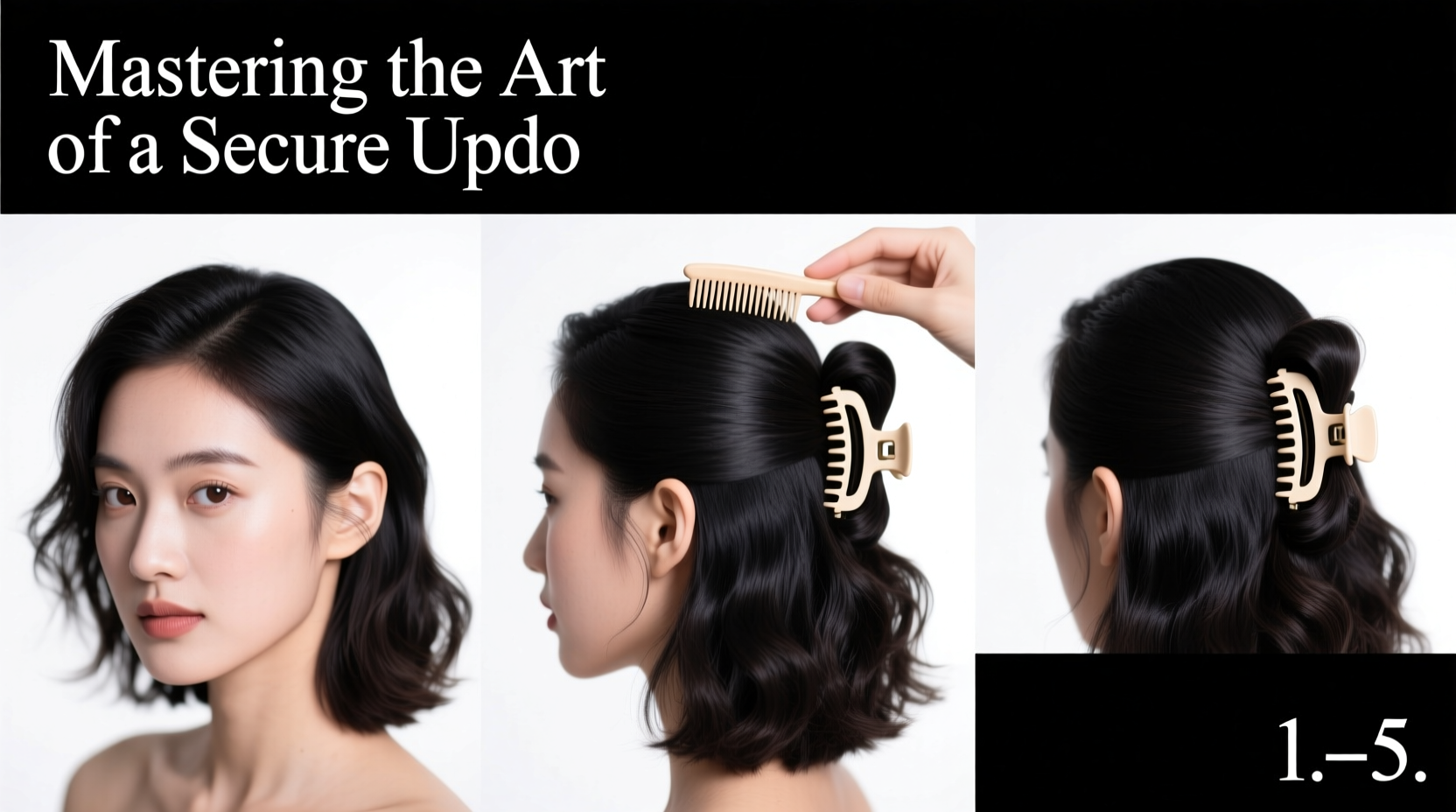
The claw clip isn’t just a trend; it’s a timeless tool. Unlike elastic bands that pull and crease hair, or bobby pins that require precision and patience, a well-designed claw clip offers grip, volume control, and minimal damage. Modern versions come in various sizes, finishes, and spring strengths, making them suitable for fine, medium, or thick hair. When used correctly, they hold securely without tugging on the scalp and allow for soft, lived-in elegance.
“Claw clips are one of the most underrated styling tools. They distribute tension evenly, reduce breakage, and can create everything from messy buns to structured chignons.” — Lila Monroe, Celebrity Stylist & Texture Specialist
Selecting the Right Claw Clip for Your Hair Type
Not all claw clips are created equal. Choosing the wrong size or material can lead to frustration and failed styles. Consider these factors before purchasing:
- Hair Thickness: Thick or curly hair needs a wide, strong clip (at least 2.5 inches) with a firm spring mechanism.
- Hair Length: Clips should span at least two-thirds of your gathered hair. For mid-length to long hair, opt for 3-inch or larger clips.
- Material: Acetate offers grip and shine; metal provides durability; resin is lightweight and snag-free.
- Teeth Design: Wider-spaced teeth work better for voluminous or textured hair, while finer teeth suit straight, slippery strands.
Step-by-Step Guide to a Secure, Long-Lasting Updo
Follow this methodical process to achieve an updo that stays in place all day—even through movement, wind, or humidity.
- Prep Your Hair: Start with day-old hair if possible. Freshly washed hair tends to be too slippery. If styling clean hair, apply a light texturizing spray or dry shampoo at the roots for grip.
- Decide on Placement: Choose where you want the updo—crown, nape, or side. For maximum hold, position it at the back of your head near the occipital bone.
- Gather and Twist: Use a brush or fingers to gather your hair into a low or mid ponytail. Instead of pulling tightly, gently twist the section clockwise or counterclockwise to form a loose rope.
- Coil Into a Base: Wrap the twisted hair around its base to form a small bun or nest. Do not secure with pins yet.
- Open and Position the Clip: Hold the claw clip vertically, squeeze the handles to open it, and align it over the coiled hair so both sides grip the bulk evenly.
- Release and Adjust: Let go of the handles slowly. The clip should snap shut, holding the coil firmly. Gently tug on the sides to test security.
- Loosen Strategically: Pull out a few face-framing pieces or tease the crown slightly for a softer look. Avoid disturbing the clip’s anchor points.
Do’s and Don’ts of Claw Clip Styling
| Do’s | Don’ts |
|---|---|
| Use clips with rounded edges to prevent snagging | Force a clip closed if hair is pinched—reposition instead |
| Choose matte finishes for better grip on oily hair | Wear clips on soaking wet hair—they’ll slip and weaken over time |
| Store clips in a pouch to avoid scratches or spring damage | Use overly large clips on fine hair—they’ll overwhelm and sag |
| Refresh the style midday by re-tightening the twist, not re-clipping | Leave clips in overnight regularly—they can cause creases and stress points |
Real-Life Example: From Rushed Mornings to Effortless Elegance
Sophie, a project manager in Chicago, used to rely on tight ponytails and headbands until she damaged her hairline from constant tension. After a colleague complimented her casual updo, Sophie learned the claw clip method described above. Now, she styles her shoulder-length, wavy hair in under five minutes each morning. “I prep with dry shampoo, twist loosely, and use a tortoiseshell acetate clip,” she says. “It holds through back-to-back meetings, and I’ve even worn it to weddings. My hair feels healthier, and I get compliments constantly.”
Pro Checklist for Flawless Claw Clip Success
Before you finish your style, run through this quick checklist:
- ✅ Hair is prepped with texture or light product
- ✅ Clip is appropriate size and strength for your hair volume
- ✅ Twist is tight enough to form a stable base but not strained
- ✅ Clip is centered and gripping both sides of the coil evenly
- ✅ No sections are caught awkwardly in the hinge or teeth
- ✅ Style has been tested with a gentle shake of the head
Frequently Asked Questions
Can I use a claw clip on short hair?
Yes, if you have at least 6–8 inches of hair. Focus on top-section updos or half-up styles. Smaller 1.5- to 2-inch clips work best. Teasing the crown adds volume and helps the clip grip.
Why does my claw clip keep slipping out?
Slippage usually comes from improper prep or incorrect clip size. Ensure your hair isn’t too clean or slick—use a texturizer. Also, check that the clip’s spring tension is strong and that you’re using a twist-and-coil method rather than just clamping loose hair.
Are claw clips damaging to hair?
When used correctly, claw clips are among the gentlest styling tools. Avoid over-tightening, never sleep in them nightly, and choose clips with smooth, snag-free interiors. They’re far less damaging than elastics or excessive bobby pin use.
Final Thoughts: Confidence Starts with Control
Mastering the claw clip isn’t about following a rigid formula—it’s about understanding how your hair behaves and adapting the technique to suit it. Whether you have fine, straight strands or dense curls, the principles of preparation, structure, and balance remain the same. Once you’ve practiced the twist-and-coil method and found the right clip, you’ll wonder why you ever struggled with messy buns or broken pins.




 浙公网安备
33010002000092号
浙公网安备
33010002000092号 浙B2-20120091-4
Comments
No comments yet. Why don't you start the discussion?