
In an era where fashion cycles spin faster than ever, cultivating a wardrobe with lasting resonance has become both a challenge and a statement. The secret lies not in chasing every trend, but in curating a balance—where the elegance of vintage meets the functionality of modern design. Blending vintage style with contemporary accessories isn’t about nostalgia; it’s about intentionality. It’s a deliberate fusion that creates personal expression, depth, and enduring style. When executed with care, this approach results in looks that feel fresh yet familiar, classic yet current.
Vintage clothing carries history—the craftsmanship of bygone eras, unique fabrics, and silhouettes rarely replicated today. But wearing head-to-toe retro can risk looking costumey or out of step. That’s where modern accessories come in: they ground the outfit, add relevance, and reflect your present-day identity. Whether it’s a 1970s silk blouse paired with minimalist gold hoops or a 1950s A-line dress anchored by sleek ankle boots, the right modern touch transforms vintage into something effortlessly wearable.
The Philosophy of Timeless Style
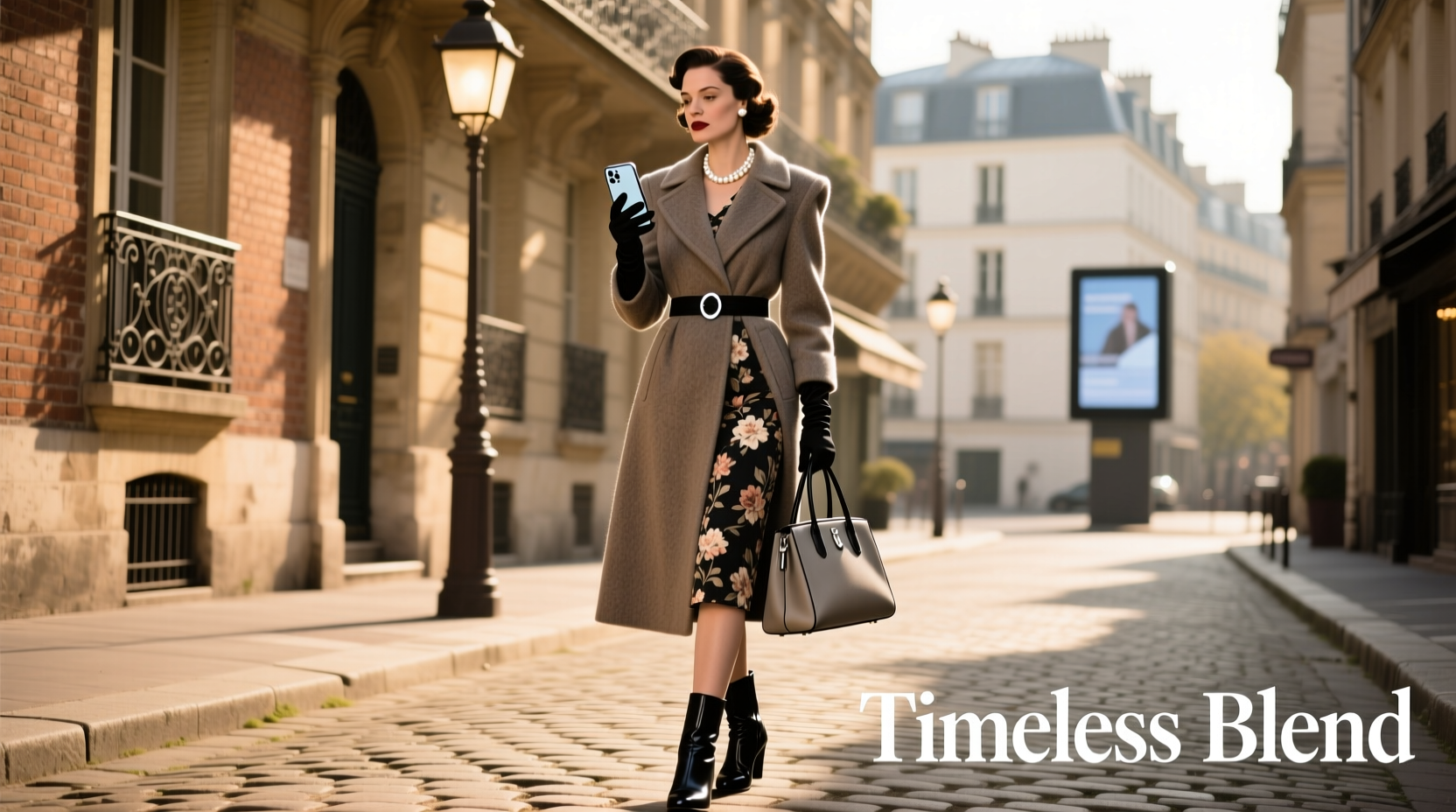
Timelessness in fashion doesn’t mean avoiding change—it means selecting pieces that transcend seasonal whims. Vintage items often embody this principle through quality construction and distinctive details. However, timelessness is also contextual. A 1940s tailored suit may have impeccable structure, but worn without thoughtful updates, it can feel disconnected from today’s lifestyle.
Modern accessories act as cultural translators. A smartwatch on a wrist adorned with a 1930s bracelet bridges decades. A structured leather tote from a contemporary brand complements a 1960s mod dress without overpowering it. The goal is harmony: letting the vintage piece shine while ensuring the overall aesthetic feels lived-in and relevant.
“Style is personal archaeology. You dig through the past, but you live in the present. Accessories are how you mark your era on a vintage foundation.” — Clara Nguyen, Fashion Historian & Stylist
Key Principles for Successful Blending
Creating cohesion between old and new requires more than random pairing. Follow these principles to achieve balance and sophistication:
- Anchor with one dominant era: Let either the vintage clothing or the modern accessory take center stage. If your dress is from the 1950s, keep jewelry clean and current.
- Maintain a consistent color palette: Even if styles differ, shared tones unify the look. Pair a mustard-yellow 1970s coat with cognac leather boots and a camel scarf for tonal continuity.
- Respect proportion and scale: Oversized vintage silhouettes work best with streamlined accessories. Avoid cluttering a voluminous 1980s shoulder-padded blazer with chunky modern necklaces.
- Prioritize fabric integrity: Ensure vintage textiles are clean, repaired, and wearable. A modern accessory won’t salvage a stained or frayed garment.
Step-by-Step Guide to Building a Balanced Look
Follow this five-step process to confidently mix vintage and modern elements:
- Start with a standout vintage piece: Choose one item with strong character—a printed silk scarf from the 1960s, a wool trench from the 1980s, or high-waisted flared jeans from the early 2000s (now considered vintage).
- Select modern footwear: Footwear instantly dates an outfit. Swap period-specific shoes for contemporary styles. Think white sneakers with a 1970s maxi dress or pointed-toe flats under a 1950s skirt suit.
- Add minimalist jewelry: Replace overly ornate vintage jewelry with simple studs, delicate chains, or geometric shapes. Modern metals like brushed gold or matte silver provide contrast.
- Choose a functional bag: Opt for a structured crossbody or tote in neutral leather. Avoid vintage handbags unless they’re part of a fully themed look.
- Refine with grooming and attitude: Finish with modern hair and makeup. A sleek bun or natural makeup keeps the focus on the clothes while feeling current.
Do’s and Don’ts: A Practical Comparison
| Do | Don’t |
|---|---|
| Pair a vintage blazer with modern slim-fit trousers | Wear full vintage head-to-toe without any modern anchor |
| Use a smartwatch to contrast a 1940s lace glove | Combine multiple loud vintage patterns with bold modern prints |
| Carry a minimalist black clutch with a 1960s go-go dress | Wear outdated footwear that clashes with current proportions |
| Layer vintage outerwear over contemporary basics | Over-accessorize with both vintage and modern jewelry |
Real Example: The Office-to-Evening Transition
Sophia, a graphic designer in Portland, wanted to wear her grandmother’s 1970s burgundy tweed suit to a client presentation, then transition to dinner. She knew the full vintage look might seem too theatrical for the office. Her solution? She wore the jacket over a crisp white modern turtleneck and dark straight-leg jeans—both current staples. For footwear, she chose low-block black ankle boots with a square toe, a 2023 design that echoed the era without mimicking it. Her accessories were minimal: small silver hoop earrings and a thin leather watch strap.
After work, she swapped the jeans for a black midi skirt, added red lipstick, and clipped on a pair of vintage-inspired—but newly made—crystal earrings. The result was a layered narrative: heritage fabric, modern silhouette, and just enough glamour. Clients complimented her “effortlessly polished” look, unaware she was wearing a half-century-old jacket reimagined for today.
Essential Checklist for Your Wardrobe Blend
Before stepping out in your mixed-era ensemble, run through this checklist:
- ✅ Is the vintage piece clean, intact, and well-fitted?
- ✅ Does at least one accessory reflect current design language?
- ✅ Are colors and textures harmonizing across eras?
- ✅ Is footwear modern and practical for the occasion?
- ✅ Have I avoided clashing patterns or competing focal points?
- ✅ Does the overall look feel authentic to my personal style?
Frequently Asked Questions
Can I wear vintage clothing with athletic-inspired accessories?
Yes, but with caution. A vintage dress paired with minimalist white sneakers works beautifully. However, avoid high-performance gear like running shoes or technical backpacks unless you're aiming for a deliberate streetwear juxtaposition. Keep sportswear sleek and simple.
How do I know if a vintage piece is worth investing in?
Look for durability: intact seams, quality buttons, and fabrics that haven’t weakened. Research the brand if possible. Pieces from designers like Laura Ashley, Yves Saint Laurent, or even department store labels from the 1950s–70s often hold value and wear well when cared for.
Is it okay to alter vintage clothing?
Yes, especially for fit. Many vintage garments benefit from tailoring to suit modern body shapes. Just preserve key details—original buttons, linings, or embroidery—whenever possible. Work with a specialist who understands historical garments.
Conclusion: Make the Past Part of Your Present
Mastering the blend of vintage style and modern accessories isn’t about perfection—it’s about storytelling. Each vintage piece carries memory, and each modern addition reflects who you are now. Together, they form a dialogue across time, creating a wardrobe that’s not only stylish but meaningful. This approach reduces fast fashion consumption, honors craftsmanship, and cultivates individuality in a world of mass replication.




 浙公网安备
33010002000092号
浙公网安备
33010002000092号 浙B2-20120091-4
Comments
No comments yet. Why don't you start the discussion?