
The allure of vintage fashion lies not in nostalgia alone, but in its ability to transcend time. Among the most graceful accessories that bridge decades is the flower brooch—a delicate emblem of elegance, femininity, and personal expression. When worn with intention, a single floral pin can transform an ordinary outfit into a curated moment from fashion history. More than mere decoration, the flower brooch carries emotional weight, historical resonance, and stylistic power. Mastering its use means understanding not just where to place it, but why—and how to make it speak volumes without saying a word.
The Historical Significance of Flower Brooches
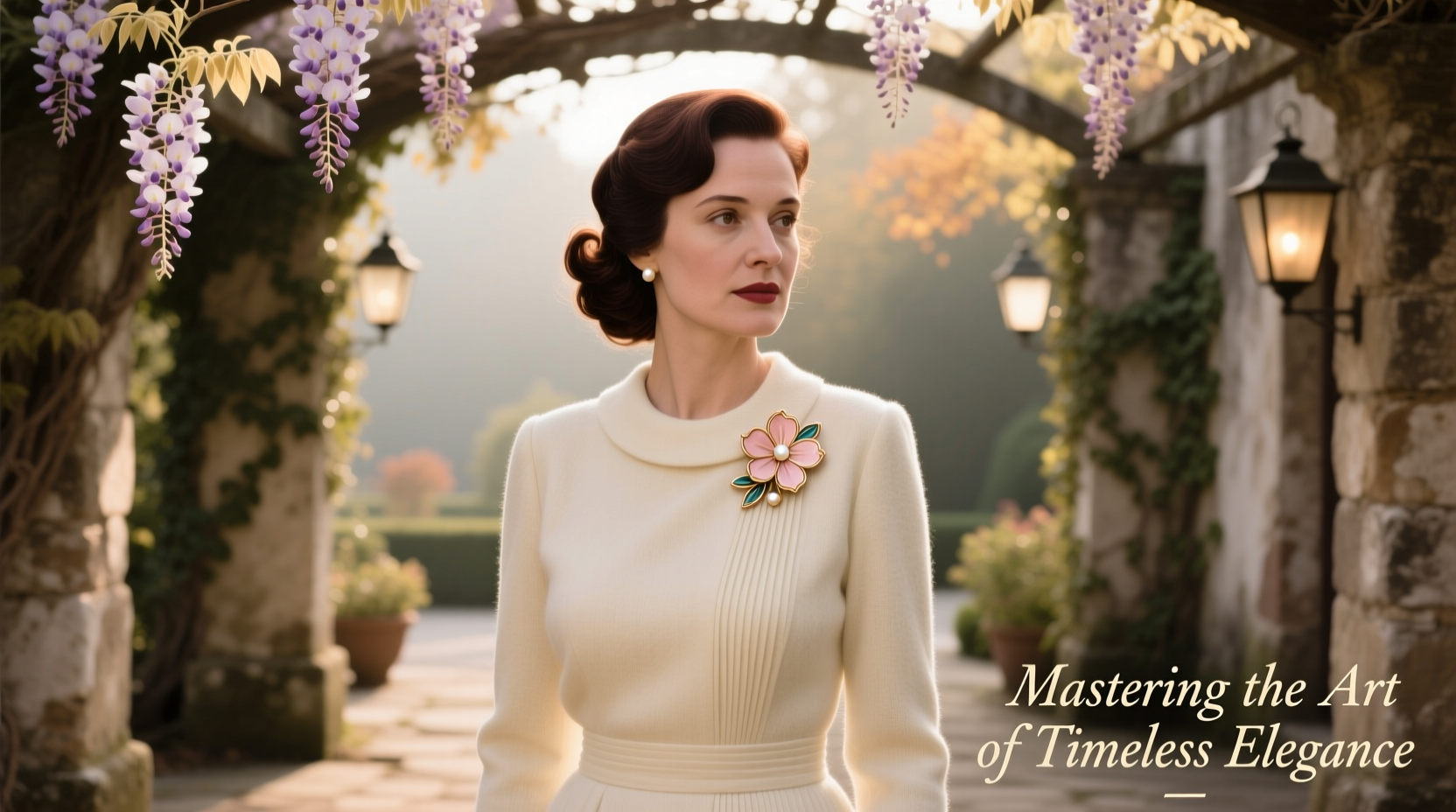
Flower brooches have adorned clothing for centuries, evolving in design and meaning across generations. In the Victorian era, flowers were used symbolically—roses for love, violets for modesty, daisies for innocence. This language of flowers, or *floriography*, extended to jewelry, where brooches served as coded messages. By the 1940s and 1950s, post-war optimism gave rise to bold, sculptural floral pins made from rhinestones, enamel, and gold-tone metals. Designers like Coro, Trifari, and Marcel Boucher elevated costume jewelry to high art, crafting pieces that rivaled fine jewelry in craftsmanship.
In the 1960s and 70s, flower brooches softened into bohemian forms, often handmade or featuring natural materials like wood and resin. Today, vintage brooches are collected, repurposed, and reimagined—not only as lapel accents but as statements of identity. Understanding this lineage allows modern wearers to engage with the piece beyond aesthetics, connecting their style to broader cultural narratives.
“Every brooch tells a story—of who wore it, when, and why. When you wear vintage, you’re not copying the past; you’re continuing a conversation.” — Clara Montgomery, Vintage Jewelry Historian
Choosing the Right Flower Brooch for a Timeless Look
Not all flower brooches evoke vintage charm equally. The key is selecting one whose design, material, and scale align with the era you wish to reference and the wardrobe you intend to enhance.
| Era | Design Characteristics | Recommended Materials | Best For |
|---|---|---|---|
| Victorian (1837–1901) | Naturalistic blooms, engraved details, dark patinas | Garnet, jet, gold fill | Cocktail dresses, velvet jackets |
| Art Deco (1920s–1930s) | Geometric petals, symmetrical forms, bold lines | Platinum-tone metal, onyx, crystal | Evening gowns, tailored coats |
| Mid-Century (1940s–1950s) | Full-bloom roses, layered petals, rhinestone centers | Rhodium-plated metal, aurora borealis stones | Suit lapels, pillbox hats, collars |
| 1970s Retro | Organic shapes, handcrafted textures, asymmetry | Resin, painted metal, ceramic | Blouses, denim jackets, knitwear |
Styling Techniques for a Cohesive Vintage Aesthetic
A flower brooch should harmonize with your outfit, not compete with it. The placement, pairing, and proportion matter deeply when constructing a timeless look.
Classic Placement Options
- Lapel or Collar: Ideal for structured jackets and blazers. Centered over the left breast, it echoes mid-century sophistication.
- Neckline Accent: Pin a small blossom at the base of a V-neck dress or blouse to draw attention upward.
- Hat or Hair Clip: Attach a petite rose or orchid to a beret or headband for a 1950s-inspired coiffure.
- Belt or Bag Closure: Use a brooch to fasten a fabric belt or embellish a vintage handbag flap.
- Reverse Layering: Place the brooch on the inside of a coat so only a hint of color peeks through, adding mystery.
Color and Texture Coordination
Match the brooch’s palette to one accent hue in your outfit rather than trying to match every tone. A ruby-red rhinestone camellia pairs beautifully with cherry lipstick and black wool, while a creamy pearl gardenia complements ivory silk or lace.
Consider texture contrast: a glossy enamel daisy stands out against tweed, while a matte-finish chrysanthemum softens satin. Avoid overcrowding—let the brooch breathe as the focal point.
Step-by-Step Guide: Building a Vintage-Outfit Around a Flower Brooch
Follow this sequence to create a polished, historically grounded ensemble anchored by your brooch:
- Select the brooch first. Choose one that resonates with your personal style and has clear vintage character.
- Determine the era inspiration. Is it 1940s utility chic or 1950s New Look glamour? Let the brooch guide the theme.
- Pick a neutral base garment. A pencil skirt, sheath dress, or tailored jacket provides a clean canvas.
- Add period-appropriate layers. Think gloves, a cropped cardigan, or a silk scarf tied under the chin.
- Finalize with complementary accessories. Pearl earrings, cat-eye sunglasses, or vintage heels complete the narrative.
- Pin the brooch deliberately. Test positions in the mirror before securing. Ensure it sits level and catches light.
“Style isn’t about wearing old clothes—it’s about wearing them with new confidence. A brooch is the punctuation mark in that sentence.” — Julian Reed, Fashion Curator
Maintaining and Preserving Your Vintage Brooch
Vintage pieces require gentle care to retain their luster and structural integrity. Improper handling can damage plating, loosen stones, or corrode clasps.
Never soak vintage brooches in liquid cleaners. Instead, use a dry microfiber cloth to remove dust. For stubborn grime, lightly dampen the cloth with distilled water and gently wipe metal surfaces—avoiding glued elements. Check the safety chain or clasp monthly for signs of weakness.
Real-Life Example: Transforming a Modern Wardrobe
Sophie, a 32-year-old graphic designer, owned a classic navy trench coat but felt it looked too contemporary for her preference for retro style. She acquired a 1950s gold-tone brooch shaped like a blooming tulip with amber-colored stones. By pinning it just above the left pocket, she instantly shifted the coat’s energy. She paired it with red kitten heels, a polka-dot scarf, and winged eyeliner. Colleagues began commenting on her “effortlessly classic” look. The brooch didn’t just decorate—it defined her aesthetic.
Frequently Asked Questions
Can I wear a flower brooch with casual clothing?
Absolutely. A small enamel daisy brooch on a white button-down or denim jacket adds subtle vintage flair without appearing costumed. The key is balance—keep other accessories minimal.
Are vintage brooches expensive?
Prices vary widely. Authentic pieces from renowned makers like Trifari or Miriam Haskell can range from $50 to several hundred dollars. However, well-crafted reproductions or lesser-known brands offer affordable entry points under $30.
How do I know if a brooch is truly vintage?
Look for hallmarks such as “Coro,” “Duette,” or “Made in France.” Older pieces often have C-clasps or roll-lock mechanisms, whereas modern ones use butterfly clasps. Patina, slight discoloration, and hand-set stones also indicate age.
Final Thoughts: Making the Past Present
Mastering the timeless vintage look with a flower brooch is not about mimicry—it’s about curation. It’s choosing a piece that speaks to you, understanding its roots, and integrating it into your life with purpose. Whether inherited, thrifted, or carefully sourced, each brooch carries the potential to become a signature element of your personal style.
In a world of fast fashion, the flower brooch stands as a quiet rebellion: small, enduring, and deeply meaningful. It invites slowness, attention, and intentionality. Start with one piece. Learn its story. Wear it proudly. Let it bloom where it’s planted.




 浙公网安备
33010002000092号
浙公网安备
33010002000092号 浙B2-20120091-4
Comments
No comments yet. Why don't you start the discussion?