
Customizing action figures has evolved from a niche hobby into a respected form of artistic expression. Among the most iconic subjects is Iron Man—Tony Stark’s armored alter ego, whose sleek design and technological complexity make it a favorite canvas for customization. Whether you're modifying a mass-produced toy or enhancing a premium collectible, personalizing your Iron Man figure allows you to create something truly one-of-a-kind. This guide walks through the essential techniques, tools, and creative decisions that transform a standard figure into a standout piece in your collection.
Why Customize Your Iron Man Figure?
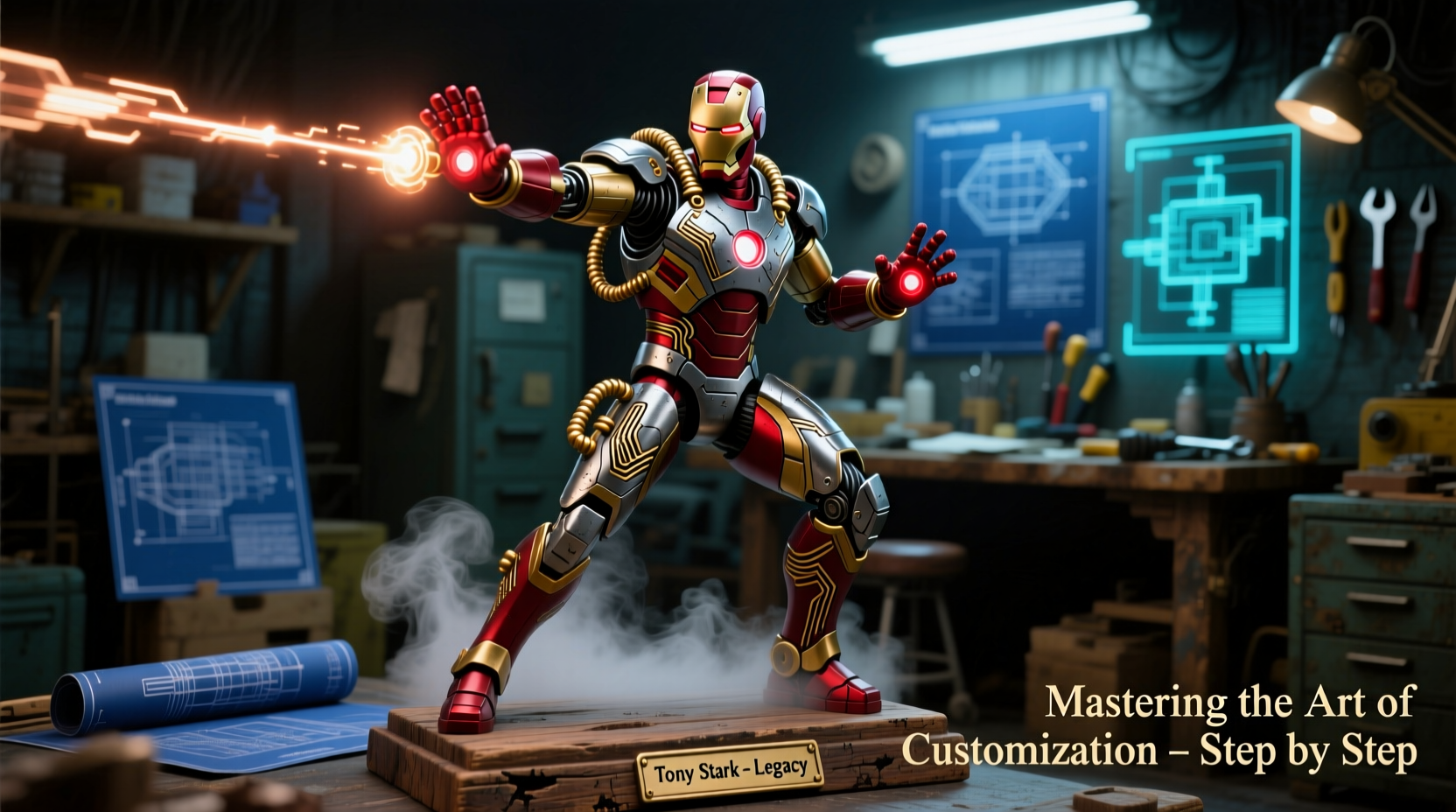
Mass-market Iron Man figures, while detailed, often follow familiar molds and color schemes. Customization breaks those boundaries. It enables fans to explore alternate versions—what if Tony used a stealth suit? What would a weathered War Machine look like after battle? Or how might an arc reactor glow differently in a darkened lab?
Beyond creativity, customization deepens engagement with the character. The process teaches precision, patience, and problem-solving. It also fosters community. Customizers share techniques online, participate in challenges, and inspire others through forums and social media platforms like Instagram and Reddit’s r/actionfigures.
Essential Tools and Materials
Successful customization depends on having the right tools. While some modifications require only paint and glue, advanced projects may involve sculpting, electronics, or 3D printing. Here’s a breakdown of what you’ll need:
| Tool/Material | Purpose | Recommended Brands |
|---|---|---|
| Acrylic & enamel paints | Base coating and detailing | Tamiya, Citadel, Vallejo |
| Paintbrushes (fine tip) | Precision work on small areas | Da Vinci, Winsor & Newton |
| X-Acto knife | Cutting, trimming, modding parts | Olfa, Revell |
| Super glue & epoxy putty | Attaching new parts or sculpting armor | Loctite, Milliput, Green Stuff |
| Sandpaper (various grits) | Smoothing seams and joints | 3M, Norton |
| Heat gun or hair dryer | Gently reshaping plastic | Generic heat guns (low setting) |
| LED micro-lights | Illuminating arc reactor or eyes | Luminoodle, Kuman LED kits |
Investing in quality tools pays off. A single well-maintained brush can last years, and proper ventilation—such as using a spray booth or working near an open window—keeps your workspace safe when using solvents or primers.
Step-by-Step Customization Process
Follow this structured approach to ensure your project progresses smoothly and professionally.
- Choose Your Base Figure: Select a figure with articulation and sculpt detail close to your vision. Hasbro’s Marvel Legends line offers excellent starting points due to their durability and availability.
- Dismantle Carefully: Remove arms, head, and any removable armor pieces. Label parts in separate containers to avoid confusion during reassembly.
- Clean and Prime: Wash the figure with mild soap and water to remove mold release agents. Once dry, apply a plastic primer (like Mr. Surfacer) to help paint adhere evenly.
- Sculpt or Modify Armor: Use epoxy putty to extend shoulder pads, reshape the chest piece, or add battle damage. Let cure fully before sanding smooth.
- Paint Layer by Layer: Begin with base colors using airbrush or fine brushes. Add shading with washes and highlight raised areas with dry brushing. Seal with matte or gloss varnish depending on finish preference.
- Add Lighting (Optional): Insert micro-LEDs behind the arc reactor or eyes. Use thin wiring routed through internal cavities. A tiny battery pack can be hidden in the back armor or base.
- Reassemble and Test Articulation: Ensure joints move freely after modification. Lubricate with artist’s wax if needed.
Real Example: The \"Mark VII Stealth Variant\"
One enthusiast, Daniel Reyes from Austin, Texas, transformed a standard red-and-gold Mark VII into a matte-black tactical version inspired by military stealth tech. He used black primer, applied textured gray paint for a carbon-fiber effect, and added silver circuit-like patterns with a 0.2mm brush. Inside the arc reactor, he embedded a blue LED powered by a coin-cell battery taped discreetly to the backplate.
The result was displayed at a local comic con and received praise for its realism and craftsmanship. “I wanted it to look like something Tony would actually build for a covert op,” Daniel said. “The lighting makes it feel alive.” His project took 18 hours over three weekends but became the centerpiece of his display case.
“Customization isn’t about erasing the original—it’s about honoring the character by imagining new possibilities.” — Marcus Lin, Professional Toy Designer and Figure Artist
Common Pitfalls and How to Avoid Them
Even experienced customizers make mistakes. Awareness helps prevent irreversible errors.
- Over-sculpting: Adding too much putty can obscure the figure’s identity. Keep proportions balanced.
- Ignoring articulation: Bulky modifications may restrict movement. Test joint flexibility throughout the process.
- Using incompatible materials: Some plastics react poorly with certain glues or solvents. Always test adhesives on a small area first.
- Skipping sealing: Unsealed paint chips easily. Apply at least two coats of clear sealant, especially on high-friction zones like elbows and knees.
Do’s and Don’ts Summary
| Do | Don't |
|---|---|
| Work in a dust-free environment | Rush drying times between layers |
| Use reference images from films or comics | Glue parts together before testing fit |
| Keep a progress journal or photos | Apply thick paint on joint areas |
| Invest in magnification (e.g., head-mounted lens) | Modify a rare figure as your first project |
Frequently Asked Questions
Can I customize a non-removable helmet or faceplate?
Yes, but carefully. If the head isn’t removable, use a fine brush to paint around the edges. For dramatic changes, consider gently cutting along seam lines with an X-Acto knife. Reattach with super glue once painted.
How do I make the arc reactor glow realistically?
Use warm white or blue LEDs placed behind a translucent piece. Diffuse the light with tissue paper or frosted tape to avoid hotspots. Battery-powered micro lights are available in sizes small enough to fit inside most figures.
Is it possible to repaint without removing factory paint?
Technically yes, but not recommended. Factory paint can peel or react poorly under new layers. Sanding lightly or using a deglosser ensures better adhesion and longevity.
Final Checklist Before Display
- All parts securely attached and articulated smoothly
- Paint fully cured (wait 24–48 hours after final coat)
- Sealant applied evenly, no sticky spots
- Lighting functions (if included) and battery accessible
- No visible glue residue or tool marks
- Figure stands upright or poses naturally
Bring Your Vision to Life
Customizing an Iron Man action figure is more than a craft—it’s storytelling in three dimensions. Each decision, from color scheme to structural modification, reflects your interpretation of the character. Whether you aim for cinematic accuracy, futuristic redesigns, or post-apocalyptic wear, the process sharpens both technical skill and creative vision.
Start small. Master painting before attempting internal lighting. Learn from setbacks—one chipped paint job won’t define your journey. Share your progress online; feedback accelerates growth. And remember, every expert began with a single brushstroke.




 浙公网安备
33010002000092号
浙公网安备
33010002000092号 浙B2-20120091-4
Comments
No comments yet. Why don't you start the discussion?