
In an era where anyone can publish content online, the ability to distinguish credible information from misinformation is not just useful—it’s essential. A simple Google search may deliver thousands of results, but most lack depth, accuracy, or authority. To make informed decisions—whether for research, health, business, or personal growth—you need more than keywords and top-ranking pages. You need a deliberate, strategic approach to information discovery.
The skill of finding reliable information goes beyond typing a query into a search engine. It involves source evaluation, leveraging specialized databases, understanding bias, and applying critical thinking at every step. This guide outlines practical, proven methods to elevate your research game and consistently access trustworthy knowledge.
Why Simple Searches Fall Short
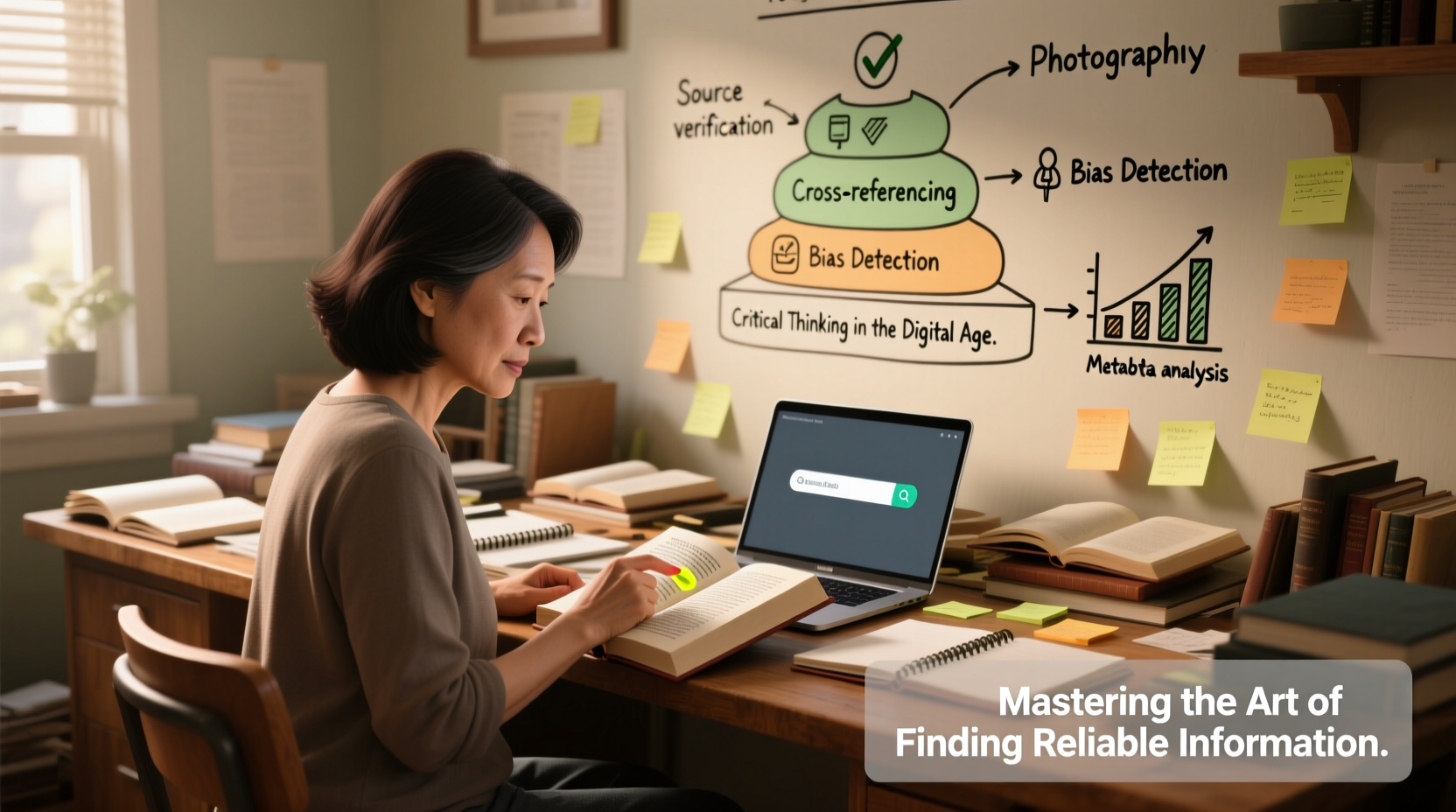
Search engines prioritize relevance and popularity, not accuracy. Algorithms favor content that generates clicks, often promoting sensational headlines over factual reporting. As a result, unreliable blogs, outdated articles, and even intentionally misleading content frequently appear at the top of search results.
Moreover, personalized search results mean two people searching the same term may see vastly different outcomes based on browsing history, location, and device. This filter bubble effect limits exposure to diverse perspectives and reinforces existing beliefs, whether accurate or not.
To bypass these limitations, you must adopt intentional research habits that emphasize verification, context, and credibility.
Evaluating Source Credibility: The SIFT Method
A powerful framework for assessing information is the SIFT method, developed by digital literacy expert Mike Caulfield:
- Stop: Pause before sharing or acting on information. Ask if you already know the source or topic well enough to trust it.
- Investigate the Source: Look up the author, organization, or publisher. Are they experts? What’s their reputation? Use independent sources like Wikipedia (for background) or media bias databases to learn more.
- Find Better Coverage: Search for other reports on the same claim. Reputable outlets will cover major events or findings. If no other credible source mentions it, be skeptical.
- Trace Claims to the Original Context: Follow links back to primary sources. Misinformation often stems from quotes taken out of context or misrepresented data.
Leveraging Academic and Institutional Resources
One of the most effective ways to access high-quality information is through academic and institutional databases. These platforms host peer-reviewed research, government reports, and expert analyses that undergo rigorous scrutiny.
Popular tools include:
- Google Scholar – Indexes scholarly articles, theses, books, and conference papers across disciplines.
- PubMed – Authoritative source for biomedical and life sciences literature.
- JSTOR – Provides access to academic journals, books, and primary sources in the humanities and social sciences.
- Government websites (.gov) – Offer policy documents, statistics, and regulatory information (e.g., CDC, FDA, U.S. Census).
- Library databases – Public and university libraries often provide free access to subscription-based services like ProQuest or EBSCOhost.
“Peer review is not perfect, but it remains one of the best filters we have for ensuring scientific rigor and accountability.” — Dr. Rebecca Lin, Information Scientist at MIT
Access to many of these resources is free or available through public libraries. For example, a library card from cities like New York or Chicago grants digital entry to dozens of academic databases—no university affiliation required.
Step-by-Step Guide to Deep Research
Follow this structured process to conduct thorough, reliable research:
- Define Your Question Clearly
Be specific. Instead of “Is coffee good for you?” ask “What are the long-term cardiovascular effects of daily coffee consumption in adults over 40?” - Start with a Trusted Overview
Use reputable encyclopedias (e.g., Britannica, StatPearls) or educational institutions (e.g., Mayo Clinic, Harvard Health) to gain foundational knowledge. - Search Academic Databases
Enter your refined question into Google Scholar or PubMed. Use filters for publication date, study type, and relevance. - Analyze Study Quality
Check sample size, methodology, funding sources, and whether conclusions are supported by data. Be cautious of studies funded by interested parties (e.g., a soda company funding research on sugar). - Cross-Reference Multiple Sources
Look for consensus across several independent studies. One outlier does not overturn established science. - Synthesize and Apply Findings
Summarize key takeaways, noting strengths and limitations. Avoid overgeneralizing results.
Do’s and Don’ts of Online Research
| Do’s | Don’ts |
|---|---|
| Verify claims using multiple reputable sources | Rely solely on a single blog or viral post |
| Check the author’s credentials and affiliations | Assume a professional-looking site is trustworthy |
| Use advanced search operators (e.g., site:.gov, filetype:pdf) | Accept statistics without checking the original study |
| Bookmark trusted sources for future reference | Share unverified information, even as a “question” |
| Stay updated via newsletters from expert institutions | Let emotional reactions override fact-checking |
Real Example: Investigating a Viral Health Claim
A few years ago, a widely shared social media post claimed that “apple cider vinegar cures diabetes.” A quick Google search returned numerous blogs supporting this idea, complete with anecdotal testimonials.
Using the SIFT method:
- Stop: The claim seemed too good to be true.
- Investigate: Most supporting sites were affiliate-driven blogs selling vinegar products.
- Find Better Coverage: Major medical institutions like the American Diabetes Association made no such claim.
- Trace: The few cited studies were small, animal-based, or inconclusive.
The conclusion? While apple cider vinegar may slightly improve insulin sensitivity in some individuals, there is no evidence it “cures” diabetes. Relying on the initial search results could have led to dangerous self-treatment decisions.
Frequently Asked Questions
How can I tell if a website is trustworthy?
Look for transparency: clear authorship, citations, contact information, and an about page explaining the mission. Sites ending in .edu, .gov, or .org (from reputable organizations) are generally more reliable than .com blogs with no editorial oversight.
Are all peer-reviewed articles accurate?
No system is flawless. Peer review improves quality but doesn’t guarantee truth. Some flawed or fraudulent studies slip through. Always consider the broader body of evidence rather than relying on a single paper.
Can I trust Wikipedia?
Wikipedia should not be cited as a final source, but it’s excellent for background research. Check the references at the bottom of any article—these often link directly to primary sources and academic papers.
Action Checklist for Smarter Research
- Pause before accepting or sharing new information
- Identify the original source of claims
- Search for coverage from independent, credible outlets
- Use Google Scholar or library databases for in-depth research
- Cross-check facts across at least three reliable sources
- Assess author expertise and potential conflicts of interest
- Subscribe to newsletters from trusted institutions
Conclusion: Become an Information Detective
Finding reliable information isn’t about memorizing facts—it’s about mastering the process of inquiry. In a world overflowing with noise, the ability to cut through misinformation and locate truth is a superpower. By moving beyond surface-level searches and adopting disciplined research habits, you protect yourself from manipulation and make better decisions in every area of life.




 浙公网安备
33010002000092号
浙公网安备
33010002000092号 浙B2-20120091-4
Comments
No comments yet. Why don't you start the discussion?