
Toile de Jouy fabric—known for its intricate pastoral scenes and timeless French elegance—is no longer confined to wallpaper or upholstery. Today, it adorns functional household items like laundry baskets, blending vintage charm with everyday utility. However, these baskets often feature rigid frames and delicate fabric that make folding them for storage a challenge. When not handled correctly, creases can damage the print, and improper collapse can strain the frame. Learning how to fold your toile de Jouy laundry basket properly ensures longevity, preserves aesthetic quality, and maximizes space efficiency—especially in smaller homes or seasonal rotations.
The Anatomy of a Toile de Jouy Laundry Basket
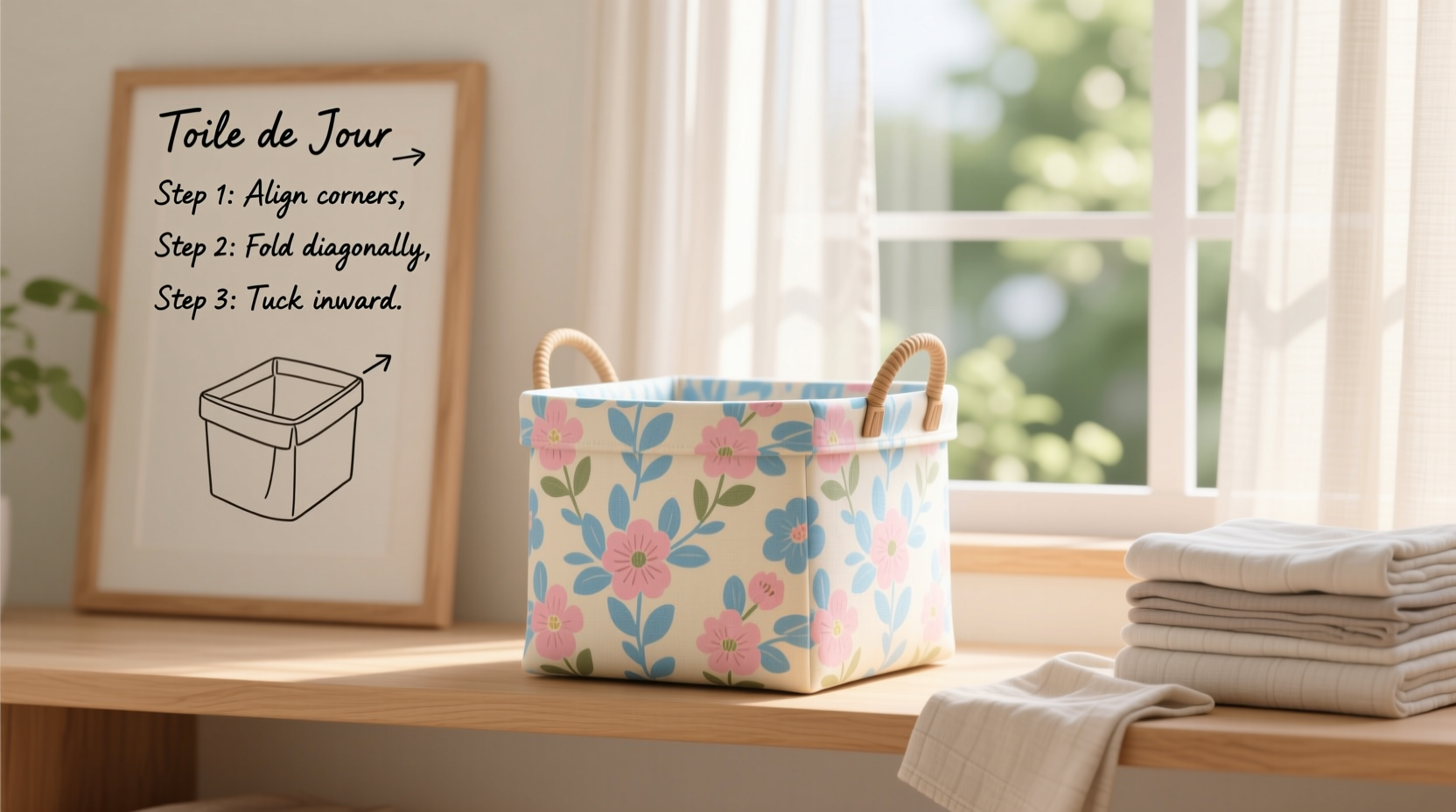
Before attempting to fold any laundry basket, understanding its construction is essential. Most toile de Jouy laundry baskets are semi-rigid or collapsible models designed for durability and visual appeal. They typically consist of three main components:
- Fabric Shell: Made from cotton-linen blends or coated canvas, often printed with the signature monochrome toile pattern on a neutral background.
- Internal Frame: Usually constructed from flexible steel or plastic wires sewn into perimeter channels, allowing the basket to hold shape while permitting controlled folding.
- Base Plate: A firm bottom, sometimes removable, made of cardboard, compressed fiberboard, or thin plastic to support weight and prevent sagging.
Because of this hybrid design, folding requires attention to both the structural integrity of the frame and the preservation of the decorative fabric. Rushing the process may lead to bent wires, torn seams, or permanent creasing across detailed print areas such as trees, figures, or architectural motifs.
Step-by-Step Guide to Folding Your Basket
Folding a toile de Jouy laundry basket isn’t just about pushing the sides inward—it’s a deliberate sequence that aligns the frame, protects the fabric, and prepares the item for safe storage. Follow this timeline to ensure precision:
- Empty Completely: Remove all clothing, linens, or debris. Residual weight can distort the frame during folding.
- Loosen Fabric Tension: Gently pull the fabric away from the internal wires around the top rim to release built-up tension.
- Compress Opposite Sides: Place your hands on two opposing sides of the basket and slowly press them toward each other. The frame should begin to deform into an oval.
- Rotate and Repeat: Once the first pair of sides meet, rotate the basket 90 degrees and compress the new opposing sides. This transforms the shape into a flattened figure-eight.
- Layer the Base: If the base is removable, slide it out carefully. If fixed, lay the collapsed basket flat with the base facing down to avoid pressure on raised elements.
- Wrap for Protection: Use tissue paper or a soft cotton cloth to wrap the folded unit, especially if storing long-term. This prevents abrasion and minimizes exposure to dust.
This method works best for baskets labeled “collapsible” or “space-saving.” Non-collapsible versions should never be forced; instead, consider disassembly options if available.
Do’s and Don’ts: Maintaining Fabric and Frame Integrity
| Do’s | Don’ts |
|---|---|
| Store in a cool, dry place away from sunlight to prevent fading | Stack heavy objects on top of the folded basket |
| Clean fabric gently with a damp cloth before storage | Use chemical cleaners that may degrade the print |
| Support the frame evenly when collapsing to avoid kinking | Leave the basket compressed for over six months without airing out |
| Place in breathable cotton storage bags, not plastic | Fold while damp—moisture can lead to mildew under fabric layers |
Adhering to these guidelines extends the life of both the textile and structural elements. The delicate nature of toile printing means even minor scuffing or prolonged folding along the same line can disrupt the continuity of the scene, diminishing its visual impact.
“Proper folding techniques preserve not only function but also heritage value. Toile de Jouy tells a story—don’t let creases interrupt the narrative.” — Claire Moreau, Textile Conservation Specialist, Musée des Arts Décoratifs, Paris
A Real-Life Example: Seasonal Storage in a City Apartment
Sophie, a lifestyle designer living in a 550-square-foot Parisian studio, uses four decorative laundry baskets seasonally—linen for summer, wool-lined for winter, and two toile de Jouy models for spring and fall rotation. Each changeover requires compact storage without compromising aesthetics.
Twice a year, she follows a strict folding protocol: after laundering her spring basket (used for delicates), she allows it to air-dry completely. She then folds it using the dual-compression technique, wraps it in unbleached muslin, and stores it inside a ventilated cedar chest alongside lavender sachets to deter moths. Six months later, the basket emerges intact, the pastoral scene undisturbed, ready to return to her bedroom bench.
Her success lies not in haste but in ritual. By treating the basket as both tool and textile artifact, she maintains its condition across years of use. Her approach exemplifies how mindful folding supports sustainable home organization.
Essential Checklist for Compact Storage Success
Before placing your folded toile de Jouy laundry basket into storage, run through this checklist to ensure optimal care:
- ✅ Empty all contents and shake out lint or fibers
- ✅ Wipe down fabric with a slightly damp microfiber cloth if needed
- ✅ Confirm the basket is fully dry—no residual moisture
- ✅ Test fold gently to ensure wires move smoothly without resistance
- ✅ Wrap in acid-free tissue or soft cotton fabric
- ✅ Store flat or upright in a breathable container, away from rodents or pests
- ✅ Label container with date and contents for easy retrieval
Frequently Asked Questions
Can I machine wash my toile de Jouy laundry basket?
No, machine washing is strongly discouraged. The agitation can warp the internal frame and cause the fabric to fray or bleed. Instead, spot-clean with a mild detergent and a soft cloth. For deep cleaning, consult the manufacturer’s care instructions—some models allow hand rinsing, but only if the base is waterproof and the frame is corrosion-resistant.
Why does my basket develop a permanent crease after folding?
Prolonged compression in the same direction causes fabric fatigue and wire deformation. To prevent this, alternate folding directions slightly every few cycles if possible, or store the basket in a relaxed open position periodically. Using padded dividers in storage can also help maintain shape.
Is it safe to store a folded toile de Jouy basket under a bed?
Only if the area is dry, clean, and free from excessive foot traffic. Avoid placing it where it might be stepped on or crushed by moving furniture. Use a fabric storage bin with ventilation holes to protect against dust while allowing airflow.
Conclusion: Elevate Your Home Organization with Intention
Folding a toile de Jouy laundry basket is more than a space-saving maneuver—it’s an act of preservation. These baskets bridge fashion, function, and artistry, deserving care that honors their craftsmanship. With the right technique, you protect delicate prints, extend usability, and maintain the elegance that makes toile de Jouy a beloved classic.
Whether you live in a countryside cottage or an urban loft, mastering this simple skill enhances both practicality and aesthetic continuity in your home. Take a moment today to assess your current storage methods. Are your baskets being treated as disposable containers—or as the heirloom-quality pieces they can become with thoughtful handling?




 浙公网安备
33010002000092号
浙公网安备
33010002000092号 浙B2-20120091-4
Comments
No comments yet. Why don't you start the discussion?