
In a world where living spaces are shrinking and wardrobes are overflowing, the Japanese method of folding clothes offers a transformative solution. Originating from traditional practices in Japan—where minimalism and order are deeply valued—this technique emphasizes vertical folding to store garments upright in drawers or bins. Unlike conventional stacking, which buries items beneath others, Japanese folding allows you to see every piece at a glance while saving significant space. Beyond practicality, it promotes mindfulness in daily routines and reduces wear on fabrics by minimizing creases and pressure.
This method has gained global recognition through organizing experts like Marie Kondo, but its roots go deeper than tidiness—it’s about respect for belongings and intentional living. Whether you're managing a compact apartment wardrobe or simply seeking more control over your closet chaos, mastering this folding style can bring lasting benefits.
The Principles Behind Japanese Folding
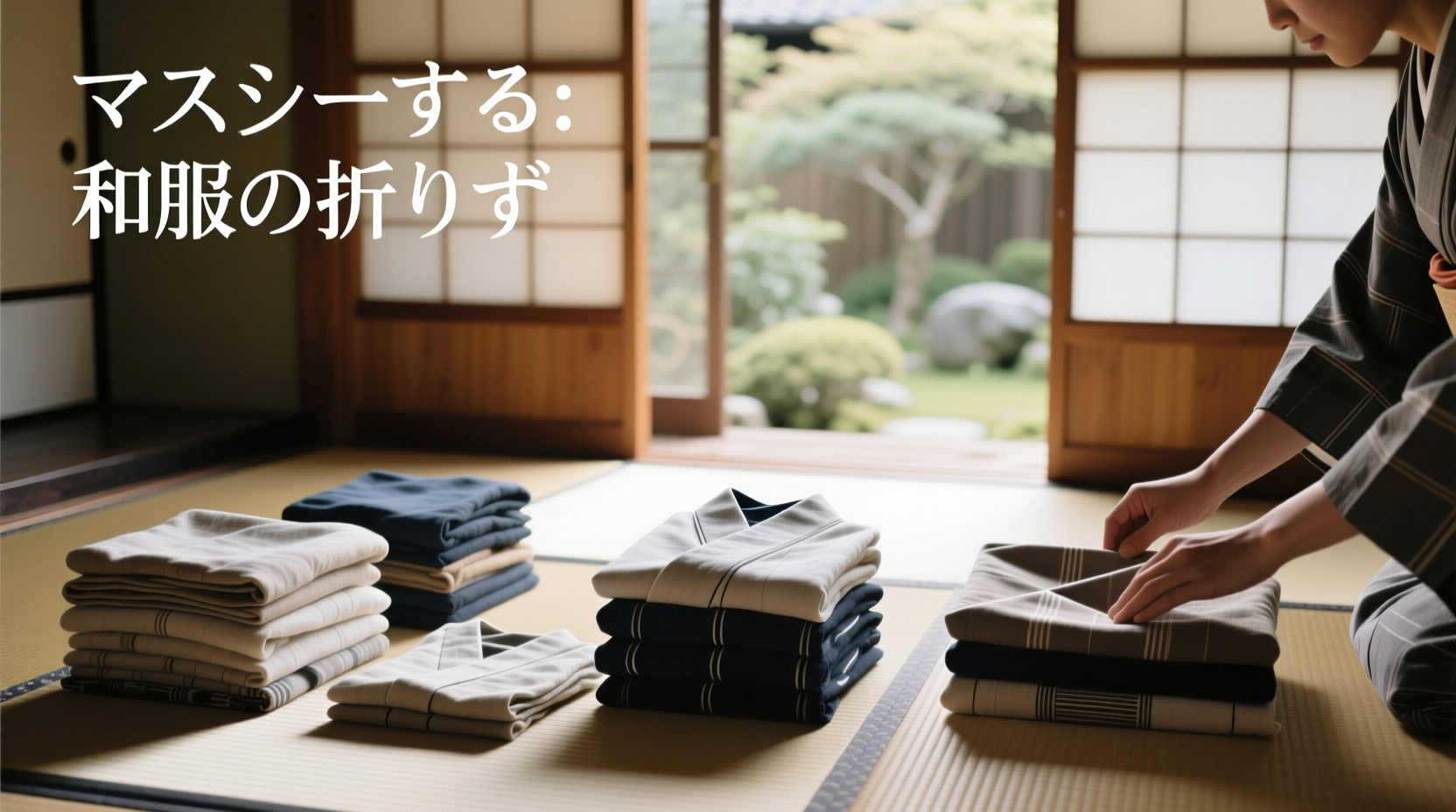
Japanese folding is not just about how clothes are folded—it's rooted in a philosophy of simplicity, accessibility, and preservation. The core principles include:
- Vertical Storage: Garments stand upright like files in a drawer, making each item visible without disturbing others.
- Uniformity: Consistent folding creates clean lines and maximizes space efficiency.
- Respect for Materials: Gentle folds reduce stress on fibers, helping clothes last longer.
- Mindful Selection: Only keep what you love and use; folding becomes part of a larger decluttering process.
This system works best when combined with a commitment to curating your wardrobe. Before folding, take time to assess each garment: Does it fit? Is it worn regularly? Does it bring satisfaction? Removing excess makes room for proper organization.
Step-by-Step Guide to Folding Different Garment Types
The key to successful Japanese folding lies in precision and repetition. Follow these detailed steps for common clothing items:
T-Shirts and Casual Tops
- Lay the shirt flat on a smooth surface, face-up.
- Fold one side toward the center so the sleeve extends slightly past the middle (about one-third).
- Repeat with the other side, overlapping slightly to create a straight edge.
- Fold the bottom up by 1–2 inches to form a stable base.
- Fold the top down over the previous fold, enclosing the collar neatly.
- Stand the folded piece upright in a drawer with similar items grouped together.
Dress Shirts
To preserve crispness and minimize creasing:
- Lay the shirt face-down with sleeves extended.
- Fold one side inward along the shoulder line, tucking the sleeve parallel to the body.
- Repeat on the other side.
- Fold the bottom third upward.
- Fold the top third down over it, aligning edges precisely.
- Store vertically in a shallow drawer or box compartment.
Pants (Jeans, Chinos, Trousers)
- Lay pants flat, legs aligned.
- Fold in half lengthwise if needed for symmetry.
- Fold one leg up two-thirds of the way.
- Fold the second leg over it, creating a compact rectangle.
- For shorter storage height, fold the waistband down once more.
- Place upright in a drawer with all pants facing the same direction.
Underwear and Socks
Small items benefit greatly from uniform folding:
- Socks: Match pairs, lay flat, fold cuffs over toes, then roll from heel to cuff.
- Underwear: Fold sides toward center, then fold bottom up twice for a small square.
Do’s and Don’ts of Japanese Folding
| Do’s | Don’ts |
|---|---|
| Fold garments immediately after drying | Leave clothes crumpled in baskets |
| Use consistent dimensions for uniform stacking | Vary fold sizes, causing instability |
| Store folded items in shallow drawers or boxes | Pile too many layers deep, leading to toppling |
| Group similar items (e.g., workout tees, formal shirts) | Mix heavy and delicate fabrics in the same stack |
| Rotate seasonal clothing during changes | Forget to reassess unused items periodically |
Real-Life Application: A Case Study
Sarah, a graphic designer living in Tokyo, struggled with limited closet space in her 350-square-foot apartment. Her dresser drawers were cluttered, and she often wasted time searching for specific tops. After attending a local workshop on Japanese home organization, she implemented vertical folding across her wardrobe.
She began by removing unworn items—donating nearly 40% of her clothes. Then, using labeled fabric bins inside her drawers, she folded all remaining t-shirts, blouses, and pants using the Japanese method. Within a week, she noticed immediate improvements: getting dressed took less time, her clothes stayed wrinkle-free, and she felt more in control of her environment.
“It’s not just about neatness,” Sarah said. “Seeing everything clearly made me appreciate what I own. I stopped buying duplicates because I could actually see what I had.”
“We fold not just to save space, but to honor the objects we choose to live with.” — Fumiko Kawakami, Organizational Consultant, Kyoto Household Efficiency Institute
Essential Checklist for Success
To implement Japanese folding effectively, follow this actionable checklist:
- ✅ Sort clothing by category and frequency of use
- ✅ Remove damaged, ill-fitting, or rarely worn items
- ✅ Choose shallow drawers or modular storage containers
- ✅ Practice folding techniques on one category at a time
- ✅ Label sections or use color-coded bins for clarity
- ✅ Maintain the system weekly with quick reorganization
- ✅ Reassess every season to prevent accumulation
Frequently Asked Questions
Can I use this method for bulky sweaters?
Yes, but with caution. Heavy knits may stretch if stored folded long-term. For wool or cashmere, consider folding with acid-free tissue paper between layers and storing in breathable cotton bags. Rotate them seasonally rather than keeping them stacked year-round.
What if I don’t have drawers? Can I still apply this method?
Absolutely. Use open-top fabric bins, plastic organizers, or even sturdy cardboard boxes placed on shelves. The goal is vertical visibility—containers should be low enough to allow upright storage without tipping. Stackable cube organizers work especially well in closets or under beds.
Does this method really save space?
Studies show that Japanese folding can increase drawer capacity by up to 60% compared to traditional stacking. Because items stand independently, there’s no compression, allowing tighter packing without damage. Users commonly report needing fewer storage units after adopting the technique.
Transform Your Space, One Fold at a Time
Mastering the art of Japanese-style folding goes beyond aesthetics—it reshapes how you interact with your belongings. It encourages intentionality, reduces decision fatigue, and turns routine tasks into moments of calm. The initial effort pays dividends in daily convenience and long-term wardrobe care.
Start small: pick one drawer, choose one clothing type, and practice the fold until it feels natural. Once you experience the clarity of seeing every garment at a glance, you’ll wonder why you didn’t adopt this method sooner.




 浙公网安备
33010002000092号
浙公网安备
33010002000092号 浙B2-20120091-4
Comments
No comments yet. Why don't you start the discussion?