
Communication is more than just speaking—it’s about being heard, understood, and remembered. Whether you're delivering a presentation, networking at an event, or having a difficult conversation, the ability to talk well can open doors, build trust, and strengthen relationships. Yet many people struggle with confidence, clarity, or coherence when speaking. The good news? Effective communication isn’t an innate talent. It’s a skill that can be learned, refined, and mastered with deliberate practice.
The Foundation: Clarity Over Complexity
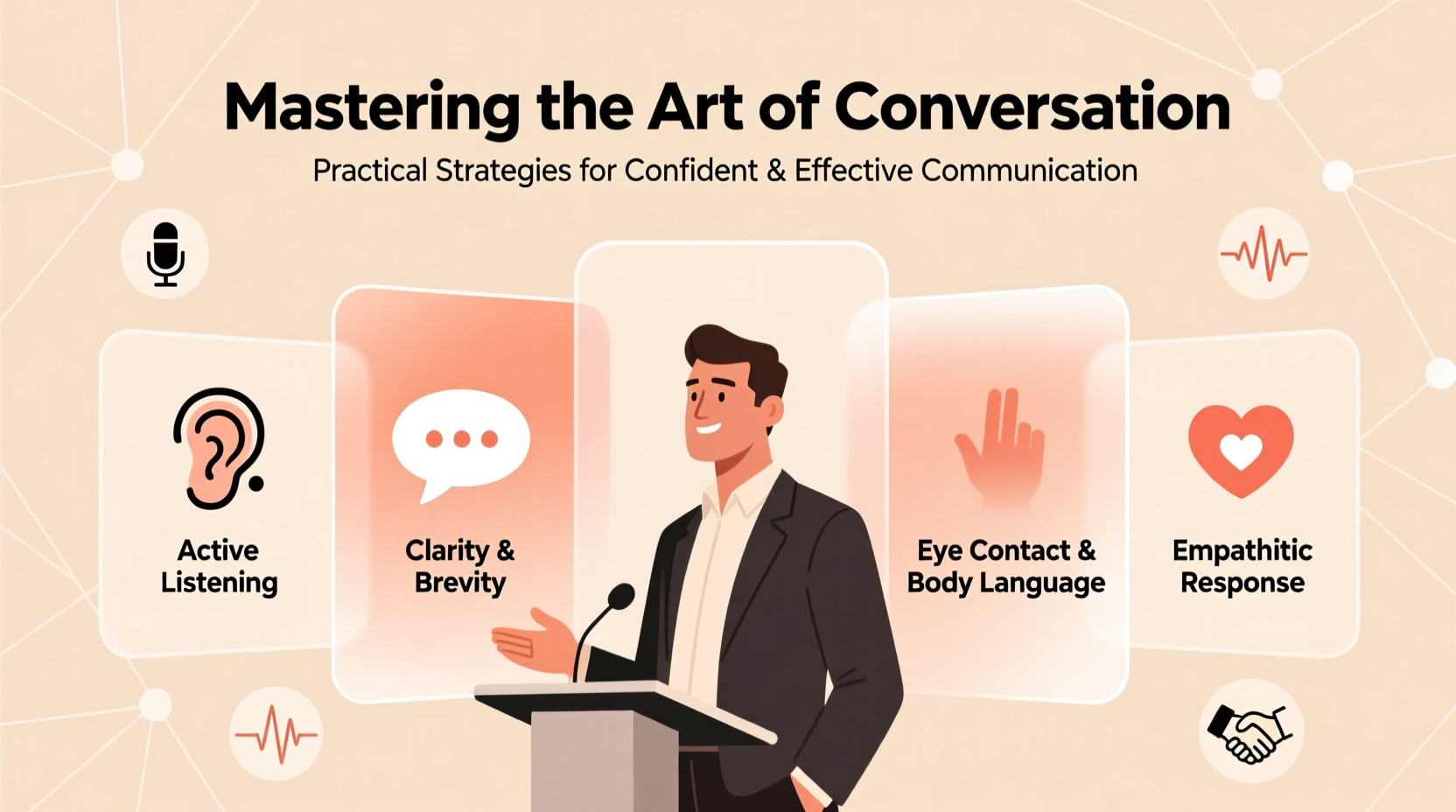
One of the most common mistakes in communication is assuming that sounding smart means using complex language. In reality, the most impactful speakers are those who convey ideas clearly and concisely. Your goal isn’t to impress with vocabulary but to ensure your message lands.
To improve clarity:
- Know your core message before speaking.
- Use simple, direct language.
- Structure your thoughts: start with the main point, then support it.
- Avoid filler words like “um,” “like,” and “you know.”
Active Listening: The Silent Skill That Elevates Speech
Talking well doesn’t begin with your voice—it begins with your ears. Active listening is the foundation of meaningful dialogue. When you truly listen, you respond appropriately, build rapport, and avoid misunderstandings.
Active listening involves:
- Maintaining eye contact.
- Nodding and using small verbal cues (“I see,” “Right”).
- Paraphrasing what the other person said (“So you’re saying…”).
- Asking follow-up questions that show engagement.
People remember how you made them feel during a conversation far more than the exact words you used. When you listen with intent, you create space for deeper connection—and better responses.
“Most people do not listen with the intent to understand; they listen with the intent to reply.” — Stephen R. Covey, author of *The 7 Habits of Highly Effective People*
Confidence Through Preparation and Practice
Nervousness is natural, especially in high-stakes conversations. But confidence isn’t the absence of fear—it’s the mastery of behavior despite it. The best communicators prepare thoroughly and rehearse consistently.
Follow this three-step preparation process:
- Define your purpose: Why are you speaking? What do you want the listener to think, feel, or do?
- Outline your key points: Use a simple structure—introduction, body, conclusion.
- Rehearse out loud: Practice in front of a mirror, record audio, or speak to a trusted friend.
For impromptu situations, adopt the PREP method:
- Point: State your main idea.
- Reason: Explain why.
- Example: Share a relevant story or data.
- Point: Restate your position.
Mini Case Study: From Nervous Intern to Confident Presenter
Jamal, a marketing intern, was asked to present campaign results in a team meeting. He froze during his first attempt, stumbling over words and avoiding eye contact. Instead of retreating, he recorded a 3-minute version of his talk, practiced it daily for a week, and asked a colleague for feedback. By the next presentation, he spoke with steady pace, clear structure, and appropriate gestures. His manager later commented that he “spoke like a seasoned pro.” Jamal didn’t change his knowledge—he changed his delivery through consistent rehearsal.
Body Language and Vocal Control
Your voice and posture communicate as much as your words. A shaky tone or slouched stance can undermine even the most brilliant message.
| Aspect | Do | Don't |
|---|---|---|
| Voice | Speak at a moderate pace, vary pitch, emphasize key words | Mumble, rush, monotone delivery |
| Posture | Stand tall, shoulders back, open gestures | Slouch, cross arms, fidget |
| Eyes | Make natural eye contact with individuals | Stare at notes or the floor |
| Hands | Use purposeful gestures to emphasize points | Clasp hands tightly or put them in pockets |
Adapting to Your Audience
Talking well also means knowing who you’re talking to. A technical explanation for engineers will differ from a summary for executives. Tailoring your message increases relevance and retention.
Ask yourself:
- What does this audience already know?
- What do they care about?
- What level of detail is appropriate?
- Should I be formal or conversational?
For example, when pitching a project to leadership, focus on outcomes and ROI. When explaining the same project to team members, highlight roles, timelines, and collaboration.
Checklist: Before Any Important Conversation
- ✅ Clarify your objective (What do I want to achieve?)
- ✅ Know your audience (What matters to them?)
- ✅ Structure your message (Point → Reason → Example → Point)
- ✅ Practice aloud at least twice
- ✅ Check your environment (Minimize distractions)
- ✅ Breathe deeply before starting
Frequently Asked Questions
How can I stop being nervous when speaking?
Nervousness decreases with exposure. Start small—speak up in low-pressure meetings, join a public speaking group like Toastmasters, or practice with friends. Focus on serving the audience, not on yourself. The more you shift attention outward, the less anxious you’ll feel.
What if I forget what I’m going to say?
Pause. Take a breath. It feels much longer to you than to listeners. Have a recovery phrase ready: “Let me rephrase that,” or “The key point here is…” Silence is acceptable—don’t rush to fill it with noise.
Can introverts become great communicators?
Absolutely. Introverts often excel because they listen more, think before speaking, and prepare thoroughly. Communication isn’t about being the loudest—it’s about being the most authentic and intentional. Many influential speakers are naturally reserved but highly effective.
Conclusion: Speak With Purpose, Confidence, and Impact
Mastering the art of how to talk well isn’t about perfection—it’s about progress. Every conversation is an opportunity to refine your clarity, deepen your presence, and connect more meaningfully. The strategies outlined here—clarity, active listening, preparation, vocal control, and audience awareness—are tools you can apply immediately, whether in a boardroom, on a date, or during a tough family discussion.
Great communication doesn’t require charisma. It requires courage, consistency, and care. Start today: choose one tip from this article and practice it in your next interaction. Notice the difference. Then build from there.




 浙公网安备
33010002000092号
浙公网安备
33010002000092号 浙B2-20120091-4
Comments
No comments yet. Why don't you start the discussion?