
A well-chosen sofa anchors a living room, but it’s the throw pillows that bring personality, texture, and harmony to the space. When done right, patterned throw pillows elevate the aesthetic, creating visual interest without overwhelming the eye. However, mismatched patterns or clashing colors can disrupt the balance and make even the most expensive furniture feel disjointed. Achieving cohesion between your sofa and patterned pillows requires more than just intuition—it demands an understanding of color theory, scale, rhythm, and intentional styling.
This guide breaks down the principles behind successful pillow-to-sofa coordination, offering actionable strategies that interior designers use to create polished, inviting spaces. Whether you're working with a neutral sofa or a boldly patterned one, these insights will help you layer patterns with confidence and style.
Understanding Color Harmony Between Sofa and Pillows
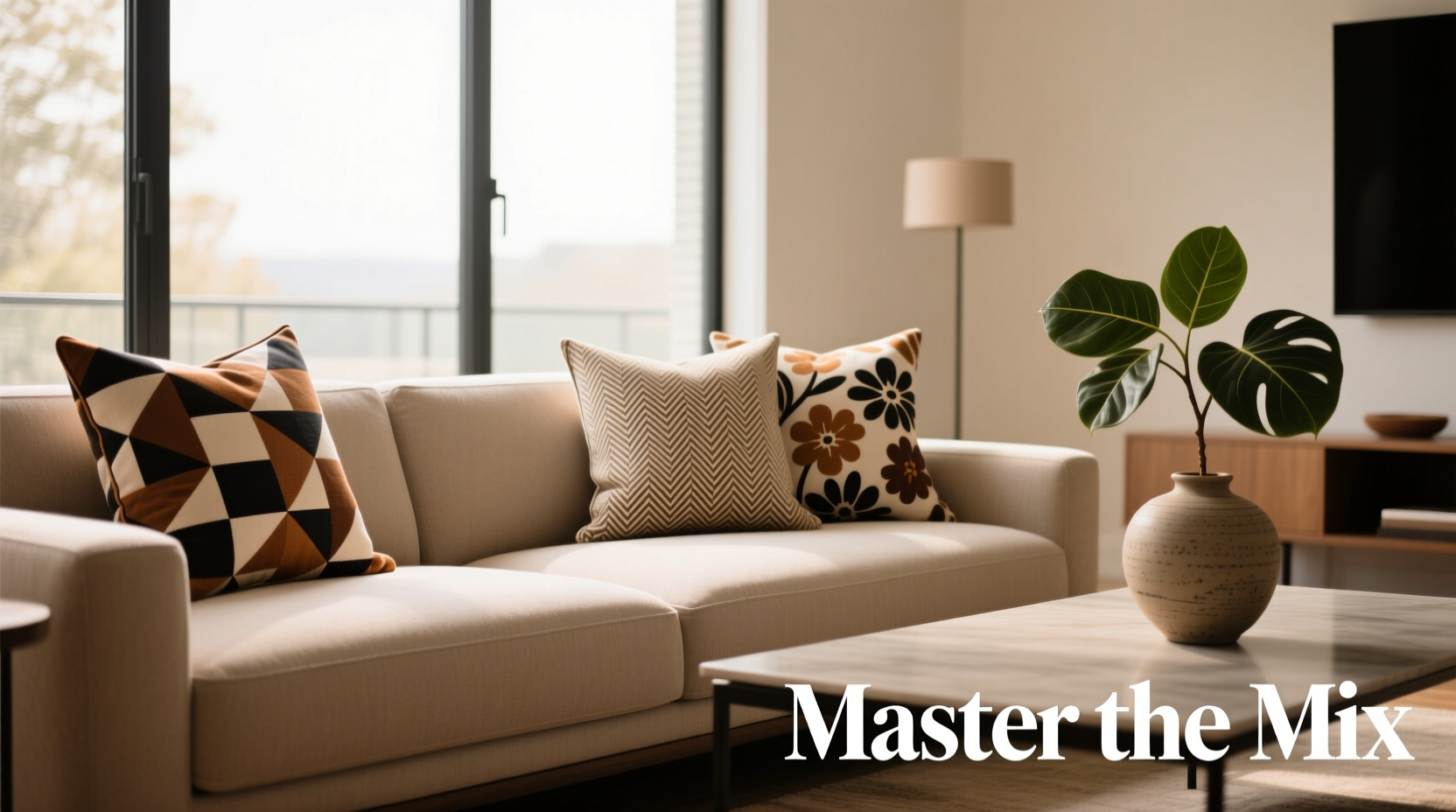
The foundation of any successful pairing begins with color. Your sofa sets the dominant tone—whether solid or patterned—and your throw pillows should either complement or thoughtfully contrast that base.
If your sofa is a solid neutral (like beige, gray, or navy), you have creative freedom. Pull accent colors from other elements in the room—such as artwork, rugs, or curtains—or introduce new hues that energize the space. For example, a charcoal gray sofa pairs beautifully with pillows in mustard yellow, deep teal, or rust orange, especially when those shades appear elsewhere in small doses.
When your sofa already features a pattern—stripes, florals, or geometrics—your throw pillows should echo at least one color from that pattern. This creates continuity. Avoid introducing entirely new colors unless they are part of a broader, intentional palette.
Choosing Patterns by Scale and Type
Pattern mixing becomes effective when different scales coexist. Think of it like music: a bassline, melody, and harmony each occupy their own frequency range. Similarly, large, medium, and small patterns layered together create depth without competition.
- Large-scale patterns (e.g., oversized florals or bold geometrics) draw attention and work best as statement pieces.
- Medium-scale patterns (like smaller florals or ticking stripes) bridge the gap between bold and subtle.
- Small-scale patterns (dots, tiny checks, or micro-prints) add texture without dominating.
For a balanced arrangement, combine no more than three different pattern types. A common formula among designers is: one dominant pattern (from the sofa), one complementary pattern (pillow), and one textural or tonal variation (a solid or subtle weave).
| Sofa Type | Recommended Pillow Pattern Mix | Example Combination |
|---|---|---|
| Neutral Solid (e.g., light gray) | One large floral + one geometric + one textured solid | Peony print, indigo ikat square, linen in warm taupe |
| Striped (blue & white) | One small-scale dot + one tribal motif | Coral polka dots, black-and-white tribal stripe |
| Floral Print (multi-color) | One solid in dominant hue + one contrasting small pattern | Deep emerald velvet, cream herringbone weave |
“Pattern mixing isn’t about randomness—it’s about rhythm. Vary the scale, repeat a color, and always include a resting point.” — Lena Torres, Interior Stylist & Author of *Textured Spaces*
Step-by-Step Guide to Styling Your Throw Pillows
Creating a cohesive pillow arrangement follows a logical sequence. Follow this five-step process to ensure visual balance and stylistic success:
- Assess your sofa’s color and pattern. Is it solid? Striped? Busy floral? Identify its dominant and secondary colors.
- Select a color story. Choose 2–3 accent colors that either exist in the sofa’s palette or align with the room’s overall scheme.
- Pick pattern types and scales. Include one larger pattern, one medium, and optionally a small-scale or solid for grounding.
- Test combinations physically. Lay out pillow covers on the sofa during daylight. Step back and observe from across the room.
- Arrange with intention. Use symmetry (matching pillows on both ends) for formality, or asymmetry for a relaxed, curated feel.
Real-Life Example: Transforming a Beige Sectional
Consider Sarah, who recently moved into a sunlit apartment with a large beige sectional. The sofa was comfortable but bland. She wanted warmth and character without making the space feel cluttered.
She began by selecting a rug with terracotta, olive green, and sand tones. From there, she chose three throw pillows: a large olive-and-cream ikat (large scale), a smaller terracotta trellis pattern (medium), and a solid caramel-colored leather-look pillow (textural anchor). By repeating the rug’s colors and varying pattern sizes, the sofa transformed into a focal point that felt intentional and layered.
The result? A cohesive, inviting seating area that guests consistently compliment—proof that thoughtful pillow selection can redefine a room’s entire mood.
Common Mistakes to Avoid
Even with good intentions, homeowners often fall into predictable pitfalls when styling with patterned pillows. Recognizing these early can save time and money.
- Overcrowding: Too many pillows reduce seating space and create visual noise.
- Mismatched color temperatures: Combining warm reds with cool blues without a balancing neutral can feel jarring.
- Ignoring texture: All-print pillows lack dimension. Incorporate solids in velvet, bouclé, or linen for tactile contrast.
- Repeating the exact same pattern: Using identical pillows on all sides can look staged. Slight variations feel more organic.
Checklist: Finalizing Your Pillow Selection
Before placing your order or arranging your pillows, run through this checklist to ensure cohesion and quality:
- ✅ At least one color in the pillows matches or complements the sofa
- ✅ Patterns vary in scale (large, medium, small)
- ✅ No more than three distinct patterns used
- ✅ One solid or textured neutral included for balance
- ✅ Pillow sizes are proportional to the sofa (larger sofas need larger pillows)
- ✅ Fabric durability suits your lifestyle (e.g., pet-friendly, stain-resistant if needed)
Frequently Asked Questions
Can I mix floral and geometric patterns?
Yes—when done intentionally. Pair a large floral with a smaller geometric in a shared color. For instance, a blush rose print works with a navy-and-white chevron if both share navy accents. The key is maintaining a consistent color thread and varying scale.
How do I choose pillow sizes for my sofa?
Standard 18x18 inch pillows suit most sofas. For larger sectionals or deep seats, consider 20x20 or 22x22 inch pillows. Lumbar pillows (12x20 or 14x22) add horizontal balance and comfort. Avoid using only small pillows on a big sofa—they’ll look lost.
Should throw pillows match the curtains or rug exactly?
They don’t need to match exactly, but they should harmonize. Repeating one or two colors from nearby textiles creates unity. Exact duplication can feel dated; subtle echo feels modern and intentional.
Conclusion: Create a Space That Feels Like You
Matching patterned throw pillows with your sofa isn’t about rigid rules—it’s about cultivating visual rhythm and personal expression. With a clear understanding of color, pattern scale, and balance, you can turn a simple seating area into a thoughtfully designed retreat. The most inviting rooms aren’t flawless; they’re layered, lived-in, and full of deliberate choices.




 浙公网安备
33010002000092号
浙公网安备
33010002000092号 浙B2-20120091-4
Comments
No comments yet. Why don't you start the discussion?