
Effortless style isn’t about wearing head-to-toe designer labels or following every trend. It’s about confidence, cohesion, and knowing how to combine pieces in a way that feels intentional yet relaxed. One of the most powerful tools in building such a wardrobe is mastering the art of mixing and matching tops and bottoms—especially when working with co-ord sets. These coordinated outfits offer a starting point, but true style emerges when you break the rules thoughtfully. Whether you're dressing for work, weekends, or special occasions, understanding how to deconstruct and reconstruct your sets can elevate your personal aesthetic and maximize your wardrobe’s potential.
Understanding Co-Ord Sets: More Than Just Matching
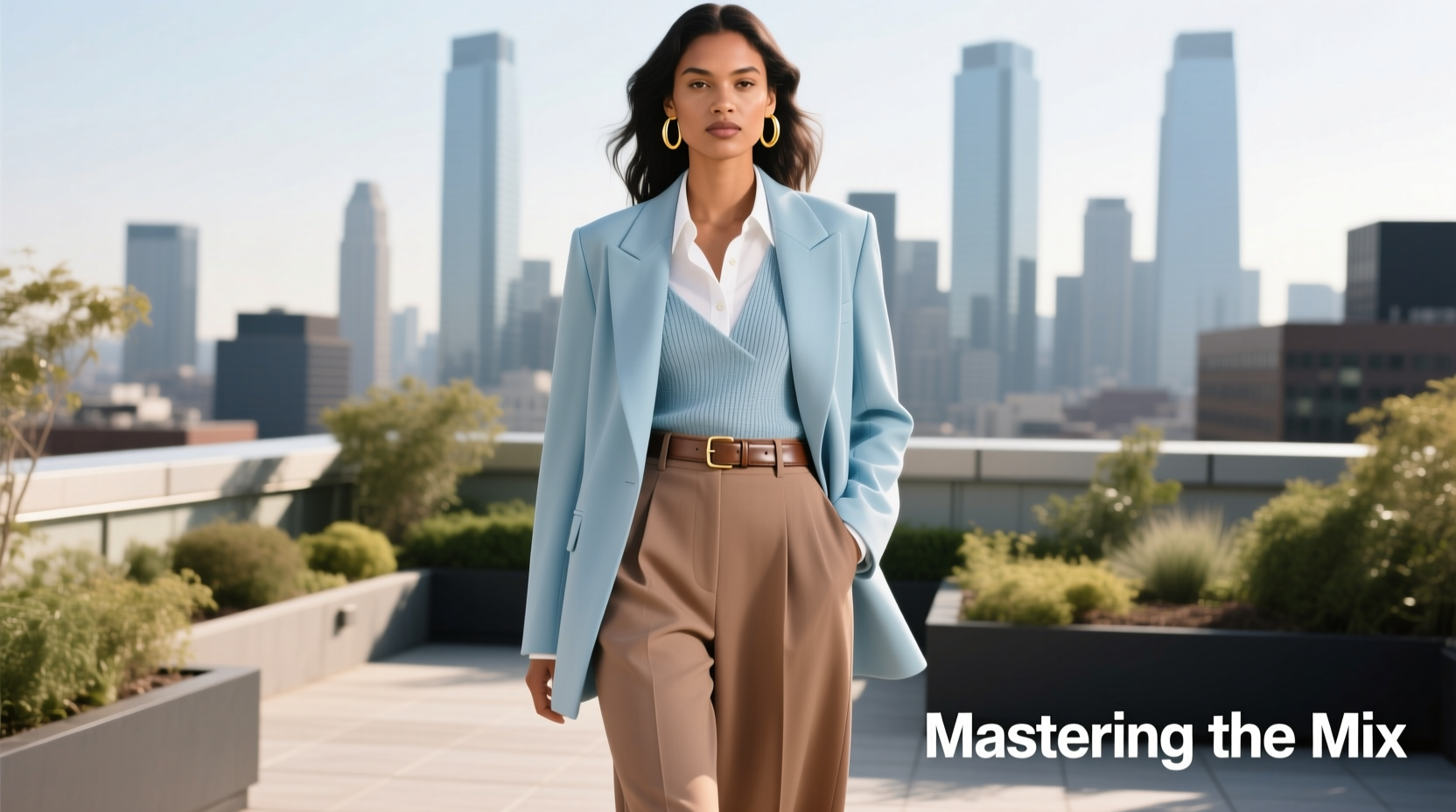
Co-ordinate (co-ord) sets are pre-paired garments designed to be worn together—typically a top and bottom made from the same fabric, pattern, or color family. While they provide an instant outfit solution, their real value lies in versatility. A well-chosen set doesn’t have to be worn as-is. In fact, the most stylish individuals use these pieces as modular components, pairing the top with a contrasting skirt or the pants with a different blouse.
The key is recognizing that coordination isn’t synonymous with uniformity. You can maintain harmony while introducing contrast through texture, silhouette, or hue. For example, a silk camisole from a matching set can be paired with wide-leg linen trousers for a luxe-casual look, or tailored shorts from a summer set can be worn with a tucked-in oversized button-down for a polished daytime ensemble.
The Principles of Successful Mix-and-Match Styling
Successful mixing and matching relies on a balance of intention and intuition. To create looks that feel cohesive rather than chaotic, consider the following principles:
- Color Harmony: Use complementary or analogous colors. If your top is emerald green, pair it with navy, rust, or cream—not bright orange unless intentionally going bold.
- Texture Contrast: Combine smooth with textured fabrics—silk with tweed, cotton with crochet—to add depth without clashing.
- Proportion Play: Balance volume. A loose, billowy top works best with slim-fit bottoms, while cropped tops pair well with high-waisted, flared pants.
- Pattern Coordination: When mixing patterns, keep one dominant and one subtle. Pair a bold floral top with pinstripe trousers if both share a common color.
- Consistent Vibe: Maintain a unified aesthetic—bohemian, minimalist, edgy—so the outfit tells a coherent story.
“Mixing separates from co-ords is where personal style truly shines. It transforms a ready-made outfit into a curated expression.” — Lena Torres, Fashion Stylist & Creative Director
Step-by-Step Guide to Deconstructing Your Sets
Follow this practical timeline to unlock new combinations from your existing wardrobe:
- Inventory Your Sets: Lay out all your co-ord pieces—separately—and assess each top and bottom individually.
- Evaluate Versatility: Identify which pieces can stand alone. Is the top neutral enough? Are the pants flattering with other shirts?
- Test Combinations: Try each top with at least three different bottoms from other outfits (and vice versa).
- Note Winning Pairings: Keep a mental or physical log of successful matches—these become go-to looks.
- Adjust with Accessories: Use belts, shoes, or jewelry to bridge visual gaps between mismatched tones or styles.
- Rotate and Refine: Reassess monthly. Seasonal changes or new purchases may open up fresh combinations.
Do’s and Don’ts: A Quick Reference Table
| Scenario | Do | Don’t |
|---|---|---|
| Mixing patterns | Pick one shared color; vary scale (large print + small print) | Combine two large-scale busy patterns (e.g., big florals + plaids) |
| Pairing textures | Balance luxe with casual (satin + denim) | Mix too many textures (velvet + fur + sequins) |
| Color blocking | Stick to 2–3 main colors max | Use clashing hues without a neutral buffer |
| Proportions | Offset volume (loose top + fitted bottom) | Wear baggy top with baggy pants unless intentional |
| Formality level | Blend smart-casual elements (blazer + joggers) | Pair a sequined top with gym shorts unless styled intentionally |
Real-Life Example: From Vacation Set to Workweek Staple
Consider Maya, a marketing consultant who bought a vibrant turquoise and coral print co-ord set for a beach holiday. At first, she wore them only together during her trip. Back home, she hesitated to wear the full set to the office, fearing it was too loud. Instead, she separated the pieces.
She paired the coral-printed crop top with high-waisted black tailored trousers and a lightweight beige blazer. The result was professional yet expressive. Later, she wore the turquoise palazzo pants with a simple white turtleneck and ankle boots for a dinner meeting. By breaking down the set, she turned a single vacation outfit into four distinct workwear looks—without buying anything new.
This approach not only extended the life of her garments but also reinforced her identity as someone who dresses with purpose and creativity.
Essential Checklist for Mixing Tops and Bottoms Like a Pro
- ✔️ Assess each piece in a set for standalone wearability
- ✔️ Identify shared colors between separate garments
- ✔️ Experiment with layering (e.g., cardigans, vests, jackets)
- ✔️ Use neutral basics to tone down bold prints
- ✔️ Rotate footwear and accessories to change the outfit’s mood
- ✔️ Store tops and bottoms together but label them as separates
- ✔️ Take photos of successful combos for quick reference
Frequently Asked Questions
Can I mix a printed top from a set with a solid bottom?
Absolutely. In fact, this is one of the easiest and most effective ways to style co-ord pieces. Choose a solid bottom in a color pulled from the print for a seamless look.
What if the fabric weights are very different?
Different weights can work if balanced correctly. For example, a heavy knit top can be paired with fluid satin pants if the overall silhouette remains harmonious. Avoid pairing overly delicate fabrics with bulky ones unless the fit compensates.
Is it okay to mix formal and casual pieces?
Yes—this is called \"clash dressing\" and is a hallmark of modern style. Try a structured blazer from a formal set with distressed jeans, or a silky cami with cargo pants. The contrast creates interest and individuality.
Cultivating Effortless Style Through Intentional Choices
Effortless style isn’t accidental. It’s the result of thoughtful curation, experimentation, and a deep understanding of what works for your body, lifestyle, and preferences. Co-ord sets are not endpoints—they’re springboards. When you learn to see each garment as a flexible component rather than a fixed pair, you gain creative freedom and reduce fashion fatigue.
The most stylish people aren’t those with the most clothes, but those who know how to make the most of what they have. By mastering the mix-and-match approach, you invest less in fast fashion and more in sustainable, meaningful choices. You build a wardrobe that adapts, evolves, and expresses who you are—without trying too hard.




 浙公网安备
33010002000092号
浙公网安备
33010002000092号 浙B2-20120091-4
Comments
No comments yet. Why don't you start the discussion?