
A well-packed backpack is more than just a container—it’s an extension of your preparedness. Whether you're embarking on a weekend hike, a cross-country train journey, or a spontaneous urban exploration, the way you organize your gear determines comfort, accessibility, and efficiency. Large-capacity backpacks offer generous storage, but without intentional organization, they quickly become chaotic. Mastering the structure and logic behind what goes where transforms your pack from a dumping ground into a finely tuned system that supports every move you make.
Understanding Your Backpack’s Design and Compartments
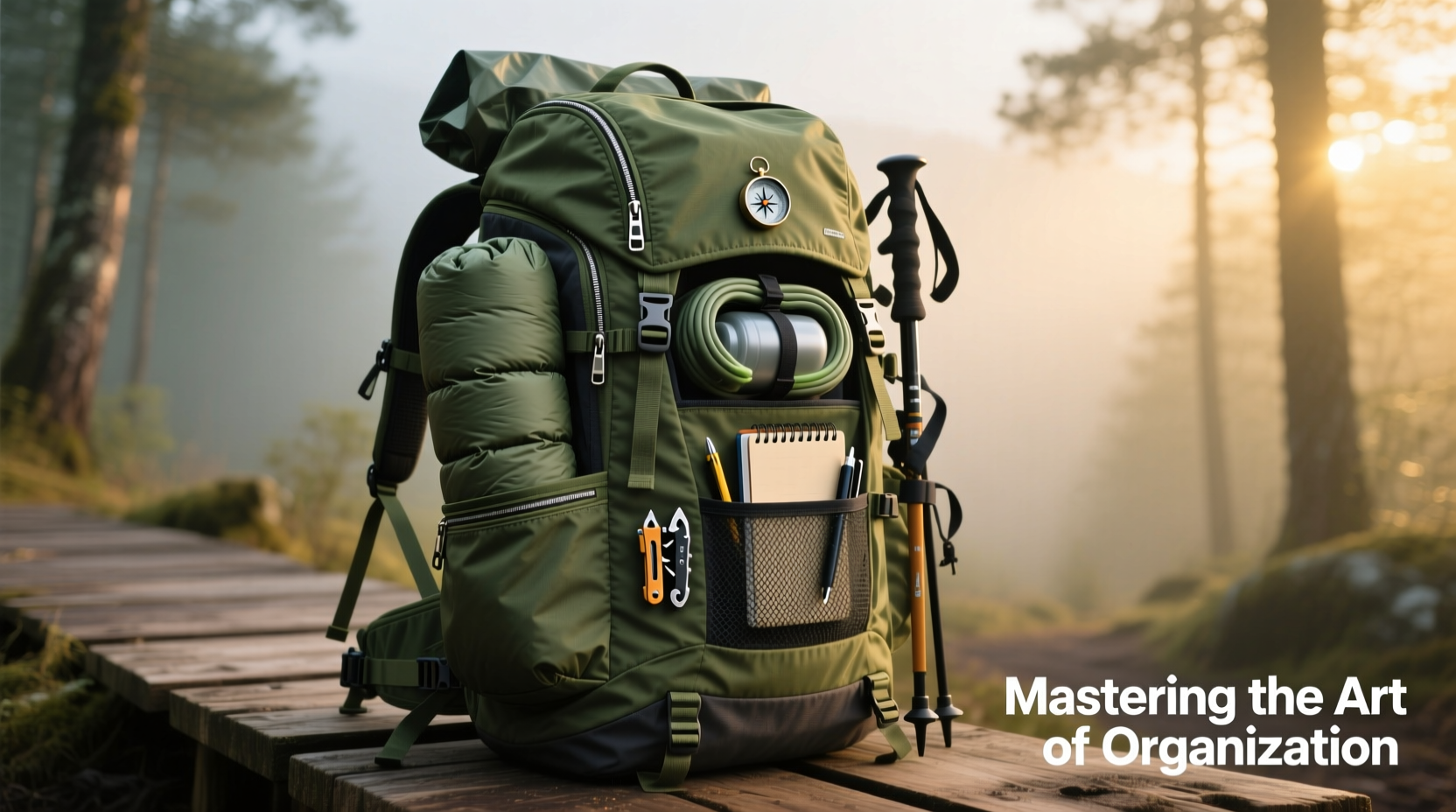
Before loading anything, take time to study your backpack’s architecture. Most versatile packs (typically 30–50 liters) feature multiple zones: main compartments, front pockets, side mesh sleeves, hip belt pockets, hydration sleeves, and laptop/tablet dividers. Each serves a distinct purpose:
- Main compartment: Ideal for bulky, less-frequently accessed items like clothing, sleeping bags, or extra layers.
- Front panel pocket: Perfect for organizing smaller essentials—snacks, maps, headlamp, multitool.
- Hip belt pockets: Designed for immediate access—keys, energy gels, phone, lip balm.
- Side pockets: Best for water bottles, trekking poles, or compact tripods.
- Laptop sleeve: Secures electronics in padded protection, usually accessible via a rear zipper.
- Hydration reservoir sleeve: Often located near the back panel, compatible with bladder systems.
Recognizing these roles prevents misplacement and ensures weight distribution aligns with ergonomic principles. Overloading shoulder straps or stuffing heavy items at the top throws off balance, increasing fatigue over long distances.
Step-by-Step Guide to Packing Strategically
Efficient packing isn’t random—it follows a deliberate sequence. Use this timeline before every departure:
- Empty and clean: Remove all contents and wipe down interior surfaces. Check for moisture, mildew, or loose threads.
- Sort by category: Group items into categories: clothing, electronics, toiletries, food, tools, documents.
- Weigh priorities: Identify what you’ll need first (e.g., rain jacket), most often (water bottle), and rarely (extra socks).
- Pack by layer: Start with base layers (sleeping bag or soft items), then mid-weight gear, followed by essentials near the top.
- Secure loose items: Use packing cubes or dry bags to contain each group and prevent shifting.
- Final check: Ensure zippers function smoothly, straps are untangled, and emergency items are reachable without unpacking.
This method minimizes digging, keeps weight balanced, and reduces wear on fabric caused by internal friction.
Essential Organization Tools and Accessories
Even the best-designed backpack benefits from internal support systems. Consider integrating these tools:
| Tool | Function | Recommended For |
|---|---|---|
| Packing cubes | Compartmentalize clothing and accessories | Travelers, minimalist hikers |
| Dry sacks | Waterproof storage for electronics or sleep systems | Rain-prone climates, river crossings |
| Cable management wraps | Keep charging cables tangle-free | Digital nomads, photographers |
| Ziplock bags (reusable) | Separate toiletries, snacks, or wet items | All adventure types |
| Label tags or color-coded cubes | Quick visual identification | Families, team expeditions |
These accessories amplify functionality without adding bulk. A photographer might dedicate one cube to lenses, another to batteries; a business traveler may separate work attire from gym clothes.
“Organization isn’t about perfection—it’s about predictability. When you know exactly where your passport is, even in low light, you’ve won half the battle.” — Jordan Lee, Outdoor Gear Consultant and Expedition Leader
Real-World Example: A 3-Day Mountain Trek
Sophie, an experienced hiker preparing for a three-day trail through the Sierra Nevada, uses a 45-liter backpack. Her approach illustrates practical application:
- Bottom layer: Sleeping bag in a compression sack (lightweight, rarely accessed).
- Middle zone: Clothes rolled tightly in two packing cubes—one for daywear, one for sleepwear.
- Near top: Rain shell, first-aid kit, and food supplies (easy reach during weather changes).
- Front pocket: Map, compass, whistle, sunscreen, and snacks.
- Hip belt: Phone in left pouch, GPS tracker in right.
- Sides: Collapsible water bottles; trekking poles clipped externally.
Throughout the trip, she accesses her hip pockets over 20 times daily—never once opening the main compartment unnecessarily. This precision saves time, energy, and frustration when conditions shift rapidly.
Do’s and Don’ts of Backpack Organization
| Do’s | Don’ts |
|---|---|
| Use compression straps to stabilize load after packing | Overstuff to the point of distorting frame alignment |
| Keep frequently used items within arm’s reach | Bury your rain jacket under heavy gear |
| Balance weight symmetrically | Carry liquids only on one side |
| Label critical items (e.g., “EMERGENCY” on flare kit) | Assume everyone knows your system—communicate if traveling with others |
| Reassess contents weekly or per trip type | Keep unused gear “just in case” indefinitely |
Checklist: Pre-Adventure Backpack Audit
Run through this checklist before sealing your pack:
- ✅ All compartments zipped and secure
- ✅ Heavy items centered and close to the back
- ✅ Emergency kit easily accessible (whistle, flashlight, matches)
- ✅ Electronics charged and protected in padded sleeves
- ✅ Water reservoir filled and leak-tested (if applicable)
- ✅ Critical documents duplicated and stored separately
- ✅ External attachment points used wisely (no dangling straps)
- ✅ Weight comfortable when worn—adjust sternum and hip belts
This routine takes under five minutes but prevents costly oversights.
Frequently Asked Questions
How do I prevent my backpack from becoming too heavy?
Stick to a strict essentials-only policy. Weigh your pack before departure—anything over 20% of your body weight increases injury risk. Use lightweight alternatives: down jackets instead of fleece, dehydrated meals, titanium utensils.
Can I use the same organization system for city travel and hiking?
Yes, but adapt priorities. In cities, quick-access security matters more—keep wallet and transit card in front-facing pockets. On trails, durability and weather resistance dominate. Reposition items based on environment, not habit.
What’s the best way to store a packed backpack overnight?
Never leave it fully packed long-term. If camping, hang it from a tree branch away from animals. At home, empty it, air it out, and store upright in a dry closet. Avoid damp basements or hot attics.
Final Thoughts: Turn Chaos Into Confidence
A large-capacity backpack holds potential—but only if its contents serve you, not hinder you. The difference between a stressful scramble and seamless readiness lies in preparation. By understanding your pack’s design, using organizational tools wisely, and refining your method through experience, you build a reliable system tailored to your lifestyle.
Every adventure begins with a single step—and that step should be taken with confidence in what’s on your back. Reorganize your current pack tonight. Test the layout tomorrow. Make adjustments until everything feels intuitive. When you do, you won’t just carry gear—you’ll carry peace of mind.




 浙公网安备
33010002000092号
浙公网安备
33010002000092号 浙B2-20120091-4
Comments
No comments yet. Why don't you start the discussion?