
A long style wallet is more than just an accessory—it’s a functional tool that reflects your lifestyle, habits, and attention to detail. While its elongated design offers generous space for cards, cash, and IDs, it also presents a unique organizational challenge. Without intentional structure, even the most elegant wallet can become a chaotic jumble of receipts, expired cards, and forgotten coupons. The key to unlocking its full potential lies in disciplined organization. When optimized correctly, a long wallet streamlines daily transactions, reduces stress at checkout counters, and enhances personal efficiency.
Why Organization Matters in a Long Wallet
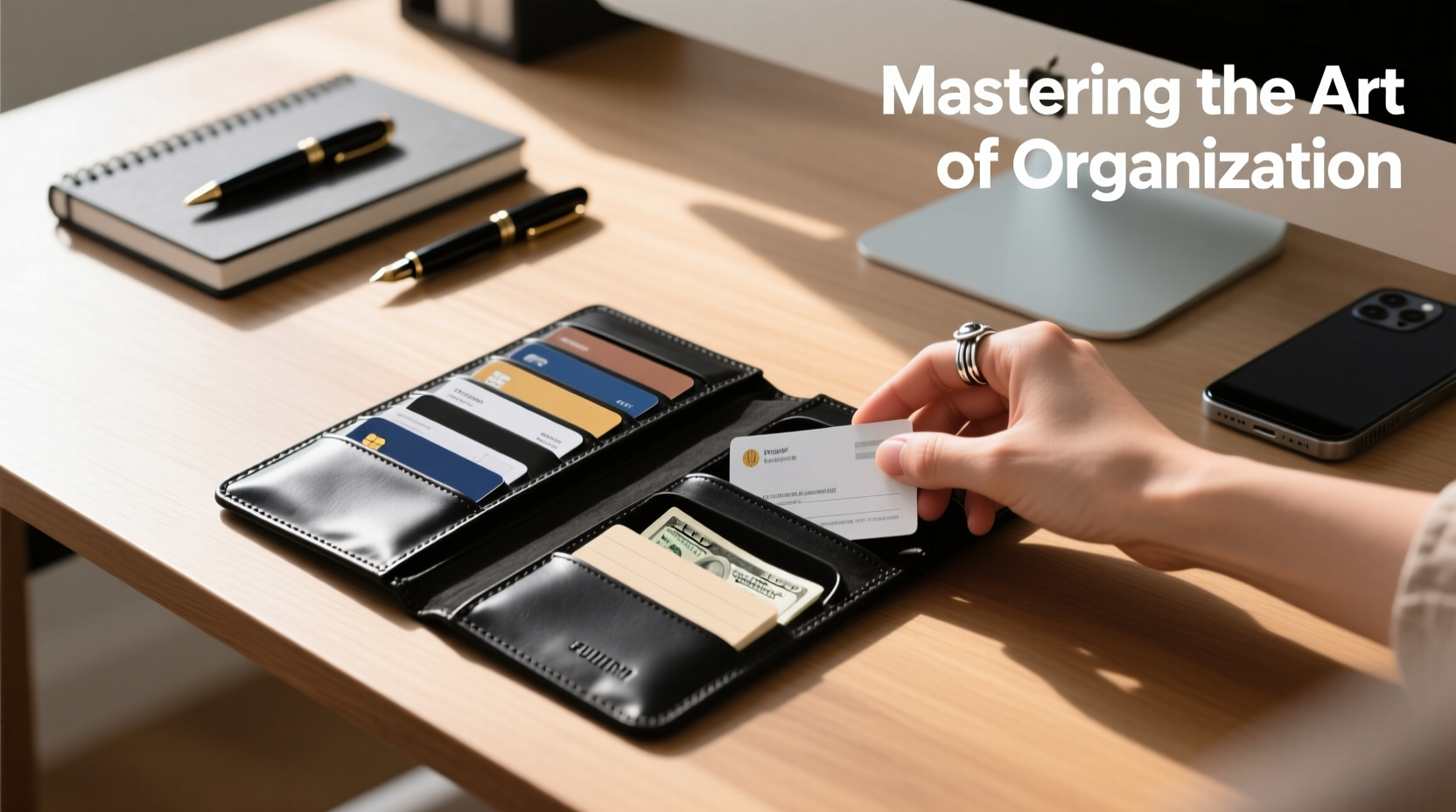
The extended format of a long wallet typically includes multiple card slots, bill compartments, and sometimes even coin pockets or hidden sleeves. This versatility is a double-edged sword: while it accommodates more items, it also invites disarray. Disorganized wallets lead to wasted time, misplaced essentials, and unnecessary wear on materials from constant digging and shuffling.
Efficient organization isn’t about minimalism alone—it’s about strategic placement. Every slot should serve a purpose, and every item should have a designated home. A well-organized long wallet ensures that what you need is immediately accessible, while less frequently used items remain stored but not forgotten.
“Wallet organization is a micro-habit with macro benefits. It reflects mental clarity and translates into real-world efficiency.” — Daniel Kim, Productivity Consultant
Step-by-Step Guide to Optimizing Your Wallet Layout
Transforming your long wallet from cluttered to streamlined requires a methodical approach. Follow this five-step process to reset and maintain order:
- Empty Completely: Remove every item—cards, cash, receipts, loyalty slips, and even old tickets. Lay them out on a clean surface.
- Categorize Items: Group contents into categories: payment cards, identification, transit passes, membership cards, emergency cash, and miscellaneous.
- Eliminate Redundancies: Discard expired cards, duplicate rewards programs, and anything unused in the past six months.
- Assign Zones: Designate specific sections of your wallet for each category based on frequency of use.
- Reinsert Thoughtfully: Place items back in their assigned zones, ensuring easy access to high-use items.
Smart Compartment Allocation: Do’s and Don’ts
How you assign items to different parts of your long wallet significantly impacts usability. Misplaced items create friction; logical placement promotes flow. Use the following table as a guide for optimal compartment usage.
| Wallet Section | Recommended Use | Common Mistakes |
|---|---|---|
| Front Card Slot (Visible) | Primary debit/credit card or ID | Storing rarely used cards or expired licenses |
| Middle Card Panels (Left & Right) | Frequently used cards: secondary bank card, transit pass, office badge | Overloading with 10+ cards, causing bulge and difficulty retrieving |
| Bills Compartment (Center) | Folded cash, organized by denomination | Stuffing crumpled bills or storing receipts here |
| Back Pocket or Hidden Sleeve | Emergency cash, backup ID, or folded insurance card | Forgetting what’s stored, leading to outdated contents |
| Zippered or Coin Pocket (if available) | Coins, USB drive, or slim key fob | Using for loose paper or sticky notes that tear easily |
Real-Life Example: From Chaos to Control
Consider Mark, a freelance designer who carried a premium leather long wallet for over two years without reorganization. It contained 14 cards—seven of which were expired or inactive—including gym memberships he’d canceled, old client contracts, and foreign currency from a trip three years prior. Retrieving his payment card often took 30 seconds of shuffling, and the wallet had begun to warp from overuse.
After applying the step-by-step method, Mark reduced his load to eight essential items: two active credit cards, driver’s license, health insurance card, work badge, $40 in small bills, emergency $20 in the back sleeve, and a folded copy of his vaccination record. He now accesses his card in under five seconds and reports feeling more composed during daily errands. His wallet retains its shape, and he performs a quick audit every month to ensure nothing obsolete sneaks back in.
Monthly Maintenance Checklist
Sustaining order requires periodic review. Integrate this checklist into your routine to prevent regression:
- ✅ Remove expired or unused cards
- ✅ Wipe down interior with a dry microfiber cloth
- ✅ Re-fold cash neatly to prevent creasing
- ✅ Verify emergency items are still valid (e.g., backup cash, spare ID)
- ✅ Assess overall wear—check stitching, lining, and closure integrity
- ✅ Rotate seasonal cards (e.g., ski pass in winter, beach club access in summer)
Frequently Asked Questions
How many cards should I realistically keep in a long wallet?
Most experts recommend carrying no more than 6–8 cards for optimal function. This includes two primary payment cards, ID, one transit or access card, and up to three situational cards (e.g., pharmacy rewards, library). Exceeding this limit compromises accessibility and increases bulk.
Is it better to fold cash or keep it flat in a long wallet?
Folding cash once vertically (into thirds) maintains neatness and prevents excessive bulk. Fully flat bills may slip around, while multiple folds cause deep creases that weaken the paper. Use the central bill compartment exclusively for currency—never mix with receipts or notes.
Can digital wallets replace the need for physical organization?
Digital wallets reduce reliance on physical cards but don’t eliminate the need for smart organization. You’ll still carry government-issued ID, certain access cards, and cash for offline scenarios. Treat your physical wallet as a complement to digital tools, not a relic.
Conclusion: Elevate Your Everyday Efficiency
Mastering the art of organizing a long style wallet is a subtle yet powerful act of self-discipline. It transforms a simple accessory into a well-oiled instrument of daily life. With deliberate categorization, consistent maintenance, and intelligent layout design, you reclaim time, reduce friction, and project a sense of control in both professional and personal settings.
Your wallet is a reflection of your priorities. Take ten minutes today to empty, evaluate, and reorganize it. Apply the strategies outlined here, adopt the monthly checklist, and notice how small changes yield outsized returns in peace of mind and practical ease. Efficiency isn’t found in grand gestures—it’s built through habits like these, one thoughtful decision at a time.




 浙公网安备
33010002000092号
浙公网安备
33010002000092号 浙B2-20120091-4
Comments
No comments yet. Why don't you start the discussion?