
Fashion runways captivate with bold silhouettes, unexpected textures, and daring combinations. While those looks may seem unattainable in daily life, the essence of runway style isn’t about copying ensembles—it’s about understanding the principles behind them and adapting them to real-world wearability. Mastering runway-inspired dressing means decoding trends, embracing confidence, and applying high-fashion logic to your personal wardrobe. The goal isn't to look like you stepped off the catwalk, but to carry the attitude, precision, and intentionality that define it.
The Philosophy Behind Runway Fashion
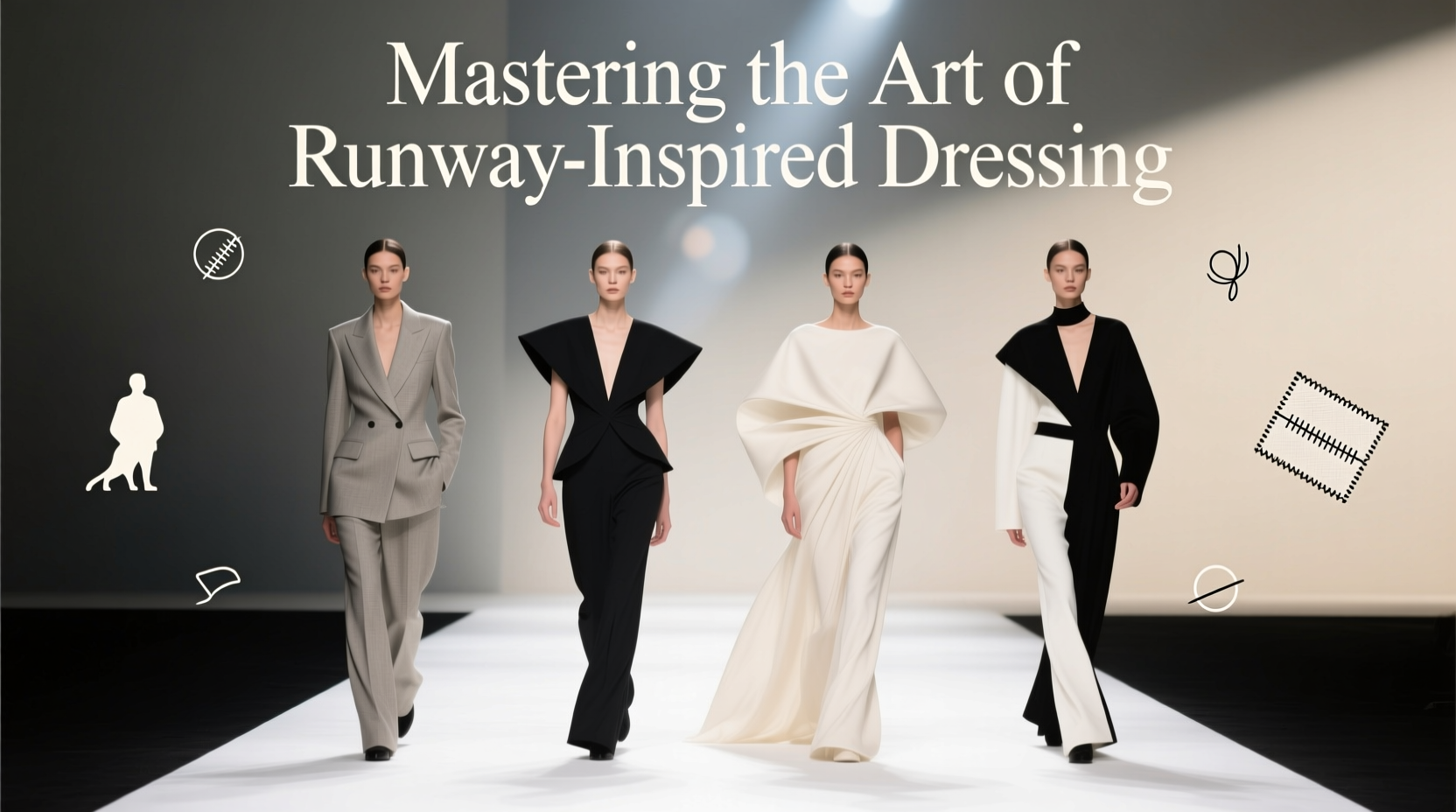
Runway collections are not designed for immediate retail replication. They serve as artistic statements, forecasting color palettes, fabric innovations, and silhouette directions for upcoming seasons. Designers use exaggeration to communicate ideas: oversized shoulders suggest power, monochrome schemes evoke minimalism, and layered textures signal depth. These concepts trickle down into accessible fashion through subtle reinterpretations.
To dress with runway influence, shift focus from literal replication to conceptual adoption. Instead of wearing a full leather jumpsuit with chrome detailing, consider how the look emphasizes cohesion and bold material choices. Translate that into a well-fitted black turtleneck paired with tailored trousers and polished boots. The message—sleek, confident, modern—remains intact.
“Fashion is architecture; it is a matter of proportions.” — Coco Chanel
This quote underscores the importance of balance and structure in styling. Runway pieces often play with proportion deliberately—wide-leg pants balanced with a cropped top, or a voluminous coat worn over a slim silhouette. You don’t need avant-garde tailoring to apply this. Simply pair one statement piece with more fitted basics to create visual harmony.
How to Translate Trends Into Wearable Style
Every season, major fashion weeks introduce new trends. Some fade quickly; others evolve into long-term staples. The key is selective adaptation. Not every trend suits every body type, lifestyle, or climate. Discernment separates trend-followers from style innovators.
For example, when structured blazers with exaggerated shoulders reappeared on recent runways, many interpreted it as a return to 1980s power dressing. In practice, a slightly padded shoulder in a modern-cut blazer can add polish to a work outfit without appearing costumey. Pair it with straight-leg jeans and loafers for an elevated casual look.
Step-by-Step Guide: Adapting a Runway Look
- Analyze the original look: Note dominant colors, fabrics, proportions, and mood.
- Extract the core idea: Is it minimalism? Dramatic volume? Contrast layering?
- Select one wearable element: Choose a single feature to integrate—e.g., wide-leg pants instead of the entire neon ensemble.
- Pair with neutral basics: Ground the statement piece with simple tops, shoes, and accessories.
- Edit ruthlessly: Remove anything that feels forced or uncomfortable.
Building a Runway-Ready Wardrobe: Key Pieces That Work
You don’t need designer labels to achieve runway-level sophistication. Invest in foundational items that reflect current design language while remaining timeless. These act as anchors for trend-driven accents.
| Core Piece | Runway Influence | Styling Tip |
|---|---|---|
| Tailored Trench Coat | Minimalist outerwear at Jil Sander, The Row | Wear open over a slip dress or with wide-leg trousers |
| Slip Dress (Silk or Satin) | Y2K revival seen at Miu Miu, Prada | Layer under oversized knitwear or denim jackets |
| Architectural Blazer | Power shoulders at Balmain, Saint Laurent | Style with slim jeans and pointed-toe flats |
| Monochromatic Knit Set | Quiet luxury trend from Bottega Veneta | Mix textures—ribbed wool with cashmere |
| Chunky Loafers or Boots | Functional elegance at Burberry, Acne Studios | Pair with socks for contrast or barefoot for sleekness |
These pieces offer versatility and trend longevity. A silk slip dress, for instance, can transition from evening wear to daytime when layered. Its presence on runways for multiple seasons confirms its staying power beyond fleeting fads.
Avoiding Common Pitfalls
Enthusiasm for runway style can lead to missteps—over-accessorizing, mismatched proportions, or prioritizing aesthetics over comfort. Awareness prevents these issues.
- Don’t wear head-to-toe trends: One standout item per outfit maintains sophistication.
- Avoid ill-fitting adaptations: Oversized doesn’t mean sloppy. Ensure garments drape intentionally.
- Respect your lifestyle: A floor-length satin gown might inspire you, but opt for a midi version for office events.
- Skip cheap imitations: Poor-quality fabrics ruin even the most stylish cut. Prioritize fit and material.
Real-World Example: From Paris Runway to Urban Commute
Consider Sarah, a marketing executive in Chicago. After seeing Louis Vuitton’s fall collection featuring camel wool coats, wide-leg pleated trousers, and leather gloves, she was inspired—but not overwhelmed. She already owned a knee-length camel coat. She purchased mid-rise, fluid trousers in a similar drapey fabric, avoiding the exact high-waisted couture cut which would feel too formal.
She paired the look with a fine-gauge turtleneck, ankle boots, and minimalist gold jewelry. The result? A polished, fashion-forward commute look that turned heads without sacrificing comfort. By borrowing the palette and proportion concept—not the literal runway execution—she achieved authenticity and relevance.
“You don’t have to be eccentric to be fashionable. You just have to be unmistakably yourself.” — Diana Vreeland
Checklist: Building Your Runway-Inspired Style
Use this actionable checklist to refine your approach:
- ✅ Review seasonal runway highlights (Vogue, WWD, or brand lookbooks)
- ✅ Identify 1–2 dominant themes (e.g., “fluid silhouettes,” “rich earth tones”)
- ✅ Audit your current wardrobe for compatible pieces
- ✅ Invest in one high-impact, versatile trend item per season
- ✅ Test new combinations at home before wearing out
- ✅ Prioritize fit: tailor pieces if needed
- ✅ Keep accessories minimal to let the clothing speak
- ✅ Photograph your outfits to track what works
FAQ: Runway-Inspired Dressing
Can I pull off runway styles if I work in a conservative environment?
Absolutely. Focus on subtlety: a sharply tailored blazer, tonal layering, or luxe fabrics convey runway influence without breaking dress codes. Let details—like a sculptural button or hidden print—hint at fashion awareness.
How do I know which trends will last?
Look for repetition across multiple designers and seasons. If three or more top houses showcase puff sleeves or chocolate brown hues, it’s likely a macro-trend. Micro-trends (e.g., logo mania) appear on fewer runways and fade faster.
Is runway-inspired dressing expensive?
Not necessarily. High-street brands like & Other Stories, Arket, and Massimo Dutti often reinterpret runway concepts affordably. Thrifting can also yield unique pieces that mimic designer aesthetics—especially for coats and vintage knits.
Conclusion: Own Your Fashion Narrative
Mastering runway-inspired dressing isn’t about imitation—it’s about interpretation. It’s learning to see fashion as a language and using its vocabulary to express who you are. Whether you’re drawn to the austerity of minimalism or the drama of maximalism, the runway offers inspiration, not instruction.
Start small. Pick one trend. Experiment. Refine. Build confidence through consistency. Over time, your personal style will reflect not just what’s in vogue, but what resonates with you. That’s the true mark of fashion mastery.




 浙公网安备
33010002000092号
浙公网安备
33010002000092号 浙B2-20120091-4
Comments
No comments yet. Why don't you start the discussion?