
Traveling light isn’t just a trend—it’s a philosophy that enhances freedom, reduces stress, and improves efficiency. For modern men navigating urban commutes, weekend getaways, or international adventures, the sling bag has emerged as a minimalist powerhouse. Compact, accessible, and stylish, it encourages thoughtful packing and streamlined movement. But to truly master the art of traveling light, you need more than just a sleek bag. It requires intentionality in what you carry, how you organize, and how you adapt your habits to match your lifestyle.
The goal isn’t merely to fit less into a smaller space; it’s about carrying only what adds value. This approach not only lightens your physical load but also sharpens your focus on essentials. Whether you're a digital nomad, frequent flyer, or city commuter, these strategies will help you optimize your sling bag use and elevate your travel game.
Choose the Right Sling Bag for Your Lifestyle
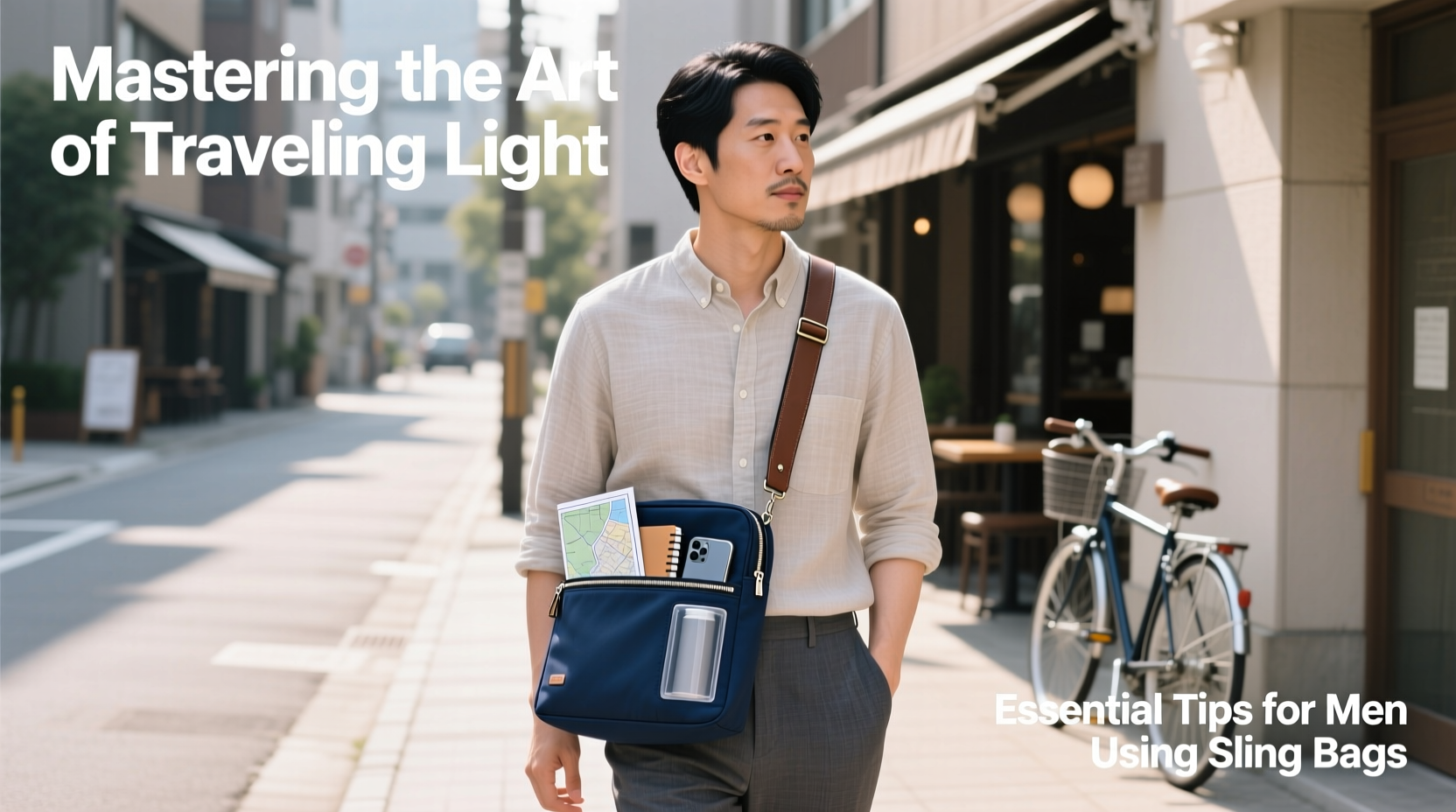
Not all sling bags are created equal. The ideal model depends on your daily routine, climate, and personal priorities. Look for durable materials like water-resistant nylon, waxed canvas, or full-grain leather. A well-structured bag with padded shoulder straps and breathable backing prevents strain during extended wear.
Size matters: most effective sling bags range from 5 to 10 liters. Anything larger defeats the purpose of minimalism; anything smaller may force uncomfortable compromises. Prioritize smart compartmentalization—a dedicated laptop sleeve (for up to 13” devices), a zippered main pocket, and at least one quick-access front pouch make organization effortless.
Essential Packing Principles for Minimalist Travel
Packing light starts with a mindset shift: ask yourself whether each item is necessary, versatile, or replaceable. Clothing should follow the “one-in, one-out” rule—if you add something new, remove an old piece. Stick to a cohesive color palette so everything mixes and matches effortlessly.
Roll clothes instead of folding to save space and reduce wrinkles. Use compression cubes or reusable silicone bags for toiletries and underwear. Limit footwear to two pairs maximum—one functional (walking shoes or boots) and one casual (loafers or sneakers).
“Minimalism in travel isn’t deprivation—it’s liberation through constraint.” — James Wu, Urban Mobility Consultant
What to Pack in a Travel-Ready Sling Bag (Weekend Trip Example)
| Category | Items | Notes |
|---|---|---|
| Electronics | Laptop/tablet, charger, power bank, earbuds | Use a slim case to reduce bulk |
| Clothing | 2 shirts, 1 sweater, underwear, socks | All wrinkle-resistant fabrics |
| Toiletries | Mini toothbrush, travel-sized deodorant, face wipes | Store in leak-proof pouch |
| Documents | Passport, ID, credit cards, boarding pass | Keep in RFID-blocking wallet |
| Extras | Sunglasses, notebook, pen | Only if frequently used |
Step-by-Step: Building Your Daily Carry System
Creating an efficient daily carry setup takes planning. Follow this sequence to build a reliable, repeatable system:
- Define your core needs: Identify what you use daily—phone, keys, wallet, work tools, hydration.
- Select multi-functional items: Choose a wallet that doubles as a phone stand, or a flashlight keychain with USB charging.
- Test weight distribution: Load your bag and walk around for 20 minutes. Adjust placement until balance feels natural.
- Create zones: Assign specific pockets—electronics in the back, wallet in the inner flap, snacks in the front.
- Review weekly: Remove unused items and refine based on real-world usage.
Avoid These Common Sling Bag Mistakes
Even experienced travelers fall into counterproductive habits. Recognizing these pitfalls early saves time, discomfort, and frustration.
- Overloading the front pocket: Makes the bag lopsided and difficult to close securely.
- Mixing dirty and clean items: Avoid tossing gym clothes or wet umbrellas directly next to electronics.
- Ignoring security features: Opt for bags with lockable zippers or anti-slash straps when traveling in crowded areas.
- Using the wrong carry side: Wear the sling across your chest, not behind your back, especially in transit hubs.
- Skipping maintenance: Dirt and sweat degrade fabric and hardware over time. Wipe down after heavy use.
Do’s and Don’ts Summary
| Do | Don't |
|---|---|
| Wear the strap diagonally across your torso | Carry it loosely over one shoulder only |
| Use packing cubes for small items | Let loose cables tangle in the main compartment |
| Invest in weatherproof models for outdoor cities | Assume all “water-resistant” bags are fully waterproof |
| Check airline carry-on size limits | Assume your sling automatically qualifies as personal item |
Real-World Example: A Week of Light Urban Travel
Mark, a freelance designer based in Berlin, switched from a backpack to a 7-liter sling bag for his client meetings and weekend trips. Initially skeptical, he found that limiting himself to 12 core items forced better decisions. He now carries a lightweight laptop, refillable water bottle, compact umbrella, Moleskine notebook, wireless earbuds, minimalist wallet, protein bar, lip balm, hand sanitizer, sunglasses, passport holder, and phone.
By rotating clothing at a laundromat and using cloud storage for files, Mark completed a 6-day trip to Lisbon without checking luggage. His feedback? “I moved faster, felt less tired, and spent zero time waiting at baggage claim.”
Frequently Asked Questions
Can I fit a 15-inch laptop in a sling bag?
Most sling bags accommodate up to 13-inch devices comfortably. While some oversized models claim 15-inch compatibility, they often sacrifice ergonomics and portability. If you regularly carry larger laptops, consider a convertible messenger-style sling or reevaluate whether a full-sized device is necessary for mobile work.
Are sling bags safe for long-term use?
When worn correctly—diagonally across the body and adjusted to sit snugly against the hip—sling bags distribute weight effectively and minimize spinal strain. However, prolonged single-shoulder use can lead to postural imbalances. Rotate shoulders periodically and avoid exceeding 10% of your body weight in carried load.
How do I keep my belongings secure?
Look for anti-theft features like hidden zippers, cut-resistant straps, and locking clasps. Always position the bag in front of you in crowded spaces like subways or markets. Never leave it unattended, even briefly.
Final Thoughts: Embrace the Freedom of Less
Mastering the art of traveling light with a sling bag isn’t about restriction—it’s about reclaiming control. Every unnecessary item removed is a step toward greater agility, clarity, and confidence. When you stop carrying everything “just in case,” you start moving through the world with purpose.
Your sling bag should reflect your values: efficiency, simplicity, and readiness. With deliberate choices and consistent refinement, it becomes more than an accessory—it becomes an extension of your lifestyle.




 浙公网安备
33010002000092号
浙公网安备
33010002000092号 浙B2-20120091-4
Comments
No comments yet. Why don't you start the discussion?