
There is more to drinking coffee than simply pouring a brew into a vessel. The way you hold your cup, balance it on its saucer, and engage in conversation while sipping speaks volumes about your presence and poise. While modern life often favors disposable cups and hurried sips, revisiting the tradition of using a porcelain coffee cup and saucer can bring a sense of mindfulness and refinement to even the most mundane morning routine. This practice, rooted in European café culture and formal dining etiquette, is not about pretension—it’s about intention. When done with care, it enhances both the sensory experience of coffee and the subtle grace of everyday gestures.
The History Behind the Cup and Saucer
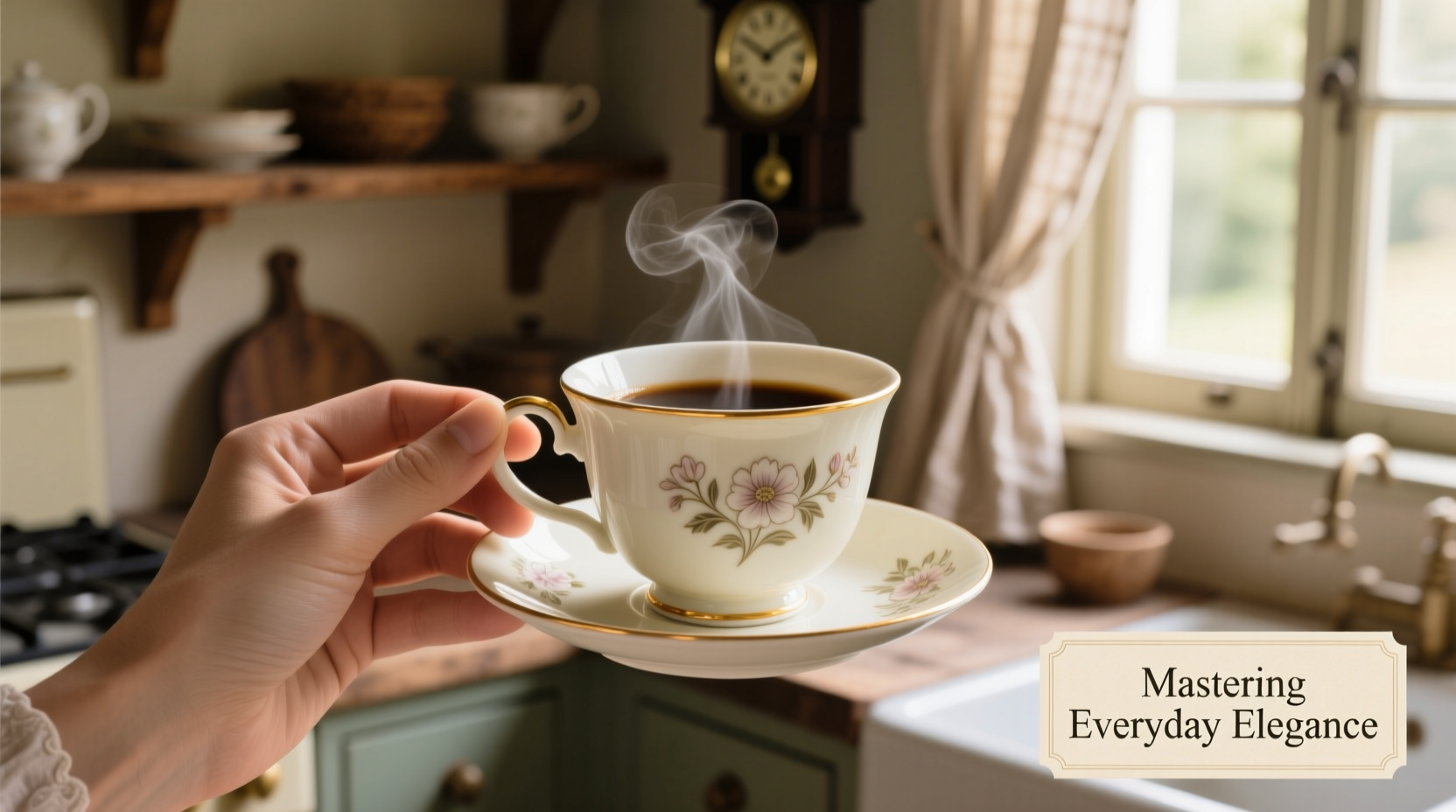
The pairing of a coffee cup with a saucer dates back to 18th-century Europe, where porcelain craftsmanship flourished and tea and coffee became symbols of sophistication. Originally designed to protect fine wood tables from heat and condensation, the saucer evolved into an elegant extension of the drinking ritual. In aristocratic circles, the way one handled their cup signaled social standing and breeding. Over time, this etiquette filtered into broader society, becoming part of formal service settings and high tea traditions.
Today, the cup and saucer remain staples in luxury hotels, fine dining establishments, and homes that value ritual over rush. Understanding their historical context helps modern users appreciate not just the object, but the quiet dignity embedded in its use.
Proper Handling: Technique and Posture
How you hold your coffee cup influences both comfort and appearance. The common mistake—gripping the handle with all four fingers like a mug—is functional but lacks finesse. For true elegance, adopt the traditional method:
- Rest the cup on the saucer placed on a flat surface.
- Using your dominant hand, gently hook your thumb through the handle.
- Lightly rest your index finger along the top of the handle for stability.
- Keep middle, ring, and pinky fingers slightly curled beneath, not rigid but relaxed.
Your wrist should remain straight, not bent outward. This position prevents wobbling and conveys calm control. When seated at a table, lift only the cup—not the saucer—unless adding sugar or stirring. Keep movements small and deliberate; large gestures risk spilling and appear rushed.
Setting the Stage: Serving and Presentation
The elegance of a coffee moment begins before the first sip. How you serve and present the cup and saucer sets the tone. Whether hosting guests or enjoying a solo pause, attention to detail transforms the ordinary.
Place the saucer on a level surface with the cup positioned so the handle faces right (at 3 o’clock) for right-handed individuals. Left-handers may prefer it at 9 o’clock. Include a teaspoon parallel to the handle unless stirring is not intended. If serving with sweets, place a small plate to the right of the saucer.
| Element | Best Practice | Avoid |
|---|---|---|
| Cup Position | Handle at 3 o’clock | Random orientation |
| Spoon Placement | Laid across saucer or beside cup | Left inside cup after stirring |
| Saucer Use | Always under cup when not in hand | Leaving cup directly on table |
| Serving Height | On coaster or trivet if surface is sensitive | Direct contact with polished furniture |
When serving multiple people, ensure uniformity in placement and matching sets. Mismatched pieces can feel charming in casual settings but may seem careless in formal ones.
Etiquette in Social Settings
Dining with others amplifies the importance of cup and saucer decorum. It’s not merely about looking graceful—it’s about showing respect for shared space and conversation.
Never stir your coffee vigorously. A few gentle clockwise turns suffice. After stirring, place the spoon on the saucer behind the cup, not resting across the rim. If you need to cool your drink, let it sit—do not blow on it. Sip quietly, pausing to set the cup down between sips rather than cradling it continuously.
In group settings, keep your pinky finger down. Despite popular myth, extending the pinky is not a sign of refinement—it originated from caricatures and has no basis in authentic etiquette.
“True elegance lies in restraint. A well-held cup signals patience, presence, and respect.” — Clara Montague, Etiquette Historian and Author of *The Civilized Pause*
Step-by-Step Guide: The Mindful Coffee Ritual
Transform your daily coffee into a ritual of calm and clarity with this five-step process:
- Prepare your space: Choose a quiet spot, free from distractions. Place your saucer and cup neatly with a clean spoon.
- Pour with care: Fill the cup no more than two-thirds full to prevent overflow and allow room for aroma.
- Hold correctly: Use the thumb-and-index method described earlier, lifting only the cup from the saucer.
- Sip mindfully: Take small sips, focusing on temperature, flavor, and breath. Set the cup down after each sip.
- Conclude gracefully: When finished, place the cup back on the saucer at a slight angle (handle still at 3 o’clock), signaling completion.
This sequence encourages presence, turning a routine act into a moment of self-awareness.
Maintaining Your Porcelain: Care and Longevity
Fine china requires thoughtful maintenance to preserve its beauty. Hand-wash cups and saucers with mild detergent and lukewarm water. Avoid stacking them without padding, as microscopic abrasions can dull the glaze over time. Store vertically or with soft liners between pieces.
Never expose porcelain to sudden temperature changes—don’t pour boiling water into a cold cup or place a hot cup on a cold surface. Thermal shock can cause hairline cracks.
Mini Case Study: Elevating a Morning Routine
Sarah, a project manager in London, used to drink takeout coffee at her desk while checking emails. She felt constantly rushed. Inspired by a visit to a Viennese café, she began using a delicate porcelain set at home each morning. She committed to sitting down, preparing her coffee slowly, and observing proper cup handling.
Within two weeks, she noticed a shift. Her mornings felt calmer, her focus sharper. Colleagues commented on her improved demeanor. “It’s not about the cup,” she said. “It’s about giving myself permission to pause. The ritual reminds me I’m not just a machine processing tasks.”
FAQ
Do I always have to use the saucer?
Yes, when seated at a table. The saucer protects surfaces and completes the aesthetic. If standing or walking, hold the cup without the saucer—but never carry the saucer alone.
What if my cup has no handle?
Some traditional demitasse cups are handle-less. In such cases, cradle the cup gently in both hands, being mindful of heat. Always place it back on the saucer when not in use.
Is it rude to leave the spoon in the cup?
Yes. Leaving the spoon in the cup during conversation is considered careless. Remove it after stirring and place it on the saucer or beside the cup.
Checklist: Daily Elegance in Five Actions
- ✅ Align the cup handle to the right on the saucer
- ✅ Hold the cup with thumb and index finger only
- ✅ Stir gently and remove the spoon promptly
- ✅ Set the cup down between sips
- ✅ Wash and store pieces carefully after use
Conclusion
Mastering the art of using a coffee cup and saucer is not about adhering to outdated rules. It’s about reclaiming moments of stillness, cultivating awareness, and expressing quiet confidence through simple actions. In a world that glorifies speed, choosing elegance is a radical act of self-respect. Whether you're alone with your thoughts or sharing conversation over coffee, let each sip reflect intention. Begin tomorrow with a properly held cup, and notice how the small details shape the larger rhythm of your day.




 浙公网安备
33010002000092号
浙公网安备
33010002000092号 浙B2-20120091-4
Comments
No comments yet. Why don't you start the discussion?