
A well-chosen statement belt does more than anchor an outfit—it transforms silhouettes, draws attention to your natural curves, and adds instant polish. When used strategically, a bold belt can redefine proportions, enhance posture, and elevate even the simplest ensemble. Yet many overlook its potential, treating it as mere accessory rather than a powerful tool in shaping their look. Understanding how to wear a statement belt for maximum waist definition requires knowledge of proportion, fabric, cut, and personal body shape. This guide reveals how to harness that power with confidence and precision.
The Power of Proportion: Why Belts Define Shape
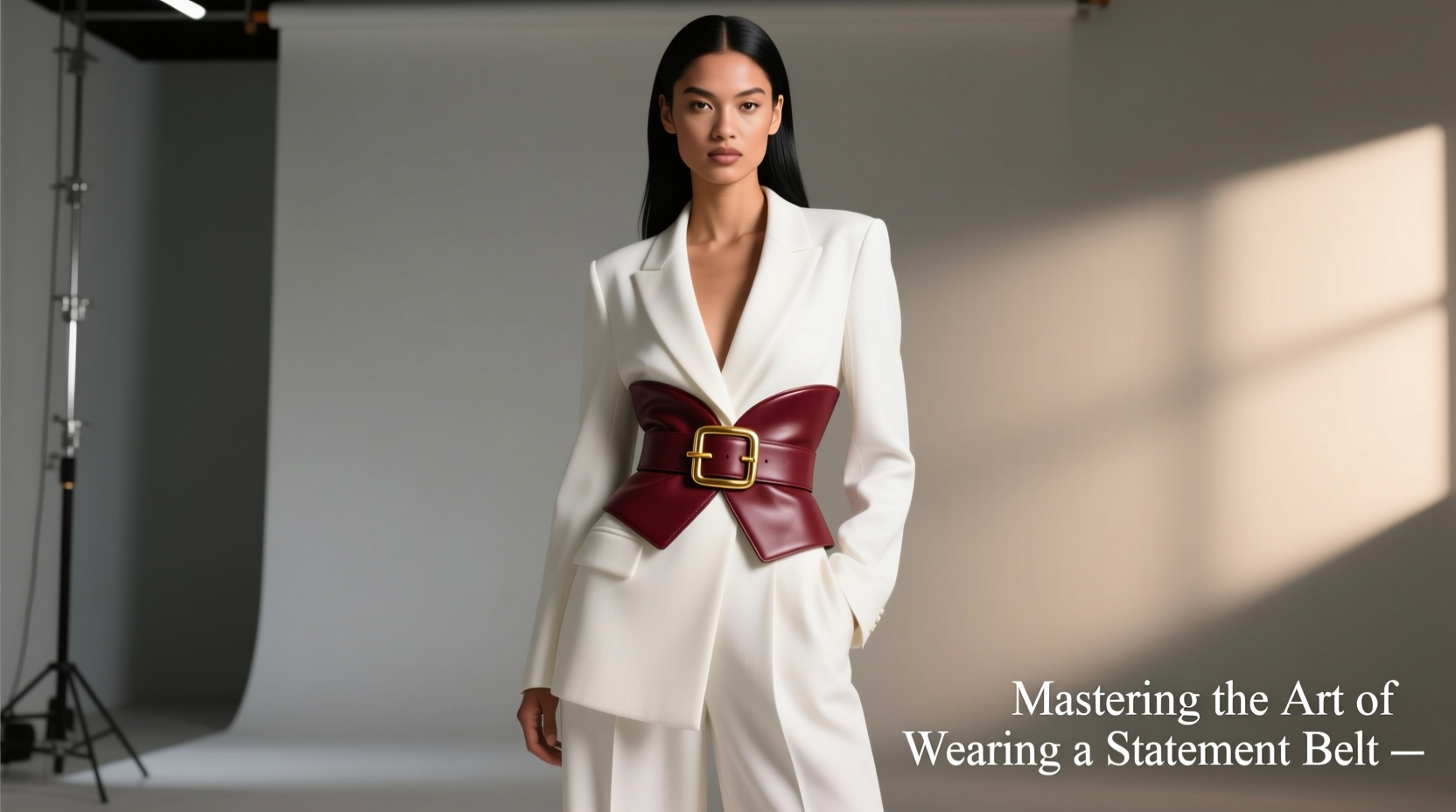
Clothing often follows a straight line from shoulder to hem, especially in looser trends like oversized blazers, shift dresses, or slouchy trousers. Without interruption, such styles risk obscuring the waist, creating a columnar silhouette. A statement belt introduces horizontal contrast, breaking up vertical space and signaling where the narrowest part of the torso should be emphasized.
Fashion designers have long used belts to sculpt form. As legendary stylist Grace Coddington once said:
“An hourglass isn’t always born—it’s often built. One well-placed belt can do more than corsetry.” — Grace Coddington, Creative Director Emeritus, Vogue
This principle holds whether you’re aiming for subtle refinement or dramatic flair. The key lies not just in wearing a belt, but in placing it correctly and pairing it thoughtfully.
Choosing the Right Belt for Your Body Type
Not all statement belts work equally well for every figure. Width, buckle size, color, and placement must align with your proportions to enhance rather than overwhelm.
| Body Type | Recommended Belt Style | Avoid |
|---|---|---|
| Pear (hips wider than shoulders) | Medium-width belt (1.5–2 inches) at natural waist | Extra-wide belts below hips |
| Apple (broad midsection, defined shoulders) | Slightly wider belt worn just above hips | Tight cinching at fullest part of waist |
| Hourglass (balanced bust and hips, narrow waist) | Bold, wide belts to emphasize natural curve | Narrow belts that disappear visually |
| Rectangle (minimal waist definition) | Structured wide belt at narrowest point | Flimsy or overly thin styles |
| Inverted Triangle (broad shoulders, narrower hips) | Waist-defining belt on sheath dresses or coats | Bulky buckles at hip level |
Strategic Placement: Where to Wear Your Belt
Location is everything. A belt worn even an inch too high or low can distort balance. Here’s how to find the ideal spot based on garment type:
- Dresses & Tunics: Place the belt at your natural waist, ideally where your torso bends when leaning side to side. For empire-line or flowy styles, consider adding a belt slightly below the bust to create faux waist definition.
- Blazers & Coats: Cinch at the narrowest part of your torso. Use a leather or structured fabric belt to maintain shape without buckling the outerwear.
- High-Waisted Trousers: Pair with a slim statement belt in contrasting color to highlight the waistband without bulk.
- Maxi Skirts & Dresses: Opt for a wide belt positioned at true waist height to prevent the look from dragging vertically.
- Over Knits or Layers: Choose a stiffer belt (like patent leather or woven canvas) that won’t sink into fabric and lose definition.
For petite figures, avoid belts that sit too low, as they can shorten leg lines. Tall frames can experiment with double belting—layering a thinner belt over a wider one—for added dimension.
Real-Life Example: Transforming an Outfit
Consider Sarah, a marketing executive who frequently wears tailored shirtdresses. While professional, her go-to navy dress lacked personality and made her appear boxy. By introducing a 2-inch cognac leather belt with a brushed gold rectangular buckle at her natural waist, she instantly created shape. Colleagues noticed the change, commenting on her “put-together” presence. The belt didn’t just define her waist—it gave the impression of intentional styling, boosting both perception and confidence.
Material Matters: Fabric, Finish, and Fit
The effectiveness of a statement belt depends heavily on construction. Soft fabrics like silk or elastic webbing may look stylish but lack structure, causing them to fold or slip instead of holding form. Prioritize materials that maintain rigidity:
- Leather (genuine or vegan): Offers durability and shape retention. Best for wide styles.
- Woven Jacquard or Tapestry: Adds texture and color; ideal for bohemian or artistic looks.
- Metal-linked or Chain Belts: Work best over lightweight layers or as accents, not for serious waist-cinching.
- Stiff Canvas or Webbing: Great for casual utility belts that still define shape.
Ensure the buckle complements the belt’s function. Large ornate buckles draw focus—perfect for minimalist outfits—but can overpower delicate fabrics. Smaller, geometric closures offer modern sophistication without dominating.
Step-by-Step Guide: Styling a Statement Belt Like a Pro
Follow this sequence to integrate a statement belt seamlessly into your wardrobe:
- Assess Your Outfit's Silhouette: Is it loose, fitted, long, or cropped? Determine where shape needs enhancement.
- Locate Your Natural Waist: Use a measuring tape or simply bend sideways to find the crease.
- Select Belt Width Based on Proportion: Wider belts make stronger statements but suit taller or curvier frames best.
- Match Metal Finishes to Other Jewelry: Coordinate gold, silver, or gunmetal tones across accessories for cohesion.
- Adjust for Comfort and Hold: Fasten securely but not tightly. You should be able to breathe and move naturally.
- Check in Full-Length Mirror: Turn side-on to ensure the belt sits flat and enhances, not distorts, your profile.
Common Mistakes to Avoid
Even experienced dressers fall into pitfalls. Watch out for these missteps:
- Belting at the Hips Instead of the Waist: Creates a lower focal point, shortening the torso.
- Using Flimsy Belts on Heavy Fabrics: Results in sagging and poor definition.
- Over-accessorizing Around the Midsection: Competing jewelry or layered tops distract from the belt’s effect.
- Ignoring Scale: A tiny buckle on a wide belt, or vice versa, disrupts visual harmony.
Frequently Asked Questions
Can I wear a statement belt if I have a larger midsection?
Absolutely. The goal isn't to hide but to define. Choose a belt in a color close to your outfit’s base tone and wear it just above the fullest part of your abdomen. This creates a flattering frame without drawing unwanted attention to volume.
Are wide belts outdated?
No—they cycle in and out of fashion but remain timeless tools for shaping. Designers like Bottega Veneta and The Row continue to feature wide waist-cinching belts in runway collections. The key is proportion: pair them with longer jackets or A-line skirts to balance the look.
How tight should a statement belt be?
Tight enough to hold its position and create gentle contouring, but not so tight that it causes bulging or discomfort. You should be able to slide two fingers underneath comfortably.
Final Checklist: Before You Belt Up
- ✅ Know your natural waist measurement
- Ensures proper fit and placement.
- ✅ Match belt width to body scale
- Avoid overwhelming smaller frames with oversized hardware.
- ✅ Coordinate metals with other accessories
- Creates a cohesive, polished appearance.
- ✅ Test movement and comfort
- Sit, walk, and reach to confirm functionality.
- ✅ Evaluate in full-length mirror
- Check front, side, and back views for symmetry and smoothness.
Conclusion: Shape With Intention
Mastering the art of wearing a statement belt isn’t about following fleeting trends—it’s about understanding how design influences perception. With thoughtful selection and precise placement, a single accessory can redefine your silhouette, express individuality, and bring intentionality to everyday dressing. Whether you're refining a workwear staple or elevating weekend denim, take a moment to consider where and how you belt. That small act could be the difference between blending in and standing out—on your own terms.




 浙公网安备
33010002000092号
浙公网安备
33010002000092号 浙B2-20120091-4
Comments
No comments yet. Why don't you start the discussion?