
Link bracelets have long been a staple in both men’s and women’s accessories, offering a timeless blend of elegance and edge. When worn alone, they make a subtle statement. But when layered thoughtfully, they become a dynamic expression of personal style. The key lies not in stacking as many as possible, but in curating combinations that harmonize in texture, proportion, and intent. Whether dressing up for a gala or adding flair to a weekend brunch outfit, mastering the art of layering link bracelets elevates your aesthetic with minimal effort and maximum impact.
The Foundations of Layering: Balance and Proportion
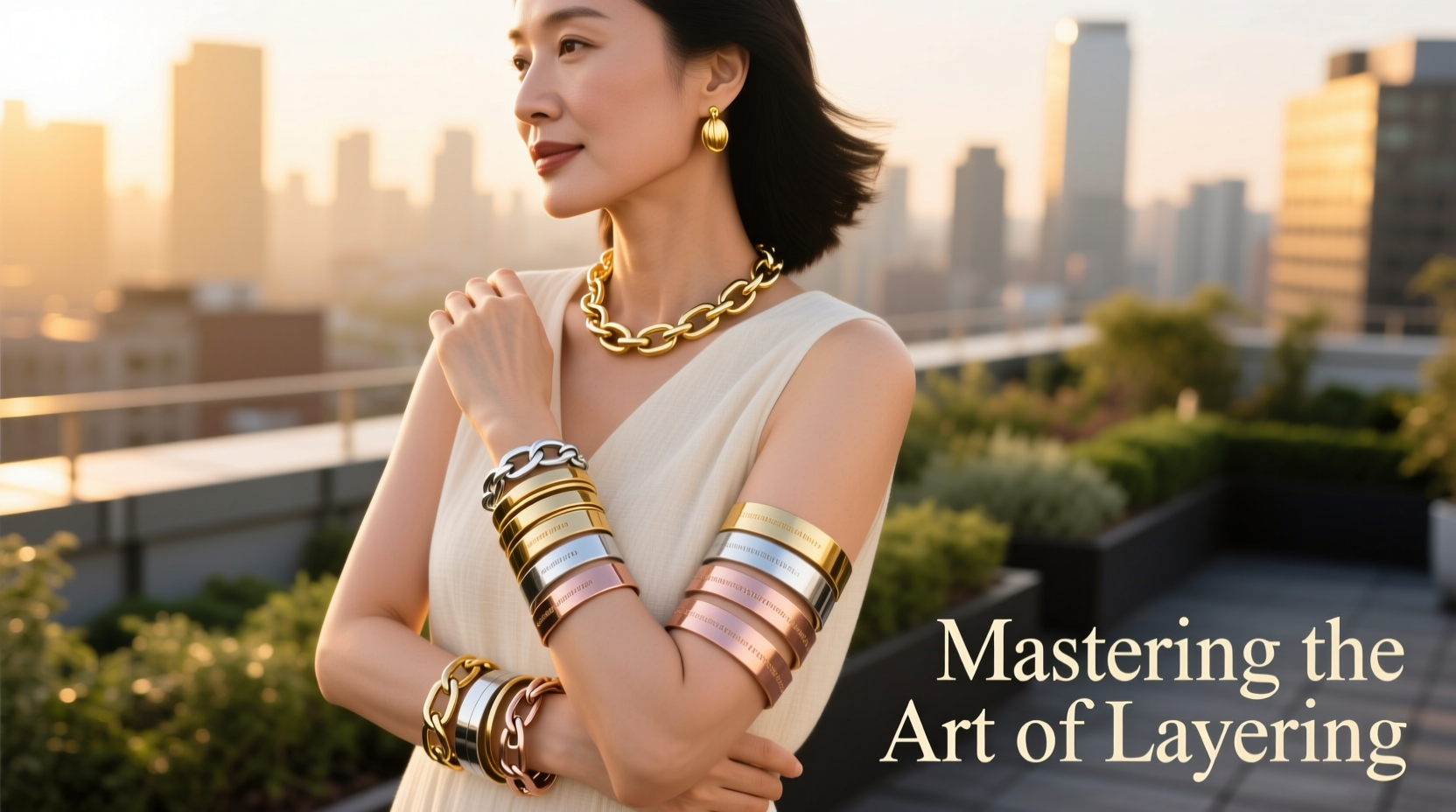
Successful bracelet layering begins with understanding balance. Wearing three thick, chunky chains on one wrist can overwhelm the hand and appear cluttered. Conversely, pairing only delicate links may get lost visually. The goal is contrast—mixing widths, lengths, and finishes to create depth without chaos.
Start by selecting a base piece: a medium-width link bracelet that complements your wrist size. This serves as your anchor. From there, build outward with one or two thinner pieces and perhaps one bolder design. A general rule is to keep the total number of bracelets between three and five. Any more risks visual overload, especially in professional settings.
Choosing the Right Materials and Finishes
Metal choice plays a crucial role in cohesion. While mixing metals was once taboo, modern styling embraces it—especially when done intentionally. Combine rose gold with silver for warmth and contrast, or pair yellow gold accents with stainless steel for a bold hybrid look. The trick is consistency: if you mix metals, repeat each tone at least twice across different pieces to create rhythm.
Texture also matters. Try combining a smooth curb chain with a twisted rope link or a hammered finish. These variations catch light differently, adding dimension even from a distance.
“Layering isn’t about quantity—it’s about conversation between pieces. Each bracelet should complement, not compete.” — Lena Torres, Jewelry Stylist & Consultant
Occasion-Based Layering Strategies
Not all events call for the same approach. What works at a rooftop cocktail party may feel out of place in a boardroom. Tailoring your stack ensures you project confidence without overstatement.
Casual Daywear: Effortless Edge
For everyday wear, aim for relaxed sophistication. Combine two to three link bracelets in mixed metals or textures. Include one piece with a small charm or engraved plate for personality. Leather-wrapped link bracelets or those with toggle closures add an urban touch.
- A brushed silver figaro chain
- A thin black leather band with a minimalist clasp
- A rose gold trace chain
This trio balances ruggedness and refinement, ideal for jeans, tees, or linen shirts.
Professional Settings: Understated Elegance
In corporate environments, subtlety wins. Stick to two or three bracelets in the same metal family. Opt for polished finishes and uniform links—such as box chains or cable links—to convey precision and polish.
A single substantial link bracelet paired with a sleek watch creates a powerful yet restrained statement. Alternatively, three slim interlocking chains in white gold offer quiet luxury.
Evening & Formal Events: Bold Expression
This is where layering shines. Go for four to five bracelets, including at least one standout piece—a wide link design, textured mesh, or one with embedded stones. Alternate between shiny and matte finishes to control light reflection.
Consider asymmetry: wear more bracelets on your non-dominant hand, leaving the dominant side clean for gestures. Pair with a cocktail ring or cuffwatch to anchor the look.
Step-by-Step Guide to Building Your Stack
Follow this timeline to create a personalized, versatile bracelet collection:
- Assess your wardrobe palette – Identify dominant metals in your existing jewelry (watches, rings, necklaces).
- Invest in a foundation piece – Choose a durable, medium-weight link bracelet in a complementary metal.
- Add contrast – Introduce one delicate chain and one textured or wider link for variety.
- Test in natural light – Wear the stack for a full day to evaluate comfort and visual harmony.
- Expand gradually – Add seasonal or event-specific pieces over time, avoiding impulse buys.
Do’s and Don’ts of Link Bracelet Layering
| Do | Don't |
|---|---|
| Mix metals intentionally, repeating each tone at least twice | Mix too many different metals without repetition |
| Vary thicknesses (e.g., 2mm, 4mm, 6mm) | Stack only thick or only thin bracelets |
| Ensure bracelets fit comfortably without pinching | Wear overly tight or loose-fitting stacks |
| Use a watch as part of the layering composition | Let your watch clash visually with surrounding bracelets |
| Adjust layers based on sleeve length and neckline | Wear bulky stacks under tight shirt cuffs |
Real-Life Example: Sarah’s Office-to-Evening Transition
Sarah, a marketing director in her mid-30s, wanted to express her creativity without compromising professionalism. By day, she wears a simple platinum box-link bracelet alongside a minimalist watch—clean, functional, and elegant. For evening networking events, she adds a vintage-inspired gold wheat chain and a slim black velvet choker-style link bracelet. The transformation takes seconds but shifts her presence from authoritative to approachable and stylish. Her colleagues often compliment her “effortless” look, unaware of the intentional curation behind it.
This case illustrates how strategic layering adapts to context while maintaining identity. Sarah’s core pieces remain consistent; only the accents change.
Frequently Asked Questions
Can I layer link bracelets with other types like bangles or cuffs?
Absolutely. Combining rigid bangles with flexible link chains adds structure and movement. Place softer link bracelets closer to the hand and stiffer cuffs near the elbow to avoid friction and breakage.
How do I prevent my bracelets from tangling?
Tangling is common with fine chains. Choose link styles with secure clasps and slightly stiffer construction. When not in use, store them in individual fabric-lined compartments or soft pouches. Avoid tossing them into a drawer loosely.
Is it okay to wear link bracelets on both wrists?
Yes, but maintain balance. If one wrist has a dense stack, keep the other minimal—a single bracelet or watch. Symmetry isn’t required, but visual weight should feel intentional, not accidental.
Final Thoughts: Make It Yours
Mastering the art of wearing multiple link bracelets isn’t about following rigid rules—it’s about developing an eye for harmony and expressing individuality through detail. The most memorable styles aren’t those that mimic trends, but ones that reflect the wearer’s rhythm, profession, and mood. Start with a strong foundation, experiment with contrast, and refine based on real-world feedback.
Your wrist is a canvas. Treat each bracelet not as an isolated accessory, but as part of a living composition—one that evolves with your experiences and choices.




 浙公网安备
33010002000092号
浙公网安备
33010002000092号 浙B2-20120091-4
Comments
No comments yet. Why don't you start the discussion?