
Art is not reserved for the naturally gifted. It’s a practice rooted in observation, repetition, and courage. Many aspiring artists hesitate because they believe talent is the gatekeeper. In truth, confidence in art comes from consistent engagement with fundamental skills—not innate ability. This guide strips away the myth of “being born an artist” and replaces it with actionable steps anyone can take to create meaningful work with growing assurance.
Start with the Right Mindset
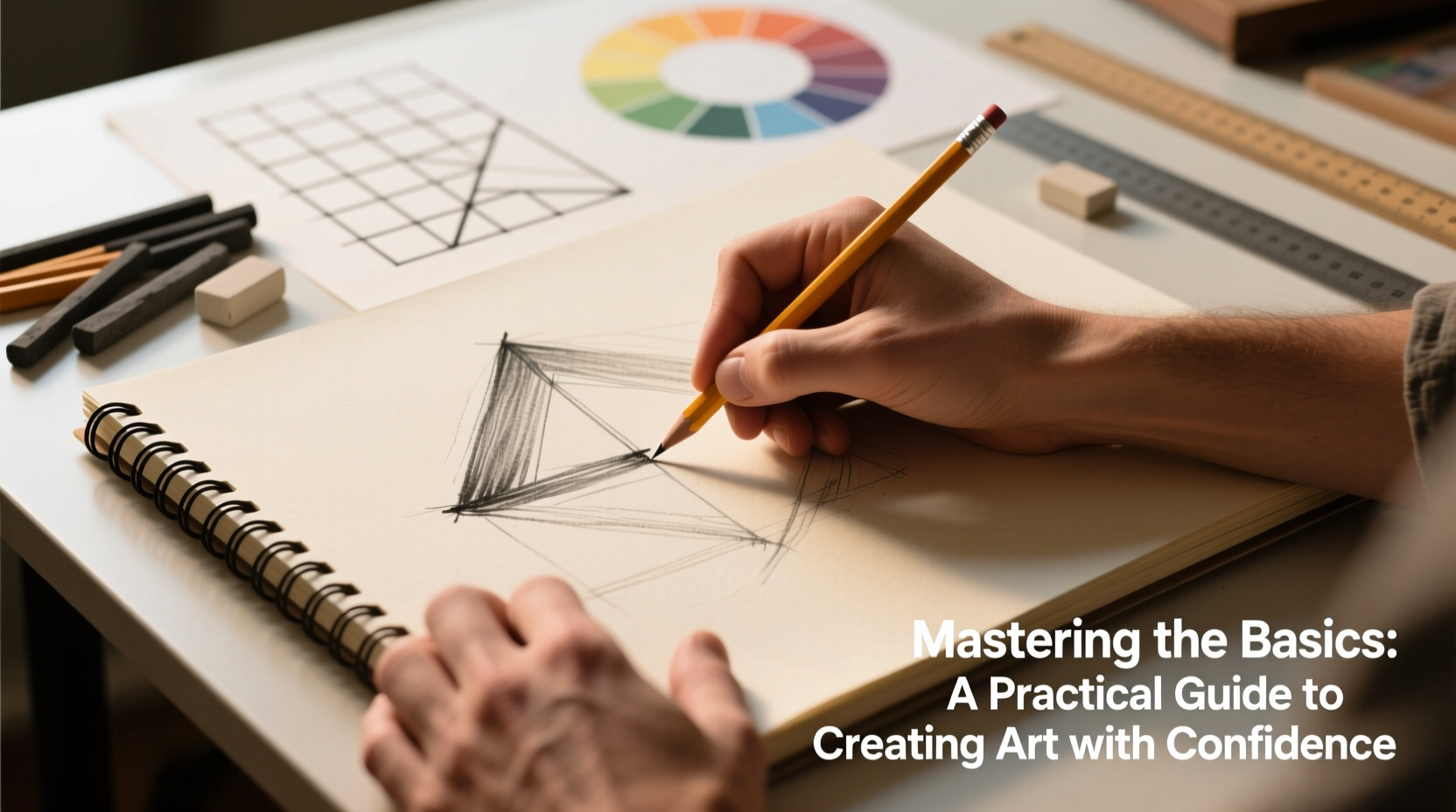
The first hurdle in making art isn’t technical—it’s psychological. The fear of imperfection stops more people than lack of skill ever does. Art is not about producing masterpieces on the first try; it’s about learning to see, respond, and refine. Embrace what psychologist Carol Dweck calls a \"growth mindset\": the belief that abilities develop through effort and feedback.
Every line you draw, every color you mix, adds to your visual vocabulary. Mistakes are not failures—they’re data. A crooked horizon teaches perspective. A muddy color mix reveals pigment behavior. When you stop judging each piece as “good” or “bad,” you open space for progress.
“Every artist was first an amateur.” — Ralph Waldo Emerson
Build Foundational Skills Through Practice
Confidence grows when competence follows. Before exploring complex compositions or advanced mediums, focus on mastering core principles. These fundamentals apply across styles and media, whether you're sketching with pencil or painting with oils.
Drawing from Observation
Photographs and imagination have their place, but drawing real objects trains your eye to interpret shape, proportion, and light. Begin with simple still lifes: a mug, a fruit, a folded cloth. Position them under natural light and spend 20–30 minutes capturing what you see, not what you think it looks like.
Understanding Basic Shapes and Forms
All complex subjects break down into basic geometric forms—spheres, cubes, cylinders. Practice constructing objects this way. A face becomes a sphere with cylinders for the nose and ears. A chair is a series of connected boxes. This simplification makes daunting subjects approachable.
Value and Contrast
One of the most powerful tools in visual art is value—the range from light to dark. Without strong contrast, even technically accurate drawings feel flat. Try a grayscale study using only three values: light, mid-tone, and shadow. Limiting your palette forces intentional decisions and strengthens tonal awareness.
Line Quality and Gesture
A line isn’t just an outline—it carries energy. Vary pressure and speed to express weight, motion, and emotion. Gesture drawing—quick 30-second to 2-minute sketches of moving figures—builds responsiveness and fluidity. Use online resources with timed figure sessions to practice regularly.
Essential Materials for Beginners
You don’t need an expensive studio to begin. Start simple and expand as your interests evolve. Below is a comparison of beginner-friendly materials across common mediums.
| Medium | Basic Kit | Best For | Cost Range (USD) |
|---|---|---|---|
| Pencil & Paper | #2 pencil, eraser, sketchbook | Learning form, value, composition | $5–$15 |
| Ink | Fine liner pens, waterproof ink, paper | Confident linework, detail work | $10–$25 |
| Watercolor | Student-grade set, round brush, water container | Transparency, layering, spontaneity | $15–$30 |
| Acrylic | Three primary colors, white, flat brush, palette | Texture, bold color, fast drying | $20–$40 |
A Step-by-Step Guide to Your First Finished Piece
Completing a piece from start to finish builds confidence faster than endless sketches. Follow this timeline to create a small but cohesive artwork in one week.
- Day 1: Choose a Subject – Pick something accessible: a plant, your coffee cup, or a photograph with clear lighting.
- Day 2: Thumbnail Sketches – Make five small (2-inch) rough compositions. Experiment with cropping and placement.
- Day 3: Final Drawing – Transfer your best thumbnail to a clean sheet. Focus on proportions and key lines.
- Day 4: Establish Values – Block in shadows and mid-tones. Use a reference photo if needed.
- Day 5: Add Details – Refine edges, textures, and focal points. Avoid overworking; step back often.
- Day 6: Evaluate – Hold the piece in a mirror or view it upside-down to spot imbalances.
- Day 7: Sign and Reflect – Sign your name. Write three things you learned from the process.
Real Example: From Doubt to Daily Practice
Sarah, a 34-year-old office administrator, had never drawn since elementary school. She started with a promise to herself: one 15-minute sketch per day for 30 days. Her first attempts were shaky—a lopsided apple, a distorted hand. But by day 10, she noticed her lines were cleaner. By day 20, she began experimenting with shading. On day 30, she completed a detailed pencil portrait of her cat from memory. She didn’t become a professional artist overnight, but she gained something more valuable: the quiet confidence that she could learn, improve, and create something meaningful.
Her turning point wasn’t a perfect drawing—it was showing up consistently, even when it felt awkward.
Checklist: Building Confidence in Your Art Practice
- ✅ Dedicate a specific time each week for art (even 20 minutes)
- ✅ Keep a sketchbook visible and ready to use
- ✅ Practice one foundational skill weekly (e.g., gesture, value, perspective)
- ✅ Complete at least one finished piece per month
- ✅ Share your work with one person for honest but kind feedback
- ✅ Review old work monthly to track growth
- ✅ Celebrate effort, not just outcome
“Art is the only way to run a risk without risking your life.” — William Saroyan
Frequently Asked Questions
How long does it take to become confident in art?
There’s no fixed timeline, but noticeable improvement typically occurs within 3–6 months of consistent practice (2–3 hours per week). Confidence builds incrementally as you recognize patterns, solve problems, and complete projects.
I keep comparing myself to others. How do I stop?
Comparison is natural but unproductive. Remember that social media often shows curated highlights, not the full journey. Focus on your own progress. Unfollow accounts that trigger self-doubt. Instead, follow artists who share their learning process, mistakes, and early works.
Do I need formal training to be good at art?
No. While classes can accelerate learning, countless skilled artists are self-taught. What matters most is deliberate practice—working with intention, seeking feedback, and studying fundamentals. Online tutorials, books, and community critiques can replace formal education when used consistently.
Take the Next Step With Courage
Artistic confidence isn’t something you wait for—it’s something you build stroke by stroke. You don’t need permission, perfect tools, or a grand idea. You need only the willingness to begin. Master the basics not to impress others, but to free your own voice. Each attempt expands your capacity to see, feel, and express. Let go of perfection. Trust the process. Create not when you feel ready, but because you are committed.




 浙公网安备
33010002000092号
浙公网安备
33010002000092号 浙B2-20120091-4
Comments
No comments yet. Why don't you start the discussion?