
Learning a new skill often feels overwhelming, especially when you're just starting out. The gap between where you are and where you want to be can seem too wide to cross. But every expert was once a beginner who chose to focus not on perfection, but on progress. Mastering the basics isn’t about rushing ahead—it’s about building a foundation so solid that everything else becomes easier. Whether you're learning to code, cook, create, or communicate, this guide breaks down the process into actionable steps that build competence, reduce frustration, and instill lasting confidence.
The Power of Starting Small
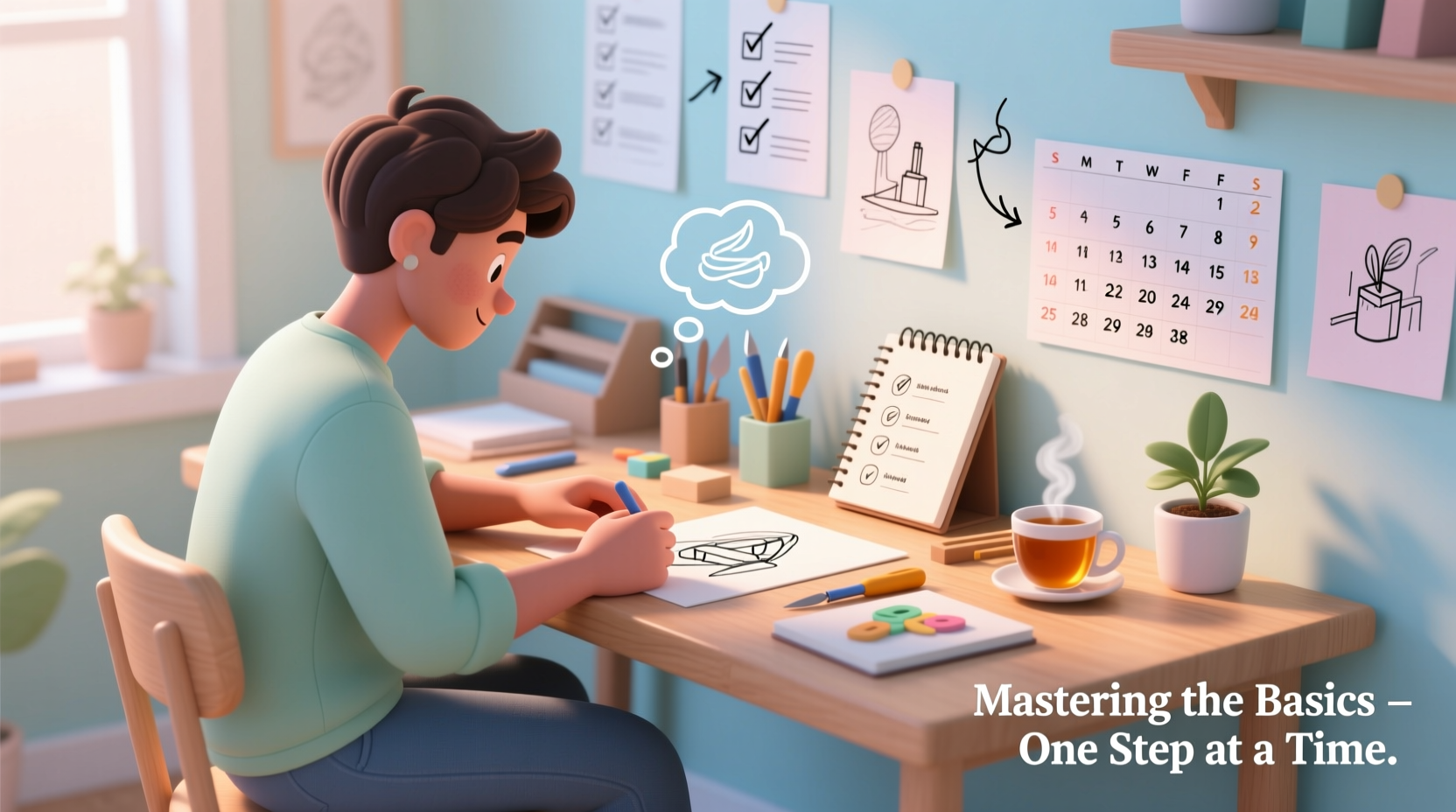
Many people abandon new skills because they expect immediate results. They try to write a novel on day one, cook a five-course meal without knowing how to chop an onion, or build an app before understanding variables. The truth is, mastery begins with micro-skills—tiny, repeatable actions that form the backbone of expertise.
Think of a pianist: they don’t start with Beethoven. They begin with scales. The same applies to any craft. Isolate the smallest unit of the skill you’re trying to learn. For coding, it might be writing a single line that prints “Hello, World.” In cooking, it could be mastering the perfect scrambled egg. These small wins compound over time.
Step-by-Step Guide to Building Confidence Through Basics
- Define Your Skill Clearly: What exactly are you trying to master? Instead of “I want to be good at coding,” say, “I want to understand HTML structure and write clean markup.” Specificity removes ambiguity and sets clear expectations.
- Break It Down: Divide the skill into core components. For example, if you're learning web development, break it into HTML, CSS, and JavaScript—one at a time.
- Learn One Concept at a Time: Don’t multitask across topics. Spend a full session understanding how HTML tags work before moving to attributes.
- Practice Immediately: After learning something new, apply it right away. Type the code, write the recipe, speak the sentence aloud. Doing cements knowledge faster than reading alone.
- Review and Reflect: At the end of each session, ask: What did I learn? What confused me? What can I improve tomorrow?
- Repeat with Slight Variations: Once comfortable, tweak your practice. Change a color in your CSS, modify a function input, swap ingredients in a dish. This builds adaptability.
Common Pitfalls and How to Avoid Them
Even with the best intentions, beginners often fall into predictable traps. Recognizing them early can save months of frustration.
| Pitfall | Why It Happens | Solution |
|---|---|---|
| Trying to learn everything at once | Overwhelm from information overload | Stick to one sub-skill per week |
| Avoiding mistakes | Fear of failure or looking incompetent | Embrace errors as feedback; debug, don’t despair |
| Skipping fundamentals | Impatience to reach advanced outcomes | Trust the process—foundations enable speed later |
| Practicing without feedback | No way to know if you’re improving | Use tools, peers, or mentors to review your work |
Real Example: From Confusion to Clarity
Sarah, a marketing professional, wanted to learn basic web design to update her company’s landing pages. She started by watching a two-hour video on HTML and CSS but felt lost. Discouraged, she paused for weeks. When she returned, she changed her approach. She committed to just 15 minutes a day. Day 1: Learn what a <p> tag does. Day 2: Add a heading. Day 3: Style text with inline CSS. Within two weeks, she built a simple page. By week four, she confidently edited live content. Her breakthrough wasn’t talent—it was discipline in mastering one tiny concept at a time.
“Mastery isn’t reserved for geniuses. It’s available to anyone willing to respect the basics.” — Dr. Alan Torres, Cognitive Learning Researcher
Your First 30-Day Mastery Checklist
Use this checklist to stay on track and measure progress. Print it or keep it open on your device.
- ✅ Choose one core skill to focus on
- ✅ Break it into 4–6 foundational sub-skills
- ✅ Schedule 10–20 minutes of daily practice
- ✅ Complete one mini-project by day 15 (e.g., a working button, a short paragraph in a new language)
- ✅ Review your work weekly and note improvements
- ✅ Seek feedback from a peer, mentor, or online community
- ✅ Celebrate small milestones (completed a module, fixed a bug, cooked without burning)
FAQ: Addressing Common Beginner Questions
How do I know if I’m making progress when nothing feels like it’s clicking?
Progress in the early stages is rarely dramatic. Look for subtle signs: you hesitate less, recall terms faster, or spot mistakes more easily. These are quiet indicators of growth. Track them in a journal to see patterns over time.
Should I use tutorials, books, or courses?
All can work, but prioritize active learning. A tutorial is only useful if you pause and try it yourself. Books offer depth but require self-discipline. Courses provide structure. Choose based on your learning style, but always pair input with hands-on practice.
What if I get stuck and don’t know where to go next?
Getting stuck is normal—and necessary. Try this: step back, explain the problem out loud (even to yourself), search for solutions using specific keywords, and ask in a focused forum like Stack Overflow or Reddit. Often, the act of articulating the issue reveals the answer.
Building Confidence Through Repetition and Reflection
Confidence doesn’t come from knowing everything. It comes from knowing you can figure things out. Each time you solve a small problem—fix a typo in code, season a dish correctly, pronounce a word accurately—you strengthen your belief in your ability to learn.
Reflection amplifies this effect. Spend five minutes at the end of each week asking:
- What was the most challenging part this week?
- What would I do differently next time?
- What am I now able to do that I couldn’t three days ago?
This habit shifts your mindset from “I’m not good yet” to “I’m getting better.” That shift is the heart of lasting confidence.
Conclusion: Start Where You Are, Build What You Need
Mastering the basics isn’t glamorous, but it’s transformative. It turns confusion into clarity, hesitation into action, and doubt into confidence. There’s no shortcut around the fundamentals—but there’s immense power in walking through them deliberately. You don’t need talent. You don’t need years of experience. You just need the willingness to start small, stay consistent, and trust the process.




 浙公网安备
33010002000092号
浙公网安备
33010002000092号 浙B2-20120091-4
Comments
No comments yet. Why don't you start the discussion?