
Maintaining proper tire pressure isn’t just about fuel efficiency—it’s critical for safety, handling, and tire longevity. Underinflated tires increase stopping distances, reduce traction, and are more prone to blowouts. Yet, many drivers overlook this simple maintenance task. The solution? Learning how to use an air tire pump correctly and consistently. Whether you're at a gas station, using a portable unit at home, or inflating bike tires, mastering this skill ensures your vehicle performs optimally in all conditions.
Why Proper Tire Inflation Matters
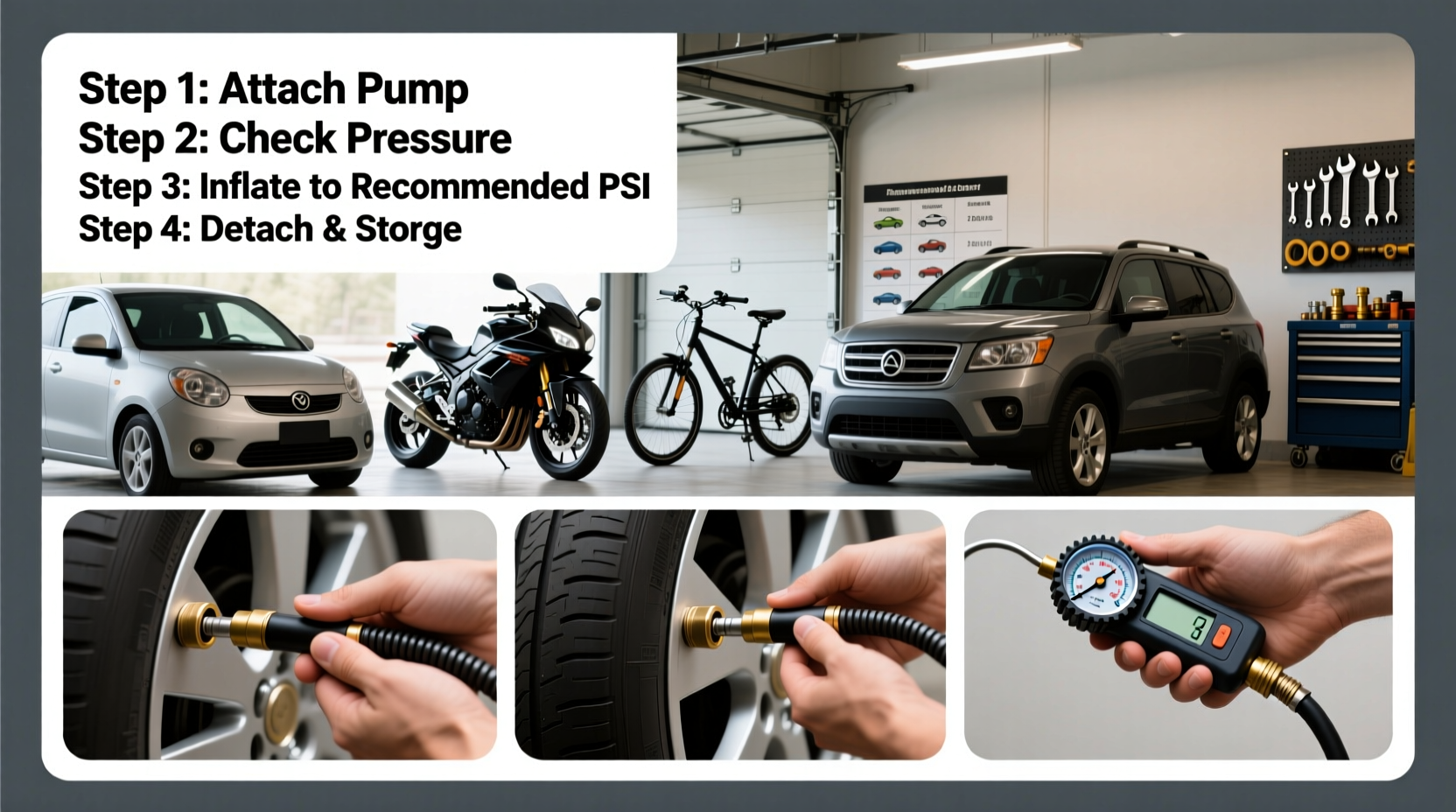
Tires are the only part of your vehicle that makes contact with the road. Their condition directly affects braking, steering, and ride comfort. According to the U.S. Department of Energy, underinflated tires can lower gas mileage by 0.2% for every 1 psi drop in pressure across all four tires. Over time, this adds up—not just in fuel costs, but in premature wear and potential roadside emergencies.
Manufacturers specify ideal tire pressure (measured in PSI—pounds per square inch) based on load, speed, and design. This information is usually found on a sticker inside the driver’s door jamb, not on the tire sidewall, which lists maximum pressure, not recommended pressure.
“Regularly checking and adjusting tire pressure is one of the most cost-effective ways to improve safety and extend tire life.” — Robert Ellis, Automotive Maintenance Specialist, ASE Certified
Types of Air Tire Pumps and Where to Use Them
Not all air pumps are created equal. Understanding the differences helps you choose the right tool for your needs.
| Type | Best For | Pros | Cons |
|---|---|---|---|
| Gas Station Compressors | Cars, trucks, SUVs | High power, free to use | Less accurate, exposed to weather |
| Portable Electric Pumps | Home use, emergencies | Convenient, often digital | Requires power source or battery |
| Battery-Operated Cordless Pumps | RVs, trailers, remote locations | Highly portable, no cords | Limited runtime, slower fill speed |
| Floor (Trackside) Pumps | Bicycles, motorcycles | Precise control, durable | Not suitable for high-volume tires |
| Hand (Manual) Pumps | Bikes, small inflatables | No power needed, compact | Labor-intensive, slow |
Selecting the right pump depends on your vehicle type, frequency of use, and storage space. For most car owners, a portable electric pump with an automatic shut-off feature offers the best balance of convenience and reliability.
Step-by-Step Guide: How to Use an Air Tire Pump Safely and Accurately
Using an air pump properly takes less than five minutes but prevents costly mistakes. Follow this sequence whether you’re at a service station or using a personal device.
- Gather your tools: Air pump, tire pressure gauge (if not built-in), owner’s manual or door jamb sticker for correct PSI.
- Inspect the tire: Look for nails, bulges, or excessive wear. Do not inflate a damaged tire.
- Remove the valve cap: Unscrew it counterclockwise and place it in a secure spot (like a pocket).
- Check current pressure: Press the gauge firmly onto the valve stem. You’ll hear a brief hiss—this is normal. Read the displayed PSI.
- Connect the pump: Attach the hose nozzle securely to the valve stem. Hold straight to avoid leaks.
- Inflate in short bursts: Especially with manual controls, pump for 5–10 seconds, then recheck pressure. Overfilling is common and requires releasing air.
- Recheck with gauge: Even if the pump has a digital display, verify with a separate gauge for accuracy.
- Adjust as needed: If overinflated, press the center pin in the valve stem briefly to release air. Recheck until correct.
- Replace the valve cap: It keeps dirt and moisture out and maintains seal integrity.
- Repeat for all tires: Don’t forget the spare if applicable.
Real Example: Preventing a Blowout on a Summer Road Trip
Mark, a father of two from Colorado, was preparing for a cross-state drive with his family. He stopped at a gas station and noticed the TPMS (Tire Pressure Monitoring System) light flickering. Instead of ignoring it, he used the station’s air pump to check each tire. The rear passenger-side tire read 24 psi—nearly 10 psi below the recommended 34 psi. After inflating it, the TPMS light turned off. Later, he discovered a small nail had partially penetrated the tread. The low pressure had masked the leak. By addressing it early, he avoided a dangerous blowout on the highway.
This scenario underscores why routine checks matter—even when no symptoms appear. Temperature changes alone can alter pressure by 1–2 psi per 10°F change. A tire inflated in cool morning air may become dangerously over-pressurized by afternoon heat if already overfilled.
Do’s and Don’ts of Tire Inflation
| Do’s | Don’ts |
|---|---|
| Check pressure monthly and before long trips | Assume the TPMS will catch all issues |
| Use the recommended PSI from the door jamb | Use the max PSI listed on the tire sidewall |
| Inflate when tires are cold | Add air immediately after driving |
| Double-check with a reliable gauge | Trust station gauges without verification |
| Keep a portable pump in your trunk | Over-tighten the valve cap (can damage threads) |
Essential Checklist for Tire Pressure Maintenance
- ✅ Locate recommended PSI (driver’s door sticker or manual)
- ✅ Acquire a reliable tire pressure gauge or digital pump
- ✅ Inspect tires visually for damage before inflating
- ✅ Remove valve cap and check current pressure
- ✅ Connect pump securely and inflate in short intervals
- ✅ Verify final pressure with gauge
- ✅ Replace valve caps on all tires
- ✅ Record date and pressure for future reference
- ✅ Store pump in dry, accessible location (e.g., glove compartment or trunk)
Frequently Asked Questions
Can I use the same pump for my car and bicycle?
Most car pumps are designed for Schrader valves, which are standard on cars, motorcycles, and some bikes. However, many bicycles use Presta valves, which are narrower. Unless your pump has a dual-head nozzle or adapter, it won’t fit. Additionally, bike tires require much higher precision (e.g., 65–90 psi), so using a car compressor risks overinflation. Use a dedicated floor pump with a pressure gauge for bicycles.
Why does my tire pressure drop in cold weather?
Air contracts when cooled. For every 10°F drop in temperature, tire pressure decreases by about 1–2 psi. This is normal but should be corrected. Never “bleed” air during hot weather to compensate—seasonal fluctuations should be managed through regular checks, not pre-adjustments.
Is it safe to use public air compressors?
Yes, but with caution. Public units can be inaccurate or poorly maintained. Always bring your own gauge to verify pressure. Also, avoid leaving the pump unattended—many have timers, but continuous use can overheat the motor. Use short bursts and monitor progress manually.
Final Thoughts: Make Tire Care a Habit
Using an air tire pump correctly is a small act with outsized benefits. It enhances safety, improves fuel economy, and extends tire life—often saving hundreds of dollars annually. The process is quick, inexpensive, and entirely within your control. With a modest investment in a quality pump and five minutes a month, you gain peace of mind every time you turn the key.
Don’t wait for a dashboard warning or uneven tread wear to act. Integrate tire pressure checks into your routine like buckling a seatbelt—non-negotiable and automatic. Your vehicle, wallet, and passengers will thank you.




 浙公网安备
33010002000092号
浙公网安备
33010002000092号 浙B2-20120091-4
Comments
No comments yet. Why don't you start the discussion?