
Professional success rarely happens in isolation. Behind every career leap, promotion, or new opportunity is often a strong network of trusted contacts. Yet for many, especially early in their careers, the idea of building a meaningful professional network feels overwhelming—especially when starting from zero. The truth is, networking isn’t about collecting business cards or adding strangers on LinkedIn. It’s about cultivating authentic relationships that grow over time. With intention and consistency, anyone can build a powerful network, no matter their background or current connections.
Why Networking Matters More Than Ever
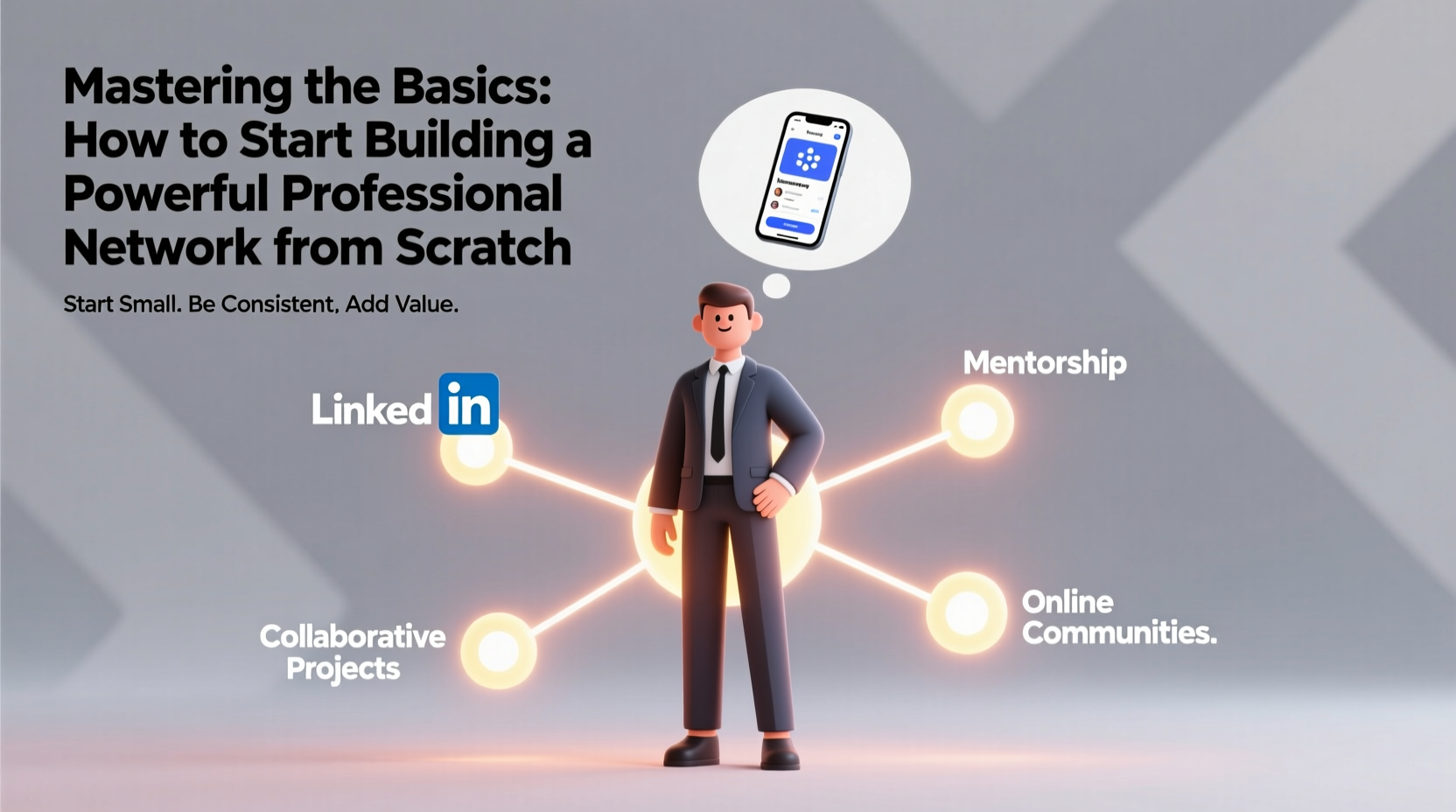
In today’s fast-moving job market, up to 85% of jobs are filled through networking, according to research by LinkedIn and various career development studies. Whether you're seeking mentorship, exploring new industries, or looking for your next role, who you know often opens doors that skills alone cannot. Strong networks provide access to hidden opportunities, insider knowledge, and long-term career resilience.
But effective networking isn’t transactional. It’s not about asking for favors the moment you connect. Instead, it’s rooted in mutual value, curiosity, and genuine interest in others’ work and goals. Building a network from scratch begins with mindset: view each interaction as the start of a potential relationship, not just a means to an end.
The Foundation: Defining Your Networking Goals
Before reaching out to others, clarify what you want from your network. Are you aiming to transition into a new industry? Find a mentor? Gain visibility in your field? Clear objectives shape how and where you network.
Start by answering three questions:
- What are my short- and long-term career goals?
- Who do I need to know to get there?
- What value can I offer in return?
Once defined, these answers guide your outreach strategy. For example, if you’re entering tech sales, prioritize connecting with sales development reps, account executives, and hiring managers at growing startups. If you’re shifting into sustainability, seek professionals in ESG, corporate responsibility, or green innovation.
A Step-by-Step Guide to Building Your Network from Scratch
Building a network doesn’t require charisma or connections—it requires action. Follow this five-step process to lay a strong foundation.
- Optimize Your Online Presence
Ensure your LinkedIn profile is complete, professional, and keyword-rich. Use a clear photo, compelling headline (e.g., “Aspiring Product Manager | Ex-Operations Lead”), and a summary that highlights your goals and strengths. - Identify 10 Target Contacts
Search LinkedIn for people in roles or companies you admire. Look for alumni, shared interests, or second-degree connections. Prioritize those with approachable profiles and recent activity. - Send Personalized Connection Requests
Avoid generic messages. Mention a shared experience, compliment their work, or reference a post they wrote. Example: “Hi Sarah, I saw your talk on remote team leadership—really resonated with my experience managing distributed teams at XYZ Corp. Would love to connect.” - Engage Before You Ask
Like, comment, or share their content. This builds familiarity before you reach out directly. After a few interactions, send a warm follow-up message to start a conversation. - Schedule Insight Conversations
Ask for 15 minutes to learn about their journey or advice for someone entering the field. Most professionals are happy to help when the request is specific and low-pressure.
Do’s and Don’ts of Early-Stage Networking
| Do | Don't |
|---|---|
| Personalize every message based on the person’s background | Use copy-paste templates or robotic language |
| Follow up once if unanswered, then move on gracefully | Send multiple follow-ups or pressure for a response |
| Prepare thoughtful questions for insight calls | Ask for a job or referral in the first conversation |
| Express gratitude with a thank-you note after a chat | Disappearing after getting advice without acknowledgment |
| Stay in touch periodically with updates or useful articles | Only reach out when you need something |
Real Example: From Isolation to Industry Access
Lena, a recent graduate in environmental science, wanted to pivot into climate policy but had no contacts in the field. She began by researching professionals on LinkedIn working at NGOs and government agencies. Over two weeks, she sent 15 personalized connection requests referencing their reports or public talks.
Three accepted. She asked one, a program officer at a sustainability nonprofit, for a brief call to understand how he entered the sector. During the conversation, she asked insightful questions and later sent a thank-you email with a link to a relevant article. Six weeks later, when a junior analyst role opened at his organization, he remembered her proactive approach and recommended her application.
Lena didn’t ask for a job. She built rapport, showed genuine interest, and stayed visible. That single conversation led to her first role in the industry.
“Your network is your net worth in the modern economy. But it only grows when you invest time in others—not just yourself.” — Keith Ferrazzi, author of *Never Eat Alone*
Action Checklist: First 30 Days of Networking
Use this checklist to launch your networking journey with focus and momentum.
- ✅ Update your LinkedIn profile with a professional photo, headline, and summary
- ✅ Identify 10 target professionals in your desired field or company
- ✅ Send personalized connection requests to 5 of them this week
- ✅ Engage with content from 3 people you admire (comment thoughtfully)
- ✅ Request one 15-minute insight call; prepare 3–5 questions
- ✅ Follow up with a thank-you message after any conversation
- ✅ Schedule one networking activity per week moving forward
Frequently Asked Questions
What if I don’t know anyone in my desired industry?
Start with indirect connections: alumni groups, online communities (like Slack or LinkedIn groups), or events hosted by professional associations. Many people are open to helping newcomers—especially if you show initiative and respect their time.
How often should I follow up with contacts?
Every 2–3 months is ideal for maintaining visibility without being pushy. Share an update about your progress, congratulate them on a promotion, or send an article relevant to their work. Keep it light and value-driven.
Is it okay to network if I’m currently employed?
Absolutely. Networking is part of professional growth, not a signal you’re job hunting. Many valuable relationships lead to collaborations, learning, or future opportunities—not immediate transitions.
Conclusion: Start Small, Think Long-Term
Building a powerful professional network doesn’t happen overnight. It begins with a single message, one conversation, and a commitment to showing up consistently. The most influential networks are grown through patience, authenticity, and reciprocity—not urgency or self-interest.
You don’t need a flashy title or years of experience to begin. What you do need is curiosity, courage, and the willingness to reach out. Every expert was once a beginner. Every connection started with a hello.




 浙公网安备
33010002000092号
浙公网安备
33010002000092号 浙B2-20120091-4
Comments
No comments yet. Why don't you start the discussion?