
Temperature monitoring is a critical part of health management, especially during illness or when tracking symptoms in children and elderly family members. Braun thermometers are renowned for their precision, speed, and ease of use—but even the most advanced device delivers inaccurate results if not used correctly. Understanding how to operate your Braun thermometer properly ensures you get reliable data that informs smart health decisions.
This comprehensive guide walks through every essential aspect of using a Braun thermometer, from initial setup to interpreting results, avoiding common mistakes, and maintaining accuracy over time. Whether you're using a forehead (temporal artery), ear (tympanic), or digital oral model, these steps apply across Braun’s trusted product line.
Understanding Your Braun Thermometer Model
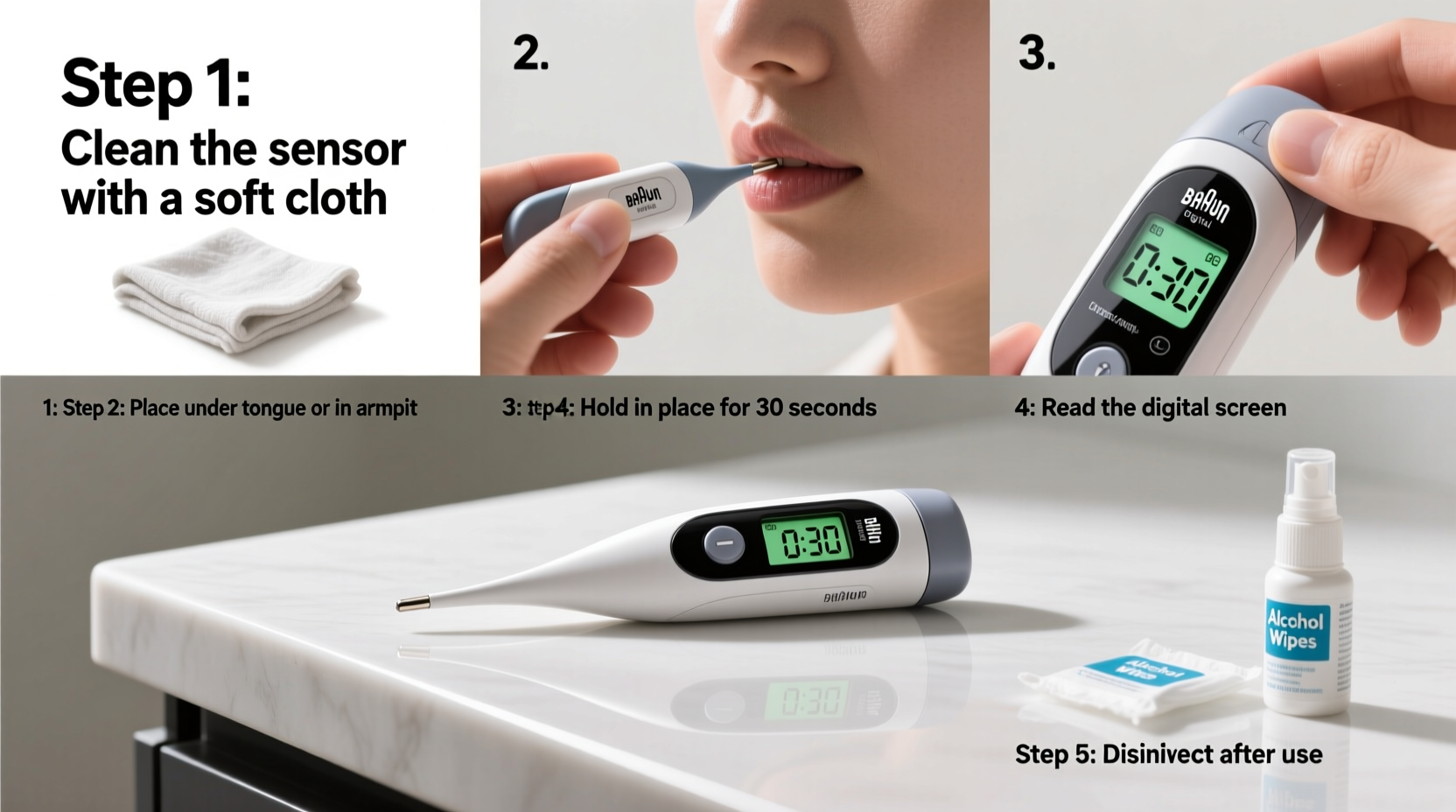
Braun offers several types of thermometers, each designed for specific use cases and age groups. The two most popular models are the Braun ThermoScan (ear) and the Braun ThermoScan 7 (with Age Precision technology). There’s also the Braun Forehead Thermometer, ideal for non-invasive scanning, particularly in sleeping infants or restless children.
Before using any thermometer, identify your model and its intended measurement site—this determines preparation, positioning, and interpretation of results. For example:
- Ear thermometers: Measure infrared heat from the eardrum. Require proper ear canal alignment.
- Forehead thermometers: Scan the temporal artery. Must be swiped correctly across the forehead.
- Digital oral/rectal thermometers: Used under the tongue or rectally; require stillness and correct placement.
Step-by-Step Guide to Accurate Temperature Readings
Accuracy depends on consistent technique. Follow this universal protocol regardless of model type:
- Prepare the Environment: Avoid taking temperatures immediately after bathing, feeding, or physical activity. Wait at least 15–30 minutes in a room with stable temperature (ideally 16–40°C / 60–104°F).
- Clean the Sensor: Use a soft cloth slightly dampened with alcohol to wipe the lens (ear or forehead scanner). Let it dry completely before use.
- Power On and Confirm Ready Status: Turn on the device and wait for the “ready” signal—usually a beep or flashing icon.
- Position Correctly:
- For ear models: Gently pull the ear back to straighten the canal. Insert the probe snugly into the ear canal, pointing toward the opposite eye.
- For forehead models: Place the sensor flush against the center of the forehead. Slide slowly across to the temple area as instructed.
- For oral models: Place the tip under the tongue, toward the back. Keep mouth closed and breathe through the nose.
- Take the Reading: Hold steady until the thermometer beeps. Do not move during measurement.
- Record the Result: Note the temperature along with time and method used. Many Braun models store up to 9 previous readings—use this feature to track trends.
- Clean After Use: Wipe the probe again, especially after ear or oral use, to prevent contamination.
“Consistency in technique matters more than the device itself. Even high-end thermometers can give false highs or lows if misused.” — Dr. Linda Chen, Pediatric Nurse Practitioner
Do’s and Don’ts When Using a Braun Thermometer
| Do’s | Don’ts |
|---|---|
| Use a new lens filter with each ear reading (if applicable) | Share ear probes without cleaning or replacing covers |
| Wait 15 minutes after exercise or eating/drinking | Take temperature right after a hot shower or cold drink |
| Store in a cool, dry place away from direct sunlight | Leave the thermometer in a car or humid bathroom |
| Check battery level regularly | Ignore low-battery warnings—they affect accuracy |
| Calibrate periodically per manufacturer instructions | Drop or expose the device to extreme impacts |
Real-World Example: Managing a Child’s Fever at Home
Sarah, a mother of two, noticed her 3-year-old son was unusually fussy one evening. She reached for her Braun ThermoScan 7, which she had used consistently since infancy. Following her routine, she waited 20 minutes after he finished dinner, cleaned the probe, inserted a new lens cover, and positioned the thermometer correctly in his ear. The reading showed 38.6°C (101.5°F)—a mild fever.
Instead of panicking, Sarah reviewed the last three readings stored in memory. Over the past 12 hours, his temperature had risen gradually from 37.2°C to 38.6°C. Armed with this trend, she opted for hydration and rest rather than medication. By morning, his temperature had normalized. Her disciplined use of the thermometer prevented unnecessary ER visits and allowed for calm, informed care.
Ensuring Long-Term Accuracy and Maintenance
Your Braun thermometer is an investment in health monitoring. To preserve its performance:
- Replace lens filters regularly: Ear models rely on clean, undamaged covers to maintain hygiene and thermal conductivity.
- Check calibration annually: Compare your thermometer’s reading against a known standard (e.g., ice water test for oral models: should read 0°C / 32°F) or send it in for professional service.
- Avoid extreme storage conditions: Heat, cold, and humidity degrade internal sensors and batteries.
- Update firmware (if applicable): Some newer Braun models support updates via computer connection for improved functionality.
If readings seem inconsistent despite correct use, replace the batteries first—weak power is the most common cause of erratic behavior.
Frequently Asked Questions
Why does my Braun thermometer give different readings each time?
Minor variations (within 0.2°C) are normal due to natural body fluctuations. Larger discrepancies usually stem from improper positioning, environmental factors, or a dirty sensor. Ensure consistent technique and clean the probe before each use.
Can I use a forehead Braun thermometer on a baby under 3 months?
Yes, but with caution. Newborns have less developed temporal arteries, so readings may be less reliable. For infants under 3 months with suspected fever, confirm with a rectal digital thermometer—the gold standard for accuracy in newborns.
How do I switch between Fahrenheit and Celsius?
Turn off the thermometer. Press and hold the power button for 5–8 seconds until the unit symbol appears. Press the button again to toggle between °F and °C, then release. The setting will save automatically.
Final Checklist Before Every Use
- Preparation:
- ✅ Room temperature stable? (16–40°C)
- ✅ Person rested for 15+ minutes?
- ✅ No recent food, drink, or bath?
- Device Check:
- ✅ Battery charged?
- ✅ Lens/sensor clean?
- ✅ Proper probe cover installed (for ear models)?
- During Measurement:
- ✅ Correct positioning achieved?
- ✅ Device held steady until beep?
- ✅ Reading recorded immediately?
Conclusion: Take Control of Your Health Monitoring
Mastery of your Braun thermometer transforms it from a simple tool into a powerful ally for proactive health management. With precise readings, consistent tracking, and informed decision-making, you reduce anxiety, avoid unnecessary medical visits, and respond appropriately to changes in condition. Whether monitoring a child’s fever, checking recovery progress, or screening during flu season, accuracy starts with knowledge and discipline.




 浙公网安备
33010002000092号
浙公网安备
33010002000092号 浙B2-20120091-4
Comments
No comments yet. Why don't you start the discussion?