
Travelers often arrive in Mauritius eager to engage with locals, explore its vibrant culture, and enjoy its stunning landscapes. Yet one small detail can make a big difference: saying the country’s name correctly. While “Mauritius” may seem straightforward, mispronunciations are common—even among seasoned globetrotters. Getting it right shows respect, builds rapport, and enhances your overall experience. This guide breaks down the accurate pronunciation, explains its linguistic roots, and provides actionable tools to help you say “Mauritius” confidently and correctly.
Understanding the Origins of the Name
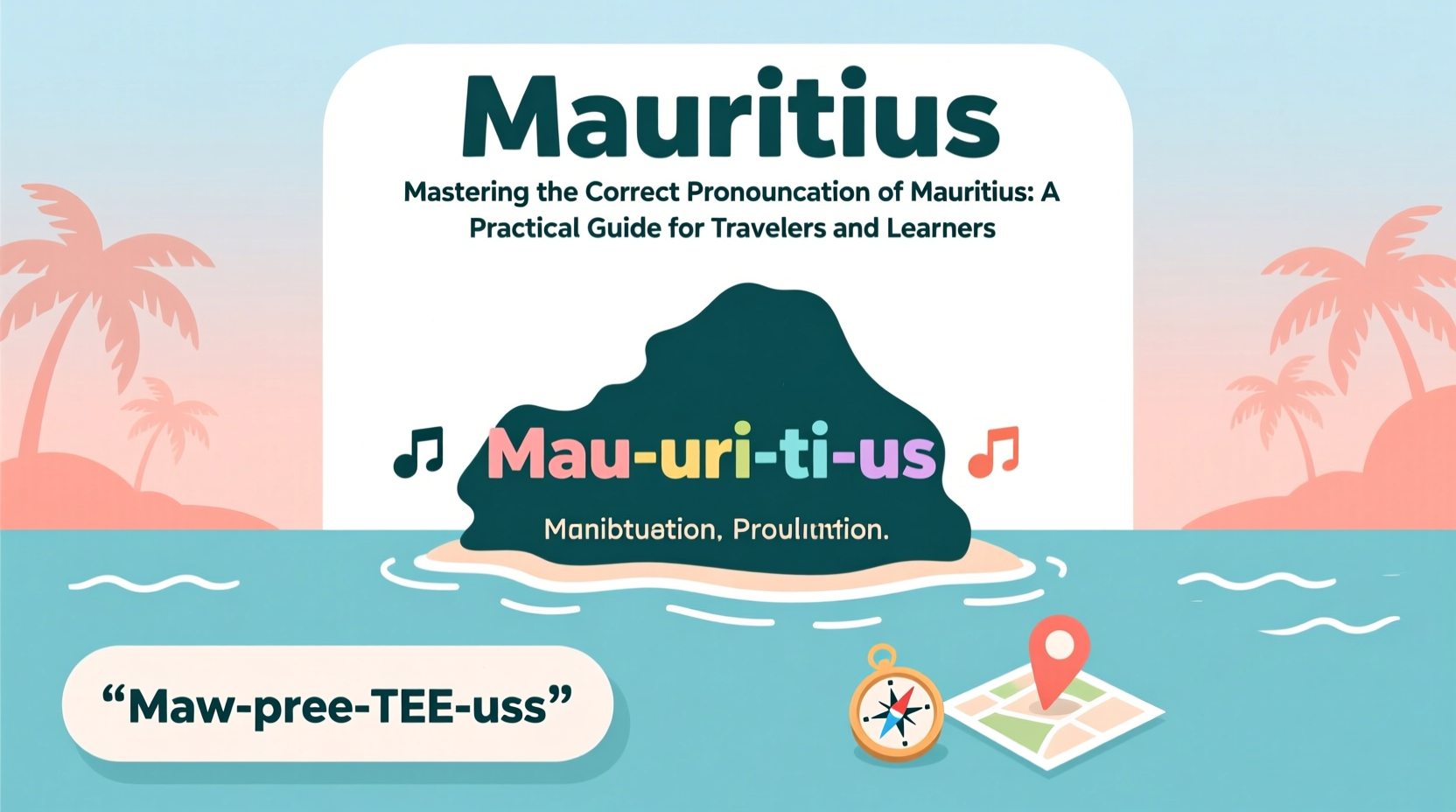
The name “Mauritius” traces back to Prince Maurice of Nassau, a 16th-century Dutch military leader. When the Dutch colonized the island in the late 1500s, they named it *Mauritius* in his honor—a Latinized version of “Maurice.” Despite changes in colonial rule—first Dutch, then French, then British—the name endured, though pronunciation evolved alongside local languages like Creole, French, and English.
Today, Mauritius is an independent republic where English is the official language, French is widely spoken, and Mauritian Creole serves as the lingua franca. As a result, the pronunciation of “Mauritius” reflects this multilingual heritage. The most widely accepted version follows British English phonetic patterns but carries subtle French influences due to historical ties.
“Pronouncing place names correctly isn’t just about accuracy—it’s a gesture of cultural respect.” — Dr. Lila Moreau, Sociolinguist at the University of Réunion
The Correct Pronunciation: A Step-by-Step Guide
To pronounce “Mauritius” correctly, break it into syllables and focus on stress, vowel sounds, and rhythm. The standard British English pronunciation is:
Maw-ri-shuhs
Phonetically: /mɔːˈrɪʃəs/
Let’s walk through each component:
- Maw – Rhymes with “law” or “saw.” This is not “mawr” (like “more”) or “mow.” The ‘au’ combination is pronounced as a long “aw” sound.
- ri – Short and crisp, like “ri” in “ribbon.” Avoid elongating it to “ree.”
- shuhs – This is a soft “shuh” sound followed by a schwa (/ə/), the unstressed vowel common in English. Think of the ending in “focus” or “famous.”
Common Mispronunciations to Avoid
Even well-intentioned speakers often stumble on “Mauritius.” Here are frequent errors and how to fix them:
- “Mor-ee-shus” – Incorrect emphasis and vowel sounds. The first syllable should be “Maw,” not “Mor,” and the second is “ri,” not “ree.”
- “Maw-ree-see-us” – Over-enunciating each syllable makes it sound unnatural. The last two syllables blend into a soft “shuhs.”
- “Mar-i-shus” – Dropping the ‘u’ sound after ‘M’ distorts the word. Remember, it’s “Maw-ri,” not “Mar-i.”
Regional Variations Across Languages
While the English pronunciation is essential for international travelers, understanding how locals say the name adds depth to your communication. Here’s how “Mauritius” sounds across different languages spoken on the island:
| Language | Pronunciation | Phonetic Guide | Notes |
|---|---|---|---|
| British English | Maw-ri-shuhs | /mɔːˈrɪʃəs/ | Standard form used in tourism and official contexts. |
| French | Maw-ree-syus | /mo.ʁi.sjys/ | Softer 's' sound, nasal vowels; commonly heard in media and signage. |
| Mauritian Creole | Mori-sye | /mo.ʁi.sjɛ/ | Shortened, fluid version used in daily conversation. |
| Indian Languages (e.g., Hindi/Bhojpuri) | Mor-ish-as | /mɔː.ɾɪ.ʃəs/ | Influenced by local phonology; common among Indo-Mauritian communities. |
While visitors aren’t expected to master all variants, recognizing these differences fosters cultural sensitivity. For example, hearing “Mori-sye” from a local vendor doesn’t mean your pronunciation is wrong—it simply reflects linguistic diversity.
Practice Techniques for Perfecting Your Pronunciation
Accurate pronunciation comes with practice. Use these proven techniques to internalize the correct way to say “Mauritius”:
- Shadowing Method: Listen to native speakers (via BBC, travel vlogs, or news clips) and repeat immediately after them. Focus on mimicking rhythm and intonation.
- Record Yourself: Use your phone to record your attempt. Compare it with a trusted audio source. Pay attention to the transition between “ri” and “shuhs.”
- Tongue Twister Drill: Repeat phrases like “Mauritius is marvelous” five times quickly. This sharpens articulation and builds muscle memory.
- Use Mnemonics: Associate “Maw-ri-shuhs” with familiar words: “Law + ribbon + circus” (emphasizing the soft ending).
Mini Case Study: A Traveler’s First Impression
Sophie, a solo traveler from Canada, arrived in Port Louis excited but nervous about blending in. At her hotel check-in, she said, “I’m here for a week in Mor-ee-see-us!” The receptionist politely corrected her: “It’s Maw-ri-shuhs—welcome!” Though slightly embarrassed, Sophie practiced the name throughout her trip. By day three, she greeted taxi drivers with a confident “Good morning, Maw-ri-shuhs!” Locals responded warmly, complimenting her effort. By week’s end, she was invited to a family dinner—an opportunity she credits to her willingness to learn.
This small adjustment didn’t just improve her interactions—it opened doors to authentic experiences.
Checklist: Mastering the Pronunciation of Mauritius
Follow this simple checklist to ensure you’re on the right track:
- ✅ Break the word into syllables: Maw | ri | shuhs
- ✅ Emphasize the second syllable: mɔː-ˈrɪ-ʃəs
- ✅ Avoid saying “ree” or “see”—use short “ri” and soft “shuhs”
- ✅ Practice with audio examples from reputable sources (BBC Learning English, Forvo)
- ✅ Record and compare your pronunciation weekly
- ✅ Use the name naturally in sentences: “I visited Maw-ri-shuhs last summer.”
Frequently Asked Questions
Is “Mauritius” pronounced differently in the U.S. and the U.K.?
Yes, subtly. In American English, some speakers shift toward “Mor-ISH-us” with a harder ‘r’ and stronger emphasis on the second syllable. However, the British /mɔːˈrɪʃəs/ remains the internationally recognized standard, especially in travel and diplomatic contexts.
Do locals mind if I get the pronunciation wrong?
Most people are gracious and appreciate the effort. However, consistently using a distorted version (e.g., “Maw-ree-see-us”) may signal disinterest in cultural accuracy. A sincere attempt earns goodwill and deeper connections.
Should I use the French or Creole version when speaking locally?
Not necessary—but appreciated. Using “Mori-sye” in casual settings can spark smiles and friendly corrections. Stick to “Maw-ri-shuhs” in formal situations unless you're fluent in French.
Final Thoughts: Speak with Confidence and Respect
Pronouncing “Mauritius” correctly is more than a linguistic exercise—it’s an act of cultural awareness. Whether you're booking a flight, chatting with a guide, or writing a blog post, getting the name right honors the nation’s identity. The island’s rich blend of African, Indian, European, and Chinese heritage deserves recognition, and language is one of the most immediate ways to show it.
You don’t need perfect fluency. You only need the willingness to try. With consistent practice, the correct pronunciation will become natural. And when you finally say “Maw-ri-shuhs” with clarity and confidence, you won’t just sound informed—you’ll feel connected.




 浙公网安备
33010002000092号
浙公网安备
33010002000092号 浙B2-20120091-4
Comments
No comments yet. Why don't you start the discussion?