
Millions of people rely on metered-dose inhalers (MDIs), commonly known as \"puff inhalers,\" to manage chronic respiratory conditions like asthma and chronic obstructive pulmonary disease (COPD). Despite their widespread use, studies show that up to 90% of patients do not use them correctly. Improper technique reduces medication delivery to the lungs, diminishing effectiveness and increasing the risk of flare-ups. Mastering the correct method is essential for optimal control of symptoms and long-term health.
Why Proper Inhaler Technique Matters
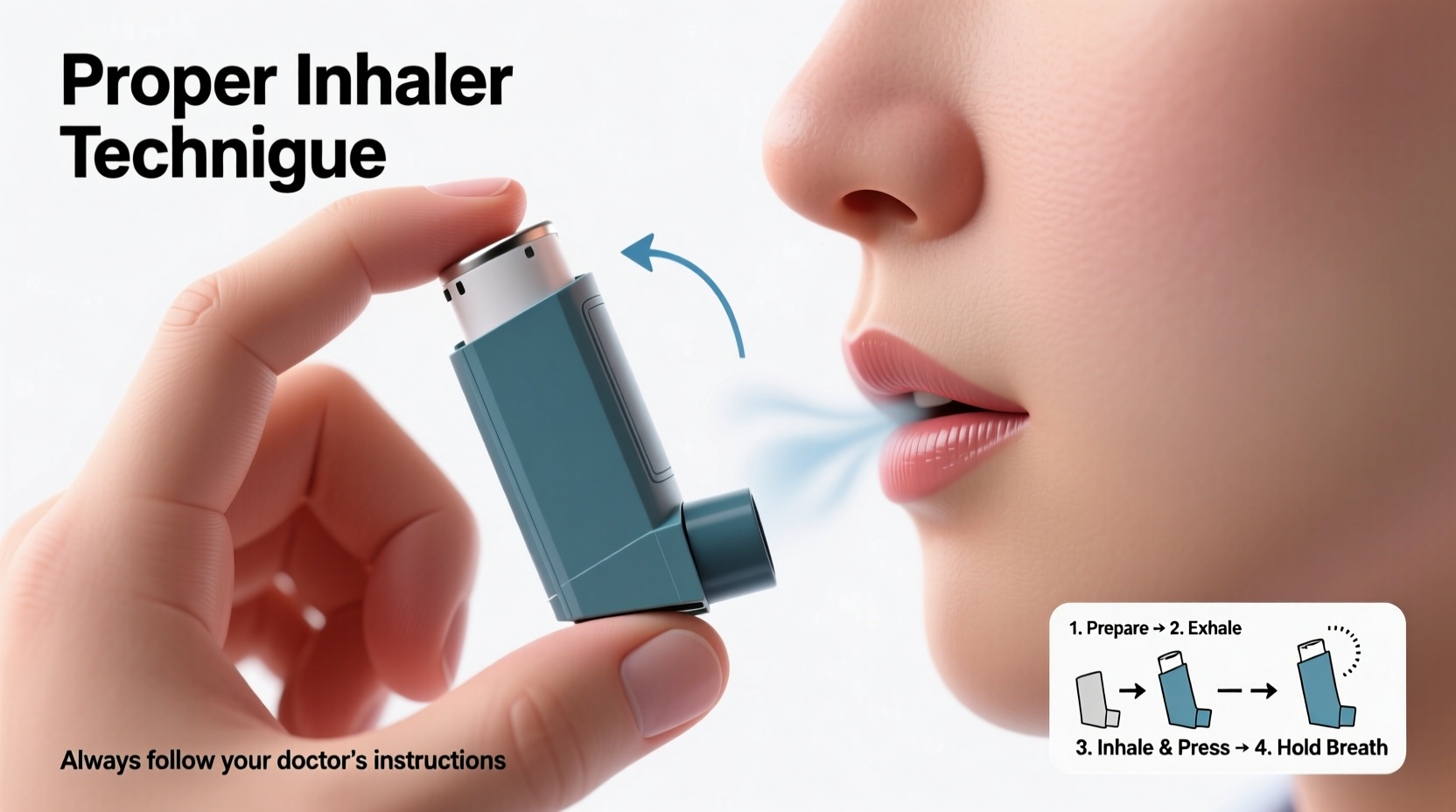
The goal of an inhaler is to deliver medication directly to the airways, where it can act quickly and efficiently. However, if the device is used incorrectly—such as inhaling too slowly, failing to coordinate the puff with breathing, or not holding your breath afterward—most of the medication lands in the mouth or throat instead of reaching the lungs.
Poor technique leads to:
- Reduced symptom control
- Increased emergency visits
- Higher reliance on rescue medications
- Unnecessary side effects from overdosing due to repeated attempts
Correct usage ensures you get the full benefit of each dose, minimizes waste, and supports better day-to-day breathing.
Step-by-Step Guide to Using a Puff Inhaler Correctly
Follow this detailed sequence to maximize medication delivery. This method applies to standard metered-dose inhalers without a spacer unless otherwise noted.
- Remove the cap and shake the inhaler. Take off both the mouthpiece and cap, then shake the inhaler vigorously for 3–5 seconds to mix the medication.
- Exhale fully. Breathe out completely, away from the inhaler, to prepare your lungs for a deep inhalation.
- Position the inhaler correctly. Place the mouthpiece between your lips, forming a tight seal. Alternatively, hold it 1–2 inches in front of your open mouth (using the “open-mouth” technique) if advised by your healthcare provider.
- Start to breathe in slowly as you press down. Begin a slow, steady inhalation through your mouth at the same moment you press the canister to release one puff. Coordination is key—inhaling too late or too early reduces effectiveness.
- Breathe in deeply over 3–5 seconds. Continue drawing air into your lungs until they are full. Avoid rapid, shallow breaths.
- Hold your breath for 10 seconds. After inhaling, close your mouth and hold your breath to allow the medication to settle in your airways.
- Breathe out slowly. Exhale gently through pursed lips. Do not exhale into the inhaler.
- Wait 30–60 seconds before repeating (if prescribed multiple puffs). This prevents overloading the airways and improves absorption.
- Rinse your mouth (for steroid-containing inhalers). Gargle and rinse with water after using corticosteroid inhalers to prevent oral thrush.
Using a Spacer: A Game-Changer for Technique
A spacer—a tube-like device attached to the inhaler—can significantly improve delivery, especially for children, older adults, or anyone struggling with hand-breath coordination. It holds the medication after release, allowing you to inhale it gradually.
To use a spacer:
- Attach the inhaler to the spacer.
- Shake and insert into the spacer’s opening.
- Seal your lips around the mouthpiece.
- Press the canister once to release the dose.
- Inhale slowly and deeply over 3–5 seconds.
- Hold breath for 10 seconds.
No coordination is needed between pressing and breathing when using a spacer, making it far more reliable.
“More than half of patients who struggle with inhaler control improve dramatically just by adding a spacer.” — Dr. Alan Reyes, Pulmonologist, National Respiratory Care Association
Common Mistakes and How to Avoid Them
Even small errors can drastically reduce medication delivery. The following table outlines frequent missteps and their corrections.
| Mistake | Why It’s a Problem | How to Fix It |
|---|---|---|
| Not shaking the inhaler | Medication settles; uneven dosing occurs | Shake for 3–5 seconds before every use |
| Inhaling too quickly | Medicine hits back of throat, not lungs | Inhale slowly over 3–5 seconds |
| Failing to hold breath | Insufficient time for drug deposition | Count silently to 10 after inhaling |
| Not cleaning the mouthpiece | Clogs form; medication delivery blocked | Rinse with warm water weekly; air dry |
| Using expired inhalers | Reduced potency or no medication released | Check expiration date monthly |
Real-World Example: Maria’s Turnaround
Maria, a 42-year-old teacher with moderate asthma, visited her clinic monthly due to persistent wheezing despite using her inhaler twice daily. Her provider observed her technique and discovered she was puffing first, then trying to inhale—rendering most doses useless. After retraining with a spacer and practicing breath-holding, her symptoms improved within two weeks. She reduced her rescue inhaler use from five times a week to once, and her lung function tests showed measurable improvement.
This case illustrates how correcting simple mechanical errors can transform treatment outcomes without changing medication.
Essential Checklist for Every Inhaler User
Use this checklist each time you take your medication to ensure consistency and accuracy.
- ✅ Shake the inhaler well (3–5 seconds)
- ✅ Remove cap and check for debris
- ✅ Exhale fully before starting
- ✅ Seal lips tightly around mouthpiece
- ✅ Press canister and inhale slowly at the same time
- ✅ Inhale for 3–5 seconds until lungs are full
- ✅ Hold breath for 10 seconds
- ✅ Wait 30–60 seconds between puffs (if needed)
- ✅ Rinse mouth after steroid inhalers
- ✅ Clean mouthpiece weekly with warm water
Frequently Asked Questions
Do I need a spacer with my inhaler?
While not mandatory, a spacer is highly recommended, especially for inhaled corticosteroids or if you have difficulty coordinating the puff and breath. It increases lung delivery by up to 70% and reduces throat irritation and oral thrush.
How often should I replace my inhaler?
Replace your inhaler when it reaches its expiration date or when the dose counter reads zero. If there’s no counter, track the number of actuations used per prescription and divide by the total sprays available (usually 120 or 200). Never guess—under-dosing is dangerous.
Can I use my inhaler if it hasn’t been used in months?
If it’s past the expiration date, discard it. If within date but unused, prime it first: spray 1–2 test puffs into the air (away from face) to ensure proper aerosol formation. Do this after storage longer than two weeks or after dropping.
Final Thoughts: Consistency Is Key
Mastering inhaler technique isn’t a one-time event—it requires regular review and mindful repetition. Even experienced users benefit from periodic check-ins with a pharmacist, nurse, or respiratory therapist. Small adjustments can lead to significant improvements in breathing, sleep quality, exercise tolerance, and overall well-being.
Take control of your respiratory health today. Reassess your current method, incorporate a spacer if needed, and commit to the correct steps every single time. Your lungs will respond—not immediately, but steadily—with greater resilience and clarity.




 浙公网安备
33010002000092号
浙公网安备
33010002000092号 浙B2-20120091-4
Comments
No comments yet. Why don't you start the discussion?