
Absinthe, once banned and shrouded in myth, has reemerged as a symbol of artisanal craftsmanship and botanical complexity. Revered for its anise-forward profile and emerald hue, authentic absinthe is more than a cocktail ingredient—it’s a cultural artifact distilled into liquid form. While commercial varieties are widely available, crafting your own absinthe allows for unparalleled control over flavor, quality, and authenticity. This guide walks you through the entire process—from sourcing traditional herbs to safe distillation—so you can produce a spirit that honors the legacy of the “Green Fairy.”
The Essence of Authentic Absinthe
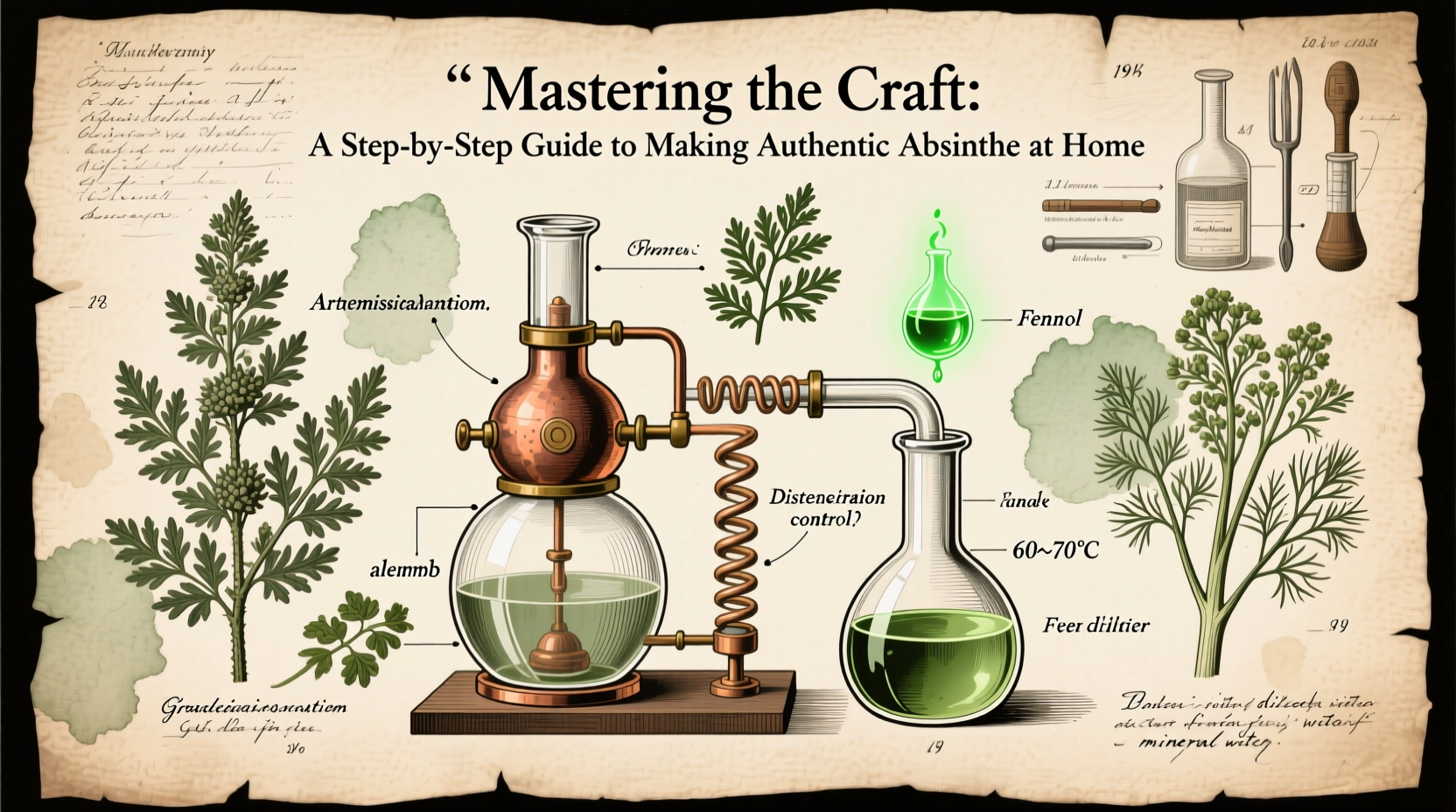
True absinthe is defined by three core components: a neutral alcohol base, a maceration of botanicals, and a final distillation that captures the volatile oils responsible for aroma and taste. The hallmark herbs are grand wormwood (Artemisia absinthium), green anise, and sweet fennel—collectively known as the “Holy Trinity” of absinthe. These are supplemented with secondary botanicals like hyssop, lemon balm, star anise, or petite wormwood to add complexity.
Historically, absinthe was associated with hallucinations due to misconceptions about thujone, a compound found in wormwood. Modern science shows that thujone levels in properly made absinthe are far below harmful thresholds. Still, responsible use and precise preparation are essential. Authenticity lies not in psychoactive myths but in balance, clarity, and the louche effect—the milky cloudiness that appears when water is added.
Essential Equipment and Safety Considerations
Home distillation requires careful attention to both equipment and legal compliance. In many countries, distilling alcohol without a license is illegal. Before proceeding, verify your local regulations. Assuming legality, here’s what you’ll need:
- Stainless steel pot still (avoid copper if inexperienced—zinc in solder can be hazardous)
- Digital thermometer (precision to 1°C)
- Collection jars (glass, labeled and dated)
- Alcoholmeter (to measure ABV)
- Fine mesh strainers and cheesecloth
- Gloves, goggles, and ventilation for safety
Distillation involves flammable vapors and high heat. Work in a well-ventilated area away from open flames. Never leave the still unattended. Use only food-safe materials—lead-soldered stills or galvanized metal can leach toxins.
“Absinthe demands respect—not fear. When made with care, it’s one of the most refined herbal spirits in existence.” — Dr. Lucien Moreau, Historian of European Spirits
Step-by-Step Guide to Crafting Absinthe
Follow this timeline to create a batch of authentic, small-batch absinthe. Plan for approximately two weeks from start to finish, including aging.
- Day 1: Prepare the Alcohol Base
Create a neutral spirit base using 1 liter of 190-proof (95% ABV) food-grade ethanol or high-purity distilled grain alcohol. Dilute to 70% ABV with distilled water for optimal extraction. - Day 1–7: Macerate the Botanicals
Add the following to the alcohol:- 35g grand wormwood
- 50g green anise
- 25g sweet fennel
- 10g hyssop
- 5g lemon balm
- 2g star anise (optional for depth)
- Day 8: Distill the Macerate
Pour the mixture into the still. Heat slowly, discarding the first 50ml (foreshots) which may contain methanol. Collect the “hearts” fraction between 78°C and 82°C until you’ve gathered approximately 750ml. Discard tails after the alcohol drops below 60% ABV. - Day 9: Post-Distillation Coloring (Optional)
For traditional color, prepare a secondary cold steep: soak 10g dried petite wormwood and 5g spinach or nettle (natural chlorophyll sources) in 100ml of 40% ABV alcohol for 24 hours. Filter and blend with the distillate. - Day 10–14: Rest and Age
Store the finished spirit in a sealed glass bottle, away from light, for at least five days. This allows flavors to mellow and integrate. - Day 15: Bottle and Label
Dilute to desired bottling strength (typically 45–74% ABV). Use amber or green glass bottles to protect from UV degradation. Label clearly with ingredients, ABV, and date.
Do’s and Don’ts of Home Absinthe Making
| Do | Don’t |
|---|---|
| Use organic, food-grade herbs | Use wild-harvested plants unless you’re certain of their identity and safety |
| Discard foreshots during distillation | Distill indoors without proper ventilation |
| Aging the spirit for at least 5 days | Rush the process—flavor integration takes time |
| Dilute with cold spring water before serving | Consume undiluted; absinthe is meant to be louchéed |
| Store in dark glass bottles | Expose finished absinthe to sunlight or heat |
Real Example: From Novice to Connoisseur
James, a home distiller in Oregon, began experimenting with absinthe after visiting the Musee de l'Absinthe in Auvers-sur-Oise, France. His first batch used supermarket anise and unverified wormwood, resulting in a harsh, overly bitter spirit. After researching traditional recipes and sourcing heirloom herbs from a botanical farm, he adjusted his ratio to 3:2:1 (anise:fennel:wormwood) and implemented precise temperature control during distillation. By his third batch, James produced an absinthe with a smooth mouthfeel, balanced anise, and a delicate herbal finish. He now shares his recipe at local distilling meetups, emphasizing patience and precision over speed.
Frequently Asked Questions
Is homemade absinthe legal?
Laws vary by country and region. In the U.S., distilling alcohol without a federal permit is illegal under 26 U.S.C. § 5601. However, owning a still for non-alcoholic purposes (like essential oils) may be permitted. Always check federal, state, and local regulations before beginning.
Can I make absinthe without distillation?
You can create an “absinthe bitters” or infusion without distillation, but it won’t be authentic. True absinthe requires distillation to extract and purify the essential oils. Non-distilled versions lack the complexity and louche effect characteristic of the real spirit.
How much thujone is safe?
The EU limits thujone to 35 mg/kg in alcoholic beverages; the U.S. allows up to 10 ppm in food products. Properly made absinthe typically contains 5–15 mg/kg—well within safe limits. Overconsumption of any alcohol poses greater risks than trace thujone.
Final Thoughts and Call to Craft
Making absinthe at home is not merely about producing a drink—it’s an act of preservation, connecting modern craft to 19th-century traditions. Each step, from selecting wormwood to watching the louche unfold in a glass, invites mindfulness and respect for the alchemy of distillation. With careful planning, adherence to safety, and a reverence for botanicals, you can create a spirit that rivals those from Switzerland or the Czech Republic.




 浙公网安备
33010002000092号
浙公网安备
33010002000092号 浙B2-20120091-4
Comments
No comments yet. Why don't you start the discussion?