
The double crochet stitch is one of the most versatile and widely used stitches in crochet. Found in everything from blankets and sweaters to hats and amigurumi, mastering this foundational technique opens the door to countless projects. While it may seem intimidating at first, the double crochet is built on a simple rhythm that becomes second nature with practice. This guide breaks down each stage of the stitch, offers practical tips, and highlights errors even experienced crocheters make—so you can build confidence and consistency in your work.
Understanding the Double Crochet: How It Works
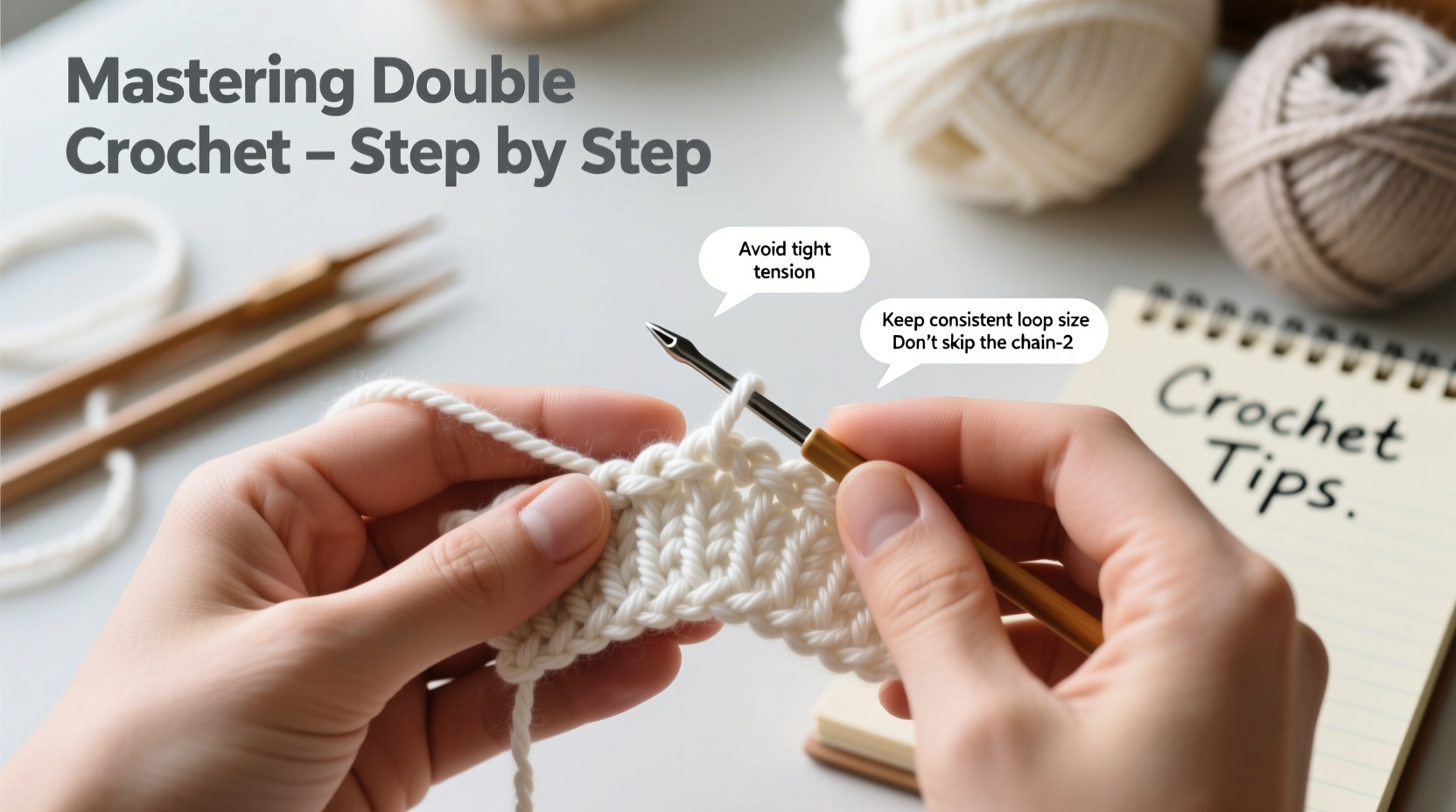
Unlike single crochet, which inserts directly into the next stitch, the double crochet begins with a \"yarn over\"—wrapping the yarn over the hook before insertion. This adds height and creates an open, flexible fabric ideal for garments and lightweight accessories. The stitch stands taller than single or half-double crochet, making it excellent for achieving drape without sacrificing structure.
In US terminology (which this guide follows), a double crochet (dc) is equivalent to what UK patterns call a treble crochet (tr). Always verify which standard a pattern uses to prevent confusion. Once you grasp the mechanics, you’ll find the double crochet faster to work than shorter stitches, allowing you to complete larger projects efficiently.
Step-by-Step Guide to the Double Crochet Stitch
- Yarn over: Wrap the yarn from back to front over your hook.
- Insert hook: Insert the hook into the designated stitch (usually the fourth chain from the hook in foundation rows).
- Yarn over and pull up a loop: Catch the yarn and draw it through the stitch. You now have three loops on your hook.
- Yarn over and pull through two loops: Complete the first removal by drawing through only two loops. Two remain on the hook.
- Yarn over and pull through the last two loops: Finish the stitch. One loop remains—your first double crochet is complete.
- Repeat across the row: Continue the same sequence in each subsequent stitch.
Common Mistakes and How to Fix Them
Even seasoned crocheters occasionally fall into traps that compromise stitch quality. Recognizing these issues early helps maintain clean, even fabric.
- Skipping the first stitch: After turning, many forget that the chain-3 at the beginning counts as the first double crochet. Failing to skip it results in extra stitches and uneven edges.
- Inconsistent tension: Varying how tightly you hold the yarn leads to irregular stitch heights. Practice holding the yarn with relaxed fingers and consistent pressure.
- Twisting chains: When starting a new row, twisted foundation chains cause the edge to curl. Ensure all chains lie flat before inserting the first stitch.
- Accidentally adding stitches: Accidentally working two stitches into one space or failing to complete the final pull-through can distort your count. Count your stitches every few rows.
- Miscounting turning chains: Using chain-3 instead of chain-2 or vice versa changes the effective height of the row, leading to slanting or ruffling.
| Mistake | Effect on Project | Solution |
|---|---|---|
| Not counting turning chain as a stitch | Extra stitches per row, flared edges | Treat chain-3 as first dc; skip first stitch when rejoining |
| Uneven tension | Wavy or puckered fabric | Practice with swatches; relax hand grip |
| Working into wrong part of stitch | Bumpy texture, instability | Aim for both top loops unless pattern specifies otherwise |
| Twisted foundation chain | Curling or twisting edge | Lay chain flat before starting row |
Pro Tips for Cleaner, More Consistent Results
Refining your technique goes beyond avoiding errors—it’s about building habits that elevate your craft.
- Check your gauge early: Make a 4x4 inch swatch before starting a garment. Adjust hook size if needed to match the pattern’s gauge.
- Use the correct hook size: A hook too small tightens the fabric; too large causes looseness. Match the yarn label recommendation unless the pattern states otherwise.
- Count stitches religiously: Especially in repetitive patterns, miscounts accumulate. Verify your total every few rows.
- Keep edges aligned: Focus on where you place the last stitch of each row. Inserting into the top of the turning chain ensures vertical alignment.
- Rotate your work: Some crocheters twist their wrists slightly, causing diagonal bias. Periodically check that your work isn’t slanting unintentionally.
“Consistency in tension and stitch placement separates amateur swatches from professional-quality pieces.” — Lila Monroe, Master Crocheter & Yarn Instructor
Real Example: Sarah’s Blanket Breakthrough
Sarah had been crocheting for six months but struggled with wavy edges in her baby blanket project. She followed a simple double crochet pattern but found her work curled dramatically on one side. After reviewing her technique, she realized she was accidentally adding an extra stitch at the end of each row—she wasn’t accounting for the turning chain properly. By marking the first and last stitches with locking stitch markers and counting after every third row, she corrected the issue. Within two evenings, her blanket lay perfectly flat. “It wasn’t my yarn or hook,” she said. “It was just one small mistake compounding over 150 stitches per row.”
Essential Checklist Before Starting Your Next Project
Use this checklist to ensure success before diving into any double crochet piece:
- ✅ Verify whether the pattern uses US or UK terms
- ✅ Confirm the correct hook size for your yarn weight
- ✅ Make a gauge swatch and measure it
- ✅ Identify how the turning chain counts in the pattern
- ✅ Place stitch markers at row beginnings and ends
- ✅ Sit in good lighting to see stitch definition clearly
- ✅ Set aside time for regular stitch counts
Frequently Asked Questions
Do I chain 2 or 3 for double crochet?
In US terms, you chain 3 at the start of a double crochet row. This chain mimics the height of a double crochet and typically counts as the first stitch. Always check your pattern—some designs instruct you to work the first actual dc into the next stitch instead.
Why does my double crochet fabric curl?
Curling usually stems from inconsistent tension, twisted foundation chains, or incorrect stitch counts. It can also occur if you're using a hook too small for the yarn. Blocking the finished piece often helps relax the fibers and flatten the fabric.
Can I substitute double crochet in a single crochet pattern?
Not directly. Because double crochet is taller, substituting it changes the drape, fit, and overall dimensions. If adapting a pattern, recalculate stitch and row counts based on your gauge, and consider whether the new stitch suits the intended structure.
Conclusion: Build Confidence One Stitch at a Time
Mastering the double crochet isn’t about perfection—it’s about progress. With deliberate practice, attention to detail, and awareness of common pitfalls, you’ll develop muscle memory and produce increasingly polished work. Whether you’re crafting a cozy throw or your first wearable, the double crochet forms the backbone of so many beautiful creations. Take the time to refine your technique now, and future projects will flow with greater ease and precision.




 浙公网安备
33010002000092号
浙公网安备
33010002000092号 浙B2-20120091-4
Comments
No comments yet. Why don't you start the discussion?