
In dog agility, success isn’t just about speed or accuracy on individual obstacles—it’s about maintaining momentum and focus from start to finish. The final stretch of a course, often referred to as the “end of course,” is where many teams lose time, precision, and connection. This critical phase demands seamless communication, especially when distractions rise and fatigue sets in. One of the most underutilized yet powerful tools during training for this segment is the leash. Far from being a symbol of restriction, the leash—when used correctly—can become an extension of your communication system, helping your dog stay attentive, responsive, and mentally engaged right through the last jump or tunnel.
The Role of the Leash Beyond Control
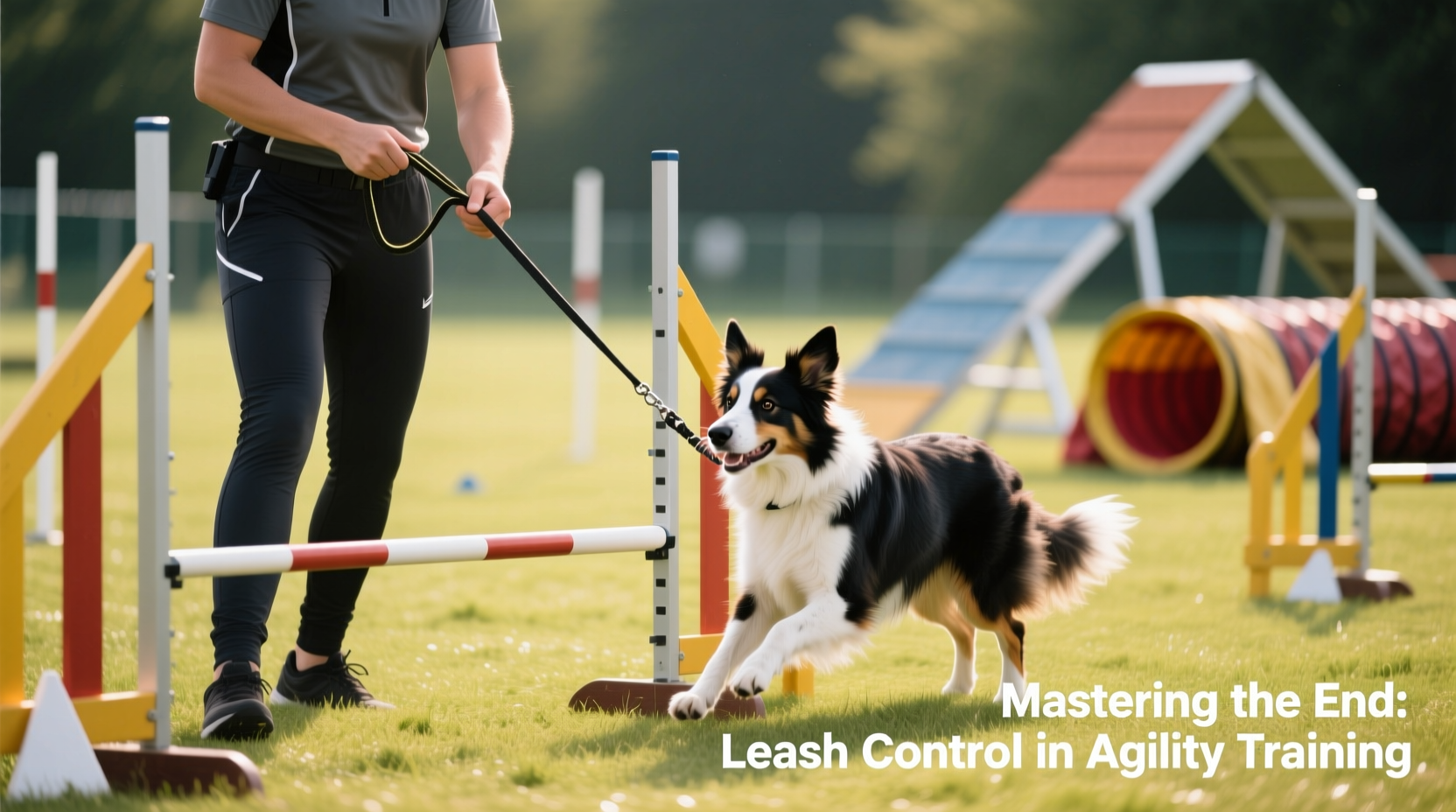
Many handlers view the leash solely as a safety tool or a means to prevent escape. In agility training, however, its function expands into real-time feedback and directional guidance. During the end of course, dogs often experience cognitive overload: they’ve completed multiple obstacles, processed rapid cues, and may be physically tiring. This is when focus wanes, and anticipation errors—like skipping a contact zone or veering off course—become common.
The leash, when used with finesse, provides subtle tactile cues that reinforce attention without disrupting flow. It’s not about pulling or restricting movement but offering light, timely input that reminds the dog of your presence and expectations. Think of it as a conversational thread between handler and dog when verbal cues might be drowned out by environmental noise or mental fatigue.
Step-by-Step: Using the Leash to Reinforce Focus at the End of Course
- Start with structured off-leash drills: Before introducing the leash, ensure your dog reliably completes full sequences off-leash in low-distraction environments. This establishes baseline performance.
- Introduce the leash mid-sequence: Begin attaching the leash during the last third of a known sequence. Let the dog feel the connection without interference at first.
- Apply light tension as a cue anchor: As your dog approaches the final obstacle, use a gentle lift or side tap on the leash to signal “stay with me.” This should coincide with your verbal cue or body lead.
- Reinforce correct responses immediately: The moment your dog maintains focus or correctly executes the last contact, release leash pressure and reward generously.
- Gradually increase difficulty: Add distractions (other dogs, noises) or longer sequences while keeping the leash active but unobtrusive.
- Phase out constant attachment: Once consistency improves, switch to using the leash intermittently—only when you sense wavering focus.
This progression builds reliability without creating dependency. The goal isn’t to have your dog on leash during competition, but to use it as a training scaffold that strengthens focus pathways.
Common Mistakes and How to Avoid Them
Improper leash use can undermine agility performance by creating resistance, confusion, or learned helplessness. Handlers often unintentionally pull, yank, or hold constant tension, which communicates anxiety rather than direction.
| Mistake | Why It’s Harmful | Better Approach |
|---|---|---|
| Pulling the dog back after an obstacle | Disrupts forward drive and creates hesitation | Use a brief tactile cue followed by release and encouragement |
| Holding tight throughout the sequence | Limits movement and increases stress | Keep slack unless delivering a specific cue; treat leash like a guide wire |
| Using the leash only when the dog errs | Associates leash with correction, not communication | Integrate leash lightly even during perfect runs to normalize contact |
| Attaching the leash too late in training | Dog doesn’t associate leash with focus cues | Use early in skill development, then fade as mastery grows |
Mini Case Study: From Rushed Finishes to Polished Runs
Sarah trained her Border Collie, Jax, in intermediate agility. While Jax excelled on weave poles and jumps, he consistently rushed his A-frame dismount, missing the contact zone during trial runs. Off-leash practice showed improvement, but under pressure, he reverted to old habits. Sarah began incorporating a 4-foot leash during the last three obstacles of every training session. She attached it quietly after the second-to-last jump and used a light upward flick of the leash the moment Jax’s front paws left the jump bar—this cued him to “reset” his focus. She paired this with a sharp “Yes!” and treat upon correct contact. Within three weeks, Jax’s end-of-course accuracy improved from 40% to over 90%, even off-leash. The leash had become a conditioned cue for precision, not punishment.
Expert Insight: What Top Trainers Say About Tactile Cues
“The leash isn’t a crutch—it’s a communication channel. When used with timing and sensitivity, it can teach a dog to stay tuned to the handler even in high-arousal situations. The best agility dogs don’t just respond to voice and motion; they feel the conversation.” — Dr. Lisa Harper, CPDT-KA, Canine Sports Behavior Specialist
Tips for Maximizing Leash Effectiveness
- Use a quick-release snap for safety during fast transitions.
- Avoid retractable leashes—they create inconsistent tension and delay feedback.
- Train both sides: some dogs lean depending on leash position. Switch hands occasionally.
- Pair leash cues with verbal markers (“Focus!”, “Look!”) to build multimodal responsiveness.
- Always end on a positive note—remove the leash after a successful run and reward off-leash play to reinforce confidence.
Checklist: Leash Training for End-of-Course Focus
- ✅ Choose a lightweight, non-stretch leash (4–6 feet)
- ✅ Attach leash during last third of known sequences
- ✅ Apply brief, consistent tactile cues before final obstacles
- ✅ Reward immediately after correct execution
- ✅ Gradually introduce distractions (noise, other dogs)
- ✅ Fade leash use once reliability exceeds 85%
- ✅ Record video to assess whether cues are clear and timing is precise
Frequently Asked Questions
Won’t using a leash make my dog dependent on it?
Only if used incorrectly. When the leash is applied intermittently, paired with positive reinforcement, and phased out as performance stabilizes, it acts as a temporary training aid—not a dependency. The key is fading its use once the desired behavior is consistent off-leash.
When should I remove the leash during training?
Remove it immediately after a successful run, ideally during the reward phase. This creates a positive association: leash on = work with focus, leash off = job well done. Over time, your dog will anticipate the relief of removal as a reward for accuracy.
Can I use a harness instead of a collar with the leash?
Yes, but choose carefully. Front-clip harnesses can interfere with shoulder movement in agile breeds. A well-fitted back-clip harness or flat collar made of durable material (like biothane) is often preferred. Avoid anything that restricts stride or causes discomfort during high-speed maneuvers.
Conclusion: Turning the Final Stretch Into a Strength
Mastering the end of course isn’t just about finishing strong—it’s about finishing connected. The leash, when wielded with purpose and precision, becomes more than a safety line; it becomes a bridge of communication when your dog needs it most. By integrating the leash strategically into your training, you build resilience against distraction, fatigue, and anticipation errors. You’re not slowing down your dog—you’re sharpening their focus. Every successful finish reinforces confidence, both for you and your canine partner. Start small, stay consistent, and watch how those final seconds transform from a gamble into a guarantee.




 浙公网安备
33010002000092号
浙公网安备
33010002000092号 浙B2-20120091-4
Comments
No comments yet. Why don't you start the discussion?