
The iPhone 15’s sleek design and powerful features make it a top choice for users who value performance and portability. But one of its most underrated accessories—the folding bracket on select protective cases—often goes underutilized. More than just a small flap of material, this built-in feature is engineered to enhance usability in real-world scenarios. Whether you're watching videos, video conferencing, or reading long articles, the folding bracket can transform how you interact with your device. Understanding its mechanics, positioning options, and maintenance ensures you get the most out of every angle and fold.
Understanding the Folding Bracket: Design and Function
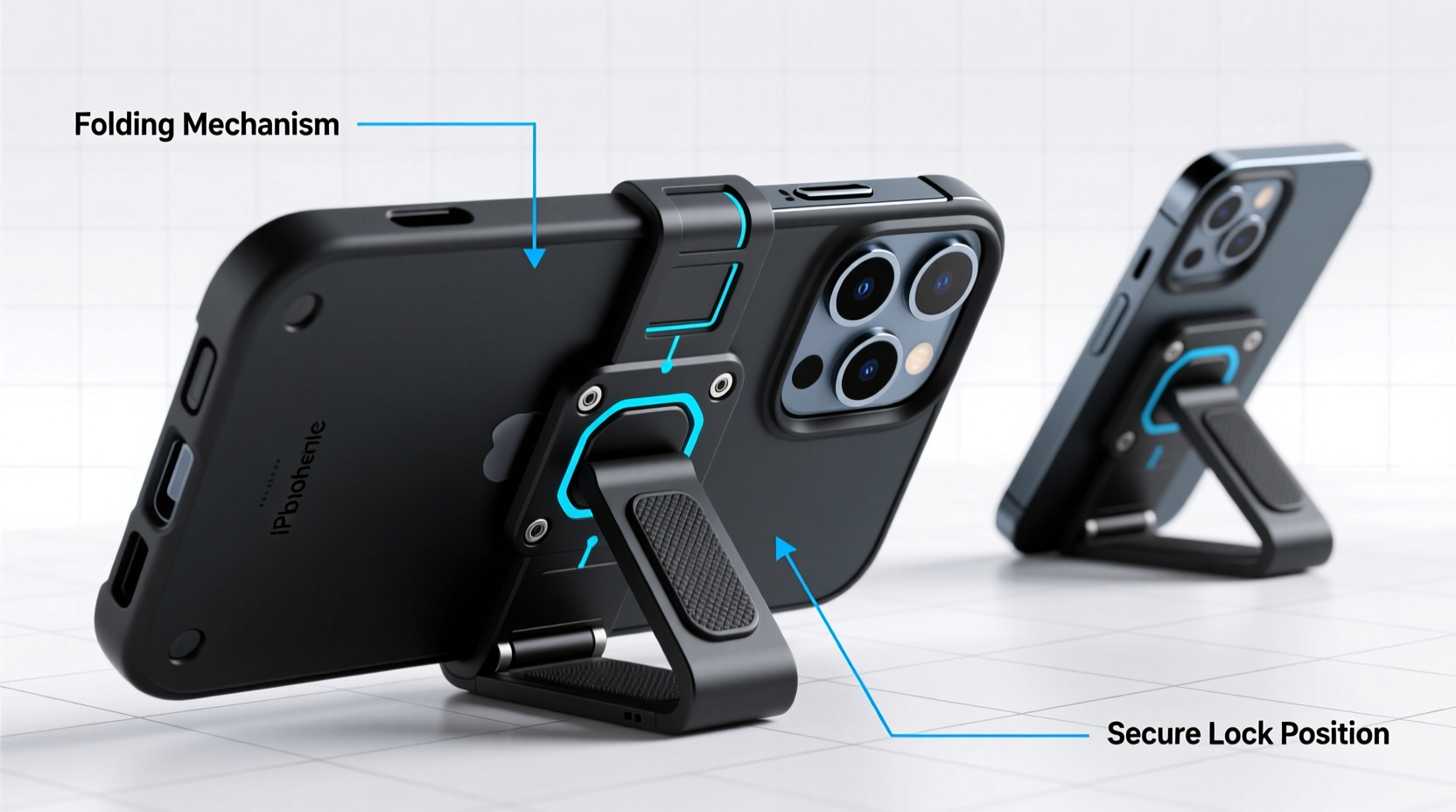
The folding bracket, typically found on hybrid or wallet-style iPhone 15 cases, is a hinged panel—usually made of rigid polymer or flexible TPU—that folds outward from the back of the case. It acts as a kickstand, allowing the phone to prop itself at various angles on flat surfaces. Unlike third-party stands, this integrated solution maintains portability while offering reliable support.
Most models allow for multi-angle adjustment. The hinge mechanism is designed to withstand repeated opening and closing, often rated for thousands of cycles. High-end versions include magnetic alignment or dual-position settings (landscape and portrait), making them ideal for different usage modes.
“Integrated folding brackets represent a shift toward functional minimalism—giving users hands-free utility without adding bulk.” — Jordan Lee, Mobile Accessory Designer at TechGrip Labs
Step-by-Step Guide to Using the Folding Bracket Effectively
To maximize the utility of your iPhone 15’s folding bracket, follow this practical sequence:
- Inspect the hinge: Before first use, check that the bracket moves smoothly without resistance or cracking sounds.
- Open slowly: Gently pull the bracket away from the case. Avoid forcing it beyond its natural stop point to prevent damage.
- Select your surface: Place the phone on a stable, level surface—avoid uneven or slippery materials like glass tables without grip.
- Adjust the angle: Depending on your activity, set the bracket to a shallow angle (45°) for typing or a steeper incline (60°–75°) for media viewing.
- Test stability: Lightly nudge the phone to ensure it doesn’t wobble. If using on a moving surface (e.g., airplane tray), keep one hand nearby.
- Fold back when done: Return the bracket flush against the case to protect the hinge and prevent snagging in pockets or bags.
Everyday Use Cases and Real-World Benefits
The true value of the folding bracket emerges in daily routines. Consider Sarah, a freelance graphic designer based in Portland, who upgraded to an iPhone 15 with a case featuring a reinforced folding bracket. She uses it during client Zoom calls while multitasking at her kitchen counter. “I used to balance my phone on cookbooks or water bottles,” she says. “Now, I open the stand, angle it just right, and have both hands free to sketch on my tablet.”
This scenario illustrates a broader trend: people are increasingly relying on smartphones for productivity, not just communication. The folding bracket supports this shift by enabling:
- Hands-free video calls in remote work environments
- Stable recording setups for social media creators
- Comfortable reading positions during commutes or downtime
- Secure placement on car dashboards (for navigation, when paired with a mount)
In public spaces like cafes or airports, the compact nature of the built-in bracket offers privacy and convenience over bulky external stands—no setup, no extra items to carry.
Do’s and Don’ts: Maintaining Your Folding Bracket
Long-term reliability depends on proper care. Refer to the table below for best practices:
| Do’s | Don’ts |
|---|---|
| Clean the hinge weekly with a dry microfiber cloth | Expose the hinge to sand, dust, or liquids regularly |
| Fold the bracket closed when storing in bags | Force the bracket into unnatural positions |
| Use mild angles on soft surfaces (e.g., beds, couches) | Lean excessive weight against the phone while propped |
| Check for debris monthly and remove gently with a toothpick | Use chemical cleaners directly on the hinge |
Tips for Optimal Viewing and Ergonomics
Using the folding bracket isn’t just about convenience—it’s also about reducing physical strain. Poor viewing angles contribute to neck pain and eye fatigue over time. Here’s how to optimize your setup:
- Eye-Level Alignment: Position the phone so the top third of the screen aligns with your natural gaze. This minimizes downward tilting of the head.
- Landscape vs. Portrait: Use landscape mode for videos and FaceTime; reserve portrait for reading or messaging, where vertical scrolling dominates.
- Lighting Awareness: Angle the screen away from direct light sources to reduce glare, especially when using the bracket outdoors.
FAQ: Common Questions About the iPhone 15 Case Folding Bracket
Can I replace the folding bracket if it breaks?
Most manufacturers do not offer standalone replacement parts for the bracket. However, many reputable brands provide limited warranties (typically 6–12 months) covering hinge failure due to defects. If damaged, replacing the entire case is usually the only option.
Will the folding bracket affect wireless charging?
In most cases, no. The bracket is positioned to avoid interfering with the phone’s rear charging coil. However, if the case adds significant thickness, ensure compatibility with your charger’s gap tolerance. Magnetic cases with MagSafe alignment generally perform best.
Are all iPhone 15 cases with folding brackets the same?
No. There are notable differences in build quality, flexibility, and durability. Premium cases often feature metal-reinforced hinges and precise fitment, while budget options may use softer plastics prone to warping over time. Always check user reviews and material specifications before purchasing.
Conclusion: Make the Most of a Small Feature with Big Impact
The folding bracket on your iPhone 15 case may seem minor, but its impact on daily usability is significant. From improving ergonomics to enabling hands-free functionality, it’s a tool worth mastering. By understanding its proper use, avoiding common pitfalls, and maintaining it regularly, you extend both the life of your case and the comfort of your device interactions.
Next time you settle in for a video call or start watching a tutorial, take a moment to adjust the bracket thoughtfully. Small habits compound—this simple action could reduce strain, boost productivity, and enhance your overall smartphone experience.




 浙公网安备
33010002000092号
浙公网安备
33010002000092号 浙B2-20120091-4
Comments
No comments yet. Why don't you start the discussion?