
The English expression “let the good times roll” evokes joy, celebration, and carefree living. While it sounds like it could be French in origin—especially with its frequent use in New Orleans culture, where French heritage runs deep—it’s actually an English phrase. However, many people seek a French equivalent to capture that same spirit in conversation, writing, or cultural immersion. Understanding how to convey this sentiment authentically in French requires more than a literal translation; it demands cultural nuance, proper pronunciation, and awareness of context.
This guide explores the closest French equivalents to “let the good times roll,” how to pronounce them correctly, and when and how to use them naturally in speech. Whether you're preparing for travel, engaging in casual conversation, or aiming to sound more fluent, mastering these expressions will add warmth and spontaneity to your French.
Understanding the Spirit Behind 'Let the Good Times Roll'
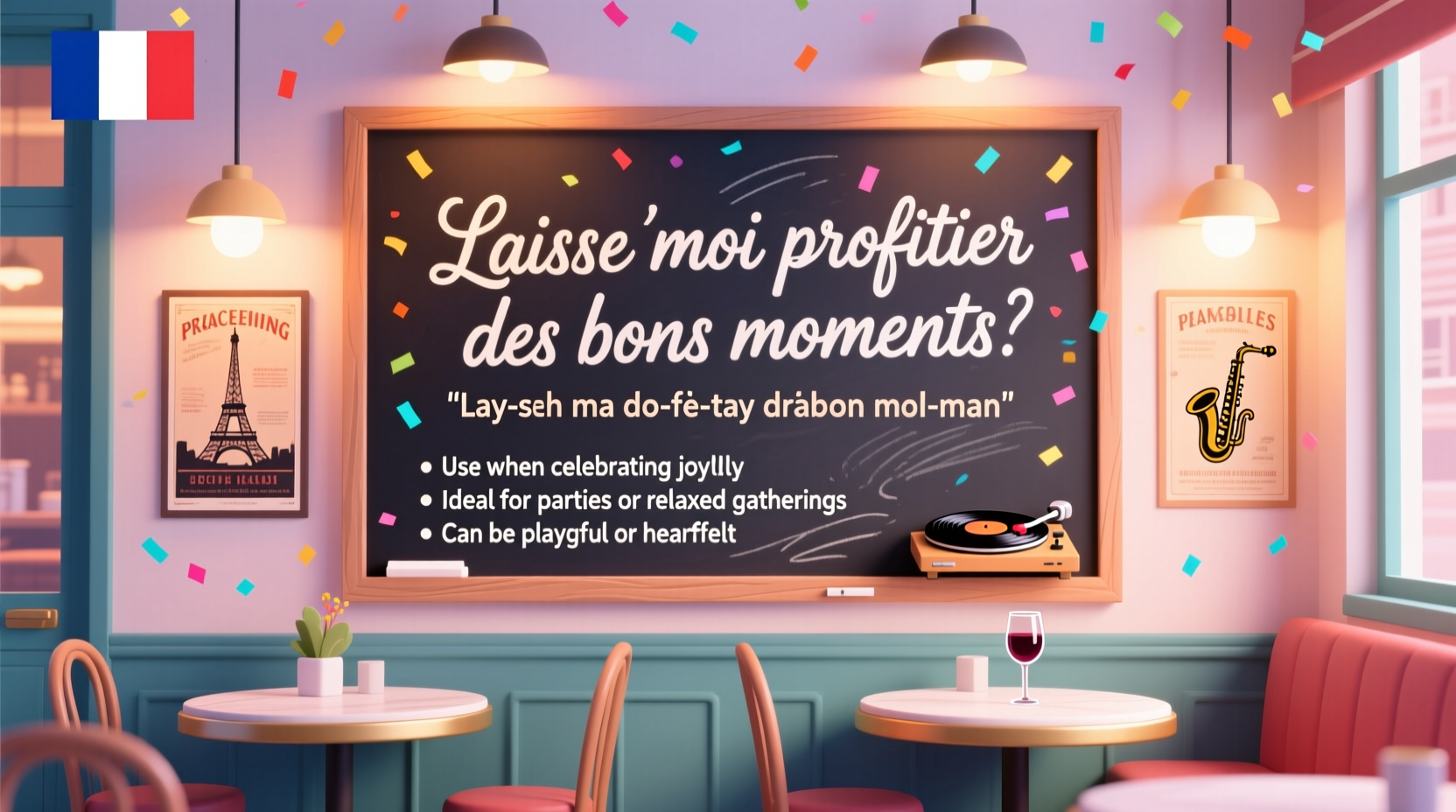
Before translating, it's essential to grasp what “let the good times roll” truly conveys. It’s not just about having fun—it’s an invitation to embrace joy, let go of worries, and celebrate life in the moment. In French, no single phrase maps perfectly onto this idiom, but several expressions come close in tone and intent.
The most commonly used equivalent is “profiter de la vie”, which translates to “enjoy life.” Another popular option is “laissez les bons moments arriver”, a more direct adaptation meaning “let the good moments come.” While neither is a word-for-word match, both carry the celebratory and relaxed essence of the original.
“Language isn’t just about words—it’s about mood, rhythm, and shared feeling. The French don’t say ‘let the good times roll,’ but they live it through expressions like ‘profiter du moment.’” — Dr. Laurent Moreau, Linguist & Francophone Culture Researcher
Pronunciation Guide: Speaking It Like a Native
Pronouncing French phrases correctly is crucial for sounding natural. Mispronunciations can confuse listeners or make expressions sound awkward. Below is a breakdown of key phrases with phonetic guidance using English approximations.
| Phrase | Literal Translation | Pronunciation (Phonetic) | IPA (International Phonetic Alphabet) |
|---|---|---|---|
| Profiter de la vie | Enjoy life | proh-fee-tay duh lah vee | /pʁɔ.fi.te də la vi/ |
| Laissez les bons moments arriver | Let the good moments come | lay-say lay bohn moh-mahn ah-ree-vay | /lɛ.se le bɔ̃ mɔ.mɑ̃ a.ʁi.ve/ |
| Amuser-se bien | Have fun | ah-myoo-zehr suh byan | /a.myzɛʁ sə bjɛ̃/ |
| Fêtons ça ! | Let’s celebrate this! | feh-tohn sah | /fe.tɔ̃ sa/ |
Pay special attention to silent letters and nasal vowels. For example, in “moments”, the final “s” is silent, and the “on” is pronounced like “ohn” with a nasal tone. In “arriver”, the double “r” should be softly rolled, not harshly trilled.
Practical Usage Tips in Real Conversations
Knowing how and when to use these phrases makes all the difference. Here are real-world contexts where each expression fits naturally.
- Profiter de la vie – Ideal for philosophical or reflective moments. Use it when encouraging someone to slow down and enjoy life. Example: “Tu travailles trop. Il faut profiter de la vie.” (“You work too much. You need to enjoy life.”)
- Laissez les bons moments arriver – Best used in upbeat, social settings. Say it before a weekend getaway or during a toast. Note: This is a borrowed structure from English, so while understandable, it may sound slightly poetic or modern.
- Amuser-se bien – A casual way to wish someone fun. Commonly said when parting ways: “Allez-y, amusez-vous bien !” (“Go ahead, have fun!”)
- Fêtons ça ! – Perfect for spontaneous celebrations. After good news, someone might exclaim, “On a réussi ! Fêtons ça avec du champagne !” (“We did it! Let’s celebrate with champagne!”)
Mini Case Study: Using the Phrase Abroad
Claire, an American student studying in Lyon, wanted to blend in during a friend’s birthday dinner. When the group hesitated before ordering drinks, she smiled and said, “Allez, fêtons ça !” The table erupted in cheers—her phrasing felt natural and enthusiastic. Later, her host mother remarked, “You’re starting to think in French.” Claire hadn’t translated literally from English; instead, she chose an idiomatic expression that matched the energy of the moment. That small shift made her sound fluent, not just correct.
Step-by-Step Guide to Mastering the Expression
- Choose your core phrase: Start with “profiter de la vie” or “amuser-se bien”—both are widely understood and culturally appropriate.
- Practice pronunciation daily: Spend 5 minutes repeating the phrase aloud, focusing on smooth flow and accurate vowel sounds.
- Use it in context: Write three example sentences using the phrase in different scenarios (e.g., texting a friend, making a toast, giving advice).
- Listen and mimic: Watch French films or YouTube clips featuring casual dialogue. Pause and repeat lines with similar emotional tones.
- Speak it in real life: Try using the phrase in low-pressure situations—ordering coffee, chatting with a neighbor, or reacting to good news.
Common Mistakes to Avoid
Even advanced learners trip up on tone and register. Here’s what not to do:
| Mistake | Why It’s Wrong | Better Alternative |
|---|---|---|
| Saying “Laissez-les bons temps rouler” (Cajun French) | This is Louisiana French, not standard French. Most Europeans won’t understand it. | Use “Fêtons cela !” or “Profitons de ce moment.” |
| Using formal tone in casual settings | Saying “Il serait opportun de profiter de la vie” sounds stiff and academic. | Stick to simple, warm phrasing: “Vivons pleinement !” (“Let’s live fully!”) |
| Misplacing emphasis | Stressing the wrong syllable (e.g., “PRO-fiter”) breaks rhythm. | Emphasize the second syllable: pro-FI-ter. |
FAQ
Is “Laissez les bons temps rouler” correct French?
No, this is a Cajun French phrase from Louisiana, derived from older French dialects. While it literally means “let the good times roll,” it’s not used in France or standard French-speaking regions. Stick to “profiter du moment” or “fêtons cela !” for broader understanding.
Can I use “profiter de la vie” in formal writing?
Yes, but with caution. It’s acceptable in essays about lifestyle or philosophy, but avoid it in technical or academic reports. In formal contexts, consider alternatives like “valoriser chaque instant” (“to value every moment”).
What’s a fun, slangy way to say it among friends?
Try “On se lâche !” meaning “Let loose!” or “Ça va être légendaire !” (“It’s going to be legendary!”). These are trendy, energetic, and perfect for parties or plans with friends.
Final Thoughts: Speak with Feeling, Not Just Accuracy
Mastering a phrase like “let the good times roll” in French goes beyond grammar and vocabulary. It’s about capturing a mood—a shared human desire to celebrate, connect, and feel alive. The most effective expressions aren’t always the most literal; they’re the ones that resonate emotionally.
Whether you choose “profiter de la vie”, “fêtons ça !”, or another variation, speak it with confidence and warmth. Language lives in moments of connection, not just correctness. The next time you raise a glass, plan an adventure, or simply want to spread joy, let your French reflect that spirit.




 浙公网安备
33010002000092号
浙公网安备
33010002000092号 浙B2-20120091-4
Comments
No comments yet. Why don't you start the discussion?