
Designer handbags are more than fashion accessories—they’re long-term investments. Whether you're purchasing a classic Chanel flap, a timeless Hermès Birkin, or a modern Bottega Veneta Cassette, understanding what separates true luxury from superficial appeal begins with material quality. Many consumers focus solely on branding or price, but connoisseurs know that the real value lies beneath the surface: in the leather, stitching, hardware, and structural integrity. Recognizing these elements empowers buyers to make informed decisions, avoid counterfeits, and preserve their investment over time.
The Foundation: Leather Quality and Types
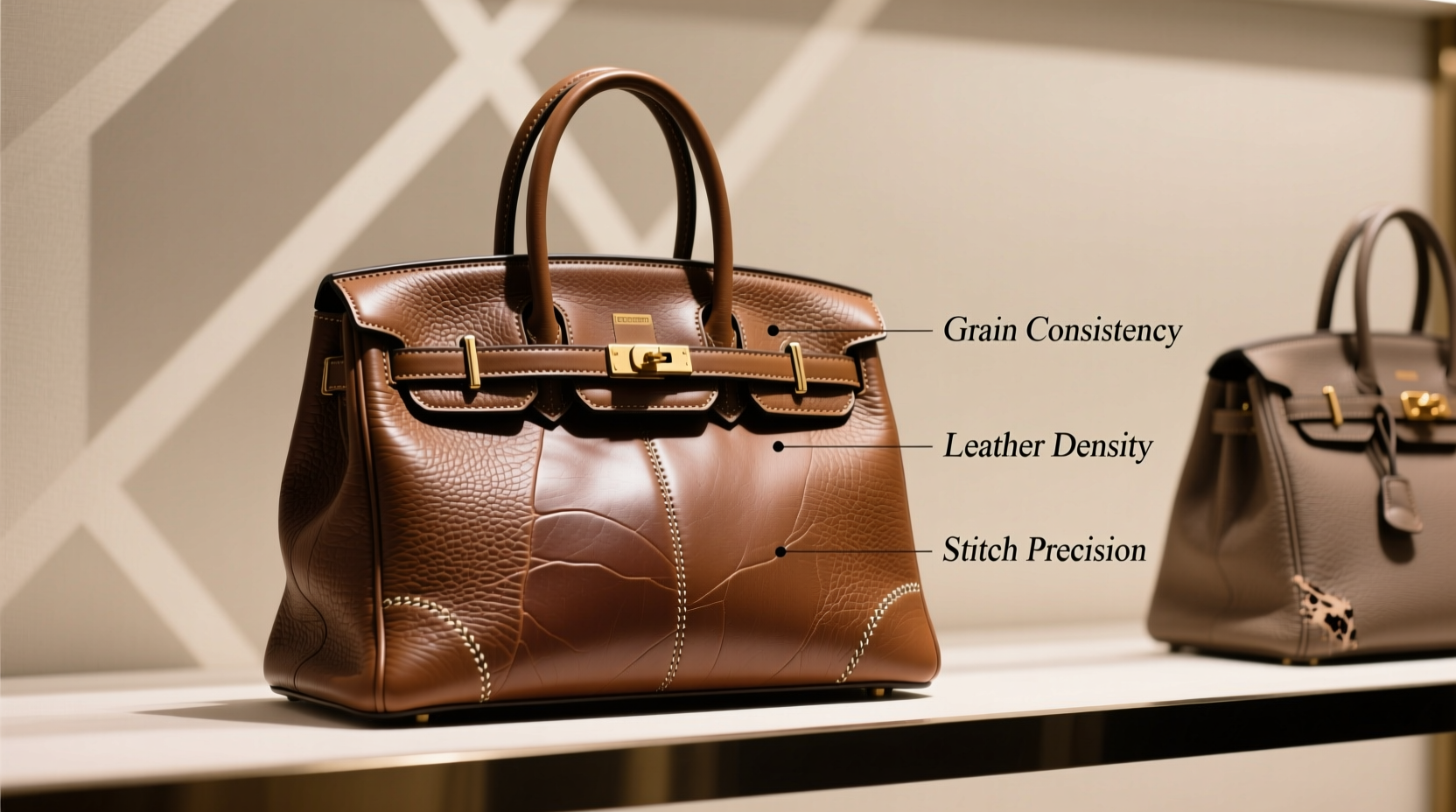
Leather is the cornerstone of most high-end handbags. But not all leathers are created equal. Luxury brands typically use full-grain or top-grain hides, sourced from premium suppliers in France, Italy, or Japan. These leathers retain the natural grain and fibers, offering durability and a distinctive patina that develops over time.
Common types used in designer bags include:
- Calfskin: Soft, fine-grained, and resilient—often seen in Louis Vuitton and Gucci bags.
- Exotic skins: Such as crocodile, python, or ostrich, which require ethical sourcing and meticulous finishing.
- Epi leather: A textured, scratch-resistant calfskin developed by Louis Vuitton, known for its durability and color retention.
- Vegetable-tanned leather: An eco-friendly method using natural tannins; ages beautifully but requires careful maintenance.
When inspecting leather, run your fingers across the surface. High-quality leather feels supple yet firm, with a consistent texture and rich aroma. Avoid bags with overly uniform patterns or plastic-like finishes—these often indicate corrected grain or synthetic coatings designed to mask inferior hides.
Hardware: The Hidden Indicator of Craftsmanship
The metal components—zippers, clasps, studs, and chain straps—are often overlooked, yet they reveal much about a bag’s quality. Designer brands use solid brass, palladium, or gold-plated alloys, which resist tarnishing and maintain weight and luster over years of use.
To test hardware quality:
- Lift the zipper pull—it should feel substantial, not hollow or lightweight.
- Check engravings: Logos on zippers (like YKK for certain designers) or internal stamps should be crisp and aligned.
- Open and close the clasp repeatedly. It should snap securely without wobbling.
Brands like Prada and Celine often use matte-finish hardware for a minimalist aesthetic, while others like Fendi favor bold gold tones. Regardless of style, the finish should be even, without flaking or discoloration at stress points.
Hardware Comparison Table
| Brand | Typical Metal Used | Distinguishing Feature |
|---|---|---|
| Hermès | Solid Brass | Hand-engraved initials, smooth action |
| Chanel | Gilt Gold or Ruthenium | Interlocking CC logo with precise alignment |
| Loewe | Palladium-Coated Brass | Tactile, understated finish |
| Goyard | Nickel-Coated Zinc Alloy | Lightweight but durable; less corrosion-prone |
Stitching and Construction: Precision Matters
Even the finest materials fail if poorly assembled. Luxury bags feature tight, even stitching—typically 8 to 12 stitches per inch—with reinforced seams at stress points like handles and corners. Look for straight lines, no skipped stitches, and thread that matches the leather tone precisely.
Double-stitched or saddle-stitched construction (common in artisanal brands like Valextra) indicates superior durability. In contrast, mass-produced bags may use glue or machine stitching alone, which can unravel under strain.
The lining is another telltale sign. Premium bags use soft microfiber suede, silk jacquard, or pebbled leather interiors. Labels inside should be neatly sewn, with correct spelling and font consistency—counterfeits often misspell brand names or use incorrect logos.
“Stitching isn’t just functional—it’s a signature of the atelier. A single millimeter off can signal factory deviation.” — Antoine Morel, Former Atelier Supervisor at Delvaux
Step-by-Step Guide: How to Inspect a Designer Bag
Whether shopping in-store, online, or secondhand, follow this inspection sequence to verify material quality:
- Examine the exterior: Check for symmetry, even panel alignment, and absence of glue residue.
- Touch the leather: Assess suppleness, grain depth, and smell. Real leather has a distinct earthy scent.
- Inspect hardware: Test zippers, clasps, and chains for smooth operation and weight.
- Flip it over: The base should have protective studs that don’t wobble and are evenly spaced.
- Check interior details: Lining should be wrinkle-free, seams hidden, and pockets properly anchored.
- Verify serial and authenticity cards: Match fonts, holograms, and date codes to official databases when possible.
Real Example: Identifying a Counterfeit Louis Vuitton Neverfull
A collector once purchased a “pre-loved” Louis Vuitton Neverfull online, drawn by its low price and pristine appearance. Upon receipt, subtle flaws emerged: the vachetta leather darkened unevenly after one week (indicating poor tanning), the D-rings were slightly misaligned, and the interior stitching averaged only six stitches per inch—half the standard. Further, the date code didn’t match LV’s regional format. After consulting an authentication service, the bag was confirmed fake. This case underscores why tactile and visual scrutiny matters—even when a bag looks convincing at first glance.
Do’s and Don’ts of Material Care
Preserving material quality starts after purchase. Follow best practices to extend lifespan and maintain resale value.
| Do’s | Don’ts |
|---|---|
| Use a breathable dust bag for storage | Store in plastic bins (traps moisture) |
| Condition leather every 3–6 months | Apply silicone-based polishes (clogs pores) |
| Rotate bags to prevent stress fatigue | Overstuff daily (distorts shape) |
| Clean spills immediately with a dry cloth | Use household cleaners or wipes |
Frequently Asked Questions
How can I tell if a leather bag is vegetable-tanned?
Vegetable-tanned leather typically has a warm, honey-brown hue on edges and develops a rich patina over time. It may also carry a natural, earthy scent. Look for certifications or brand disclosures—many luxury houses now specify tanning methods in product descriptions.
Are exotic skins worth the extra cost?
When ethically sourced and expertly crafted, exotic skins offer unparalleled rarity and durability. However, they require specialized care and face increasing regulatory restrictions. For many, the investment is justified by exclusivity and longevity—provided proper maintenance is followed.
Does a heavier bag always mean better quality?
Not necessarily. While solid hardware and thick leather add weight, excessive heaviness can indicate over-padding or suboptimal design. Balance is key—a well-constructed bag feels substantial but remains comfortable to carry.
Final Thoughts: Cultivating an Eye for Excellence
Recognizing high-quality materials in designer bags is a skill refined through observation, experience, and attention to detail. It transcends logos and price tags, focusing instead on the tangible evidence of craftsmanship: the hand of the leather, the precision of the stitch, the heft of the hardware. These elements not only define authenticity but also determine how gracefully a bag ages over time.
As the secondary luxury market grows and counterfeit sophistication increases, the ability to discern true quality becomes more valuable than ever. Whether you're building a curated collection or making a single meaningful purchase, take the time to inspect, question, and appreciate the materials in front of you. Your discernment today ensures lasting beauty and value tomorrow.




 浙公网安备
33010002000092号
浙公网安备
33010002000092号 浙B2-20120091-4
Comments
No comments yet. Why don't you start the discussion?