
Mail delivery may seem straightforward, but complications arise when recipients are unavailable, transient, or receiving correspondence through an intermediary. One widely used yet often misunderstood solution is the \"in care of\" (c/o) address. Whether you're sending personal letters, official documents, or business packages, understanding how to correctly use c/o addresses ensures your mail reaches its intended destination without delays or misrouting.
The “in care of” designation allows someone to receive mail on behalf of another person or entity. It's particularly useful for temporary housing situations, business representatives, legal guardians, or international shipments where direct delivery isn't feasible. When used properly, it streamlines communication. But incorrect formatting can lead to returned mail, privacy issues, or even security risks.
Understanding the Purpose of 'In Care Of'
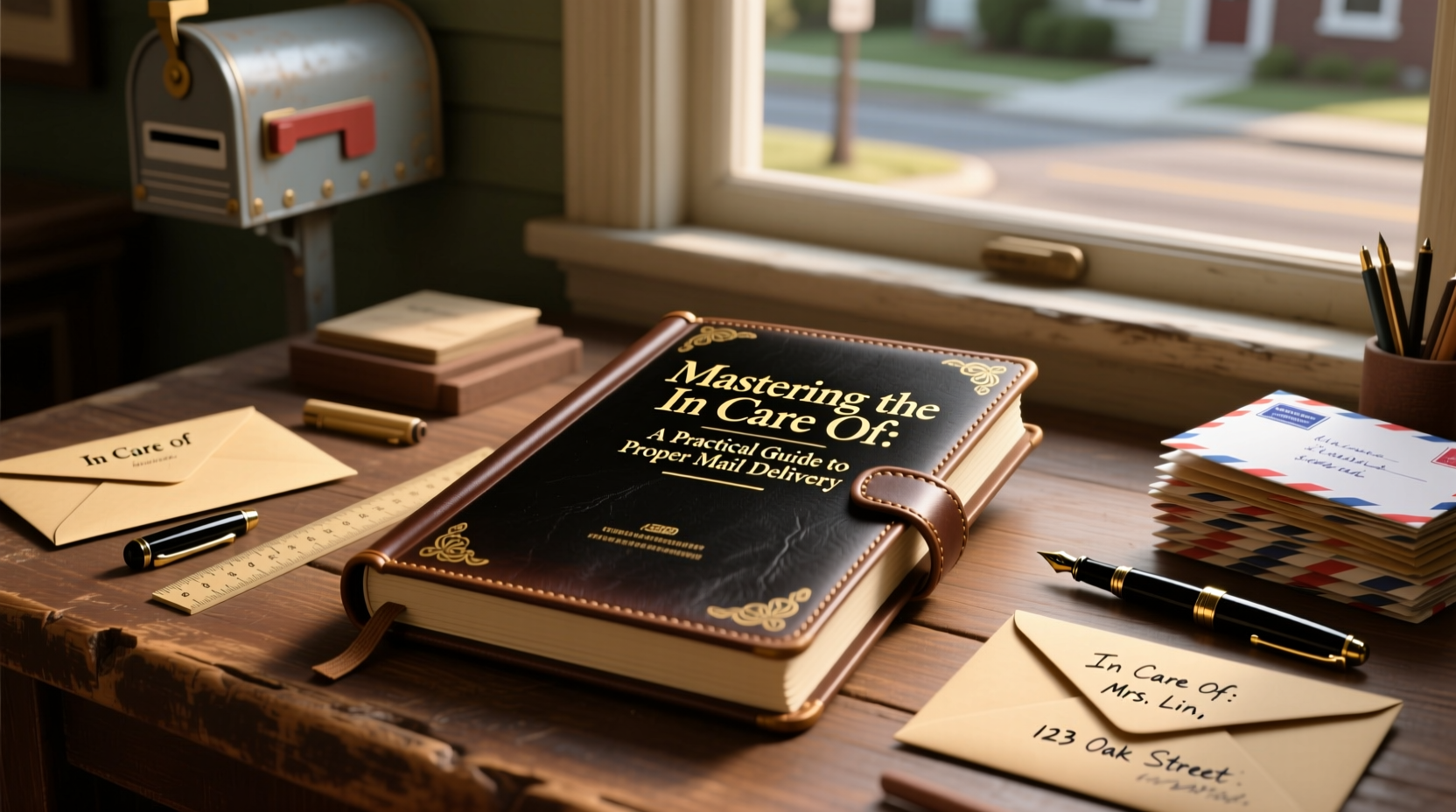
The term “in care of” indicates that the named individual or organization is responsible for handling and forwarding mail to the final recipient. This method is not a substitute for a permanent address but serves as a trusted relay point.
Common scenarios include:
- A tenant using a property manager’s address for official notices.
- An employee receiving corporate documents at a company office.
- A family member managing correspondence for an elderly relative in assisted living.
- International students receiving mail through their university housing office.
Unlike general delivery or PO box services, c/o does not require special postal infrastructure—just clear labeling and cooperation between parties.
“Properly formatted c/o addresses reduce delivery errors by up to 40% in high-mobility populations.” — U.S. Postal Service, Mail Processing Efficiency Report (2023)
Correct Formatting: Structure and Best Practices
Formatting a c/o address correctly is essential. The U.S. Postal Service and most international carriers follow standardized guidelines to ensure readability and machine processing compatibility.
The standard structure follows this order:
- Recipient Name
- c/o Line (with the caretaker’s name)
- Street Address or PO Box
- City, State, ZIP Code
- Country (for international mail)
Example of a Properly Formatted c/o Address:
John A. Rivera
c/o Maria Lopez
742 Evergreen Terrace
Springfield, IL 62704
USA
In this example, Maria Lopez will receive the mail and ensure John A. Rivera gets it. The key is placing the c/o line immediately below the recipient’s name and above the physical address.
When to Use (and Avoid) c/o Addresses
While versatile, c/o should be used judiciously. Here’s a breakdown of appropriate versus problematic use cases:
| Scenario | Recommended? | Notes |
|---|---|---|
| Sending documents to a client via their attorney | Yes | Ensure legal consent; ideal for formal correspondence. |
| Shipping gifts to a friend staying temporarily with family | Yes | Confirm with both parties to avoid confusion. |
| Using c/o for personal mail at a workplace without permission | No | May violate company policy or create administrative burden. |
| Redirecting government benefits or tax forms | Use Caution | Some agencies require official change-of-address filings instead. |
| Masking identity for sensitive deliveries | Limited Use | Consider registered mail or private courier for confidentiality. |
Step-by-Step Guide to Sending Mail Using c/o
Follow this sequence to ensure accuracy and reliability:
- Obtain Consent: Confirm that the caretaker agrees to accept and forward the mail.
- Verify Full Address Details: Double-check the street, city, ZIP, and country if applicable.
- Format the Envelope Correctly: Write clearly using block letters; avoid cursive.
- Include Return Address: Essential for undeliverable items.
- Add Context if Needed: For sensitive mail, include a note like “Confidential – Please Forward to [Name]”.
- Choose Tracking Option: Use certified or tracked mail for valuable or time-sensitive items.
- Follow Up: Allow 5–7 business days, then contact the recipient to confirm receipt.
Real-World Example: International Student Mail Delivery
Li Wei, a graduate student from China enrolled at the University of Michigan, rents off-campus housing but prefers academic correspondence go through the department office during exam season. His advisor, Dr. Karen Ellis, regularly receives transcripts and scholarship notifications on his behalf.
To streamline the process, Li submits this address for all institutional mail:
Li Wei
c/o Dr. Karen Ellis – Computer Science Department
2260 Hayward Street
Ann Arbor, MI 48109
USA
The department logs incoming mail and notifies Li within 24 hours. This system prevents missed deadlines and lost documents due to unreliable apartment mailbox access. After two semesters, zero mail has been misplaced—a testament to proper c/o usage.
Common Mistakes and How to Avoid Them
Even small errors can derail delivery. Watch out for these frequent pitfalls:
- Misplacing the c/o line: Putting it after the address renders it invisible to processors.
- Omitting the caretaker’s full name: “c/o Office Manager” lacks specificity and may delay handling.
- Using informal labels: Phrases like “Attn:” or “Hold for” aren’t recognized by postal automation.
- Assuming all carriers handle c/o the same way: FedEx and UPS may treat c/o differently than USPS; check carrier policies.
“Clarity trumps convenience in addressing. A well-formatted c/o line is the difference between delivery and detention.” — Robert Kim, Logistics Coordinator, National Courier Alliance
Checklist: Preparing a c/o Mail Submission
Before dropping off your envelope or scheduling a shipment, run through this checklist:
- ✅ Recipient name is listed first
- ✅ c/o line includes full name of caretaker
- ✅ Physical address is complete and verified
- ✅ City, state, ZIP are aligned with postal standards
- ✅ Country included for international destinations
- ✅ Return address clearly visible in top-left corner
- ✅ Sufficient postage applied based on weight and service level
- ✅ Tracking number obtained (if applicable)
Frequently Asked Questions
Can I use c/o for receiving government mail like IRS notices?
Yes, but only temporarily. While the IRS will deliver to a c/o address, they recommend filing Form 8822 (Change of Address) for permanent updates. Relying solely on c/o for tax-related mail may result in missed communications or audit notices going unacknowledged.
Is it legal to send mail c/o without the caretaker’s knowledge?
No. Doing so violates ethical and potentially legal norms. Most organizations refuse to accept unsolicited mail addressed to others. Unauthorized use could also breach data protection laws, especially with sensitive information.
Does using c/o affect package delivery speed?
Not inherently. USPS and major carriers process c/o mail normally. However, additional handling time occurs once the caretaker receives it. For urgent deliveries, combine c/o with expedited shipping and notify both parties in advance.
Final Thoughts: Precision Enables Connection
The “in care of” address is more than a formatting footnote—it’s a bridge between people across distances, transitions, and responsibilities. Whether you’re supporting a loved one abroad, managing professional correspondence, or navigating temporary housing, mastering c/o formatting empowers reliable communication.
Accuracy builds trust. A correctly addressed envelope reflects respect for both the recipient and the caretaker. In an age of instant messaging, physical mail still carries weight—legal, emotional, and logistical. Ensuring it arrives safely is not just practical; it’s a gesture of care.




 浙公网安备
33010002000092号
浙公网安备
33010002000092号 浙B2-20120091-4
Comments
No comments yet. Why don't you start the discussion?