
A crocodile leather watch strap isn’t just an accessory—it’s a statement of refinement, durability, and craftsmanship. Among premium options, the four leaf design stands out for its elegant tapering and secure fit, often found on high-end timepieces. However, installing such a strap correctly is critical to both performance and longevity. A poorly fitted strap can lead to discomfort, uneven wear, or even accidental detachment. This guide walks you through every step of installing a four leaf crocodile leather watch strap, offering professional insights, practical tips, and real-world advice to ensure a perfect fit.
Understanding the Four Leaf Crocodile Leather Strap
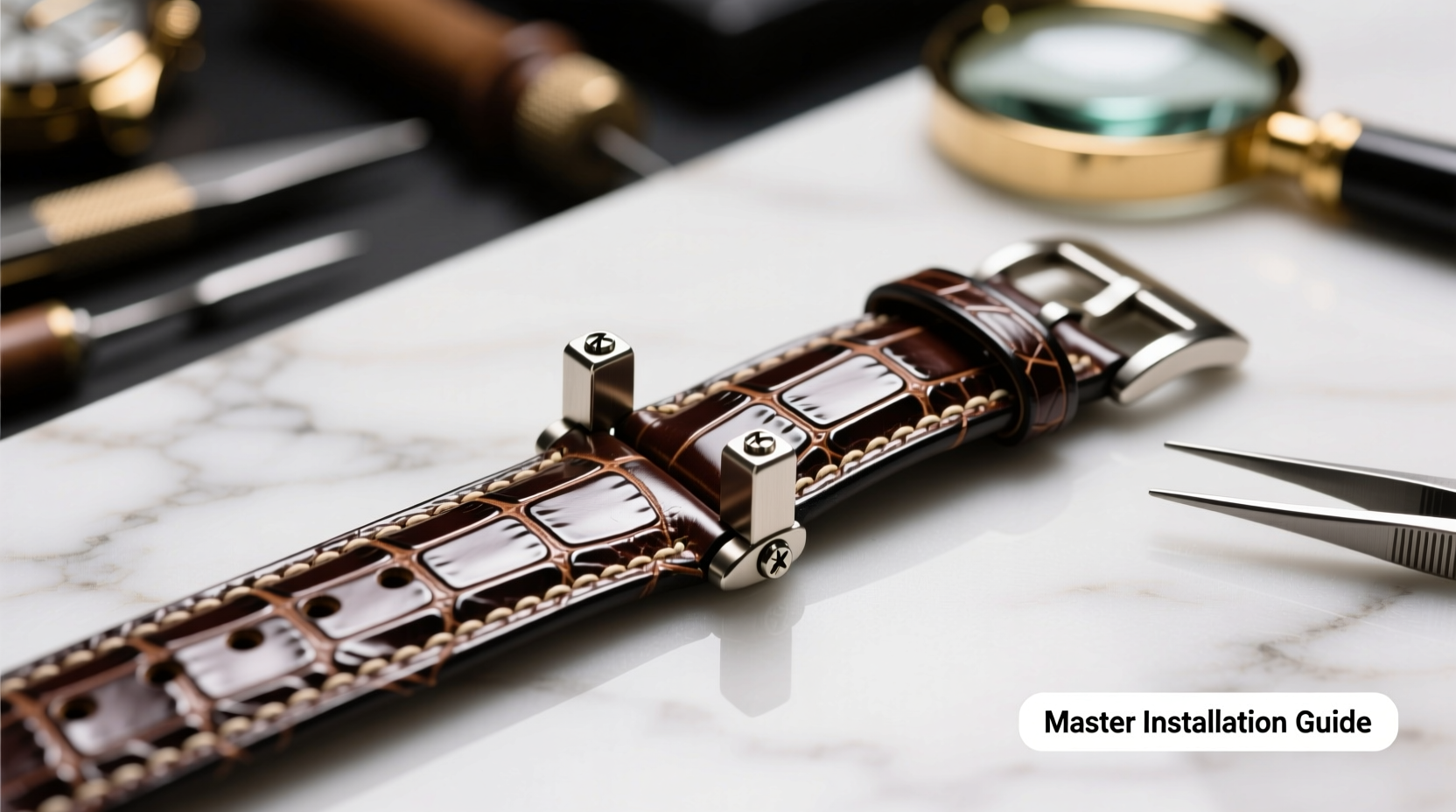
The term “four leaf” refers to the distinctive shape of the strap where it meets the watch case. Unlike straight-ended straps, the four leaf design features gently curved lugs that mimic the silhouette of a four-leaf clover—providing better ergonomics and a seamless transition from case to band. When paired with genuine crocodile leather, known for its textured grain and natural strength, this combination delivers both luxury and resilience.
Crocodile leather is tanned and finished to preserve its unique scale pattern while enhancing durability. It’s naturally water-resistant to a degree but requires careful handling during installation to avoid creasing or damaging the delicate edges near the spring bars.
“Precision in strap installation preserves both aesthetics and function. A well-fitted four leaf strap enhances the watch’s drape on the wrist and reduces stress on the lugs.” — Julian Hartman, Master Watchmaker & Horology Consultant
Step-by-Step Installation Guide
Installing a four leaf crocodile leather strap demands attention to detail. Rushing the process risks scratching the watch case or distorting the leather. Follow this sequence for a secure, polished result:
- Prepare your workspace: Use a clean, soft surface (like a microfiber cloth) under good lighting. Keep tools within reach: a spring bar tool or small flathead screwdriver, and optionally, rubber-tipped tweezers for handling delicate parts.
- Inspect the new strap: Check for any manufacturing defects, misaligned holes, or warping. Ensure the leather hasn’t dried out and that the lining feels supple.
- Remove the old strap: Insert the spring bar tool into the narrow gap between the spring bar end and the watch lug. Gently press to release tension and slide the bar outward. Repeat on the other side. Remove the strap carefully to avoid snapping the spring bar into the case.
- Align the four leaf ends: Position the new strap so the wider end connects to the watch case’s fixed horns (typically at 12 o’clock), and the narrower end attaches to the spring-loaded side (at 6 o’clock). The curve of the leaf should follow the contour of the lug.
- Insert the first spring bar (fixed side): Compress one end of the spring bar and insert it into the lug hole on the non-spring side. Hold it steady with light pressure while aligning the strap.
- Attach the second end (spring side): Compress the free end of the spring bar and guide it into the opposite lug. Use steady, even pressure—do not force it. Misalignment can gouge the leather or damage the spring bar.
- Test movement and alignment: Once secured, gently wiggle the strap to confirm it moves smoothly but without excessive play. The four leaf should sit flush against the case with no twisting.
Do’s and Don’ts: Installation Best Practices
| Do | Don’t |
|---|---|
| Use a dedicated spring bar tool for precision | Use sharp metal objects that can scratch the case |
| Handle the leather by the edges, avoiding oils from fingers | Touch the polished surface of the strap excessively |
| Lubricate spring bars lightly with silicone grease if stiff | Over-lubricate, which attracts dust and grime |
| Verify lug width compatibility before purchase (e.g., 20mm, 22mm) | Assume all crocodile straps fit universally |
| Check that the strap tapers correctly from case to buckle | Install a strap that bunches or gaps at the lugs |
Finding the Perfect Fit: Ergonomics and Adjustment
A perfectly installed strap should feel balanced on the wrist. The four leaf design excels in distributing weight evenly, reducing pressure points. After installation, assess these factors:
- Drape: The strap should follow the natural curve of your wrist without lifting at the lugs.
- Buckle position: Ideally, the tongue should land in the middle three holes—not too tight, not too loose.
- Clearance: Ensure the case back doesn’t rub against the leather when flexing your wrist.
If the strap feels too tight or loose, consider replacing the buckle or adjusting hole placement—but only if done by a professional. Altering factory-punched holes risks compromising structural integrity.
Mini Case Study: Correcting a Poor Initial Fit
Mark, a collector in Geneva, purchased a vintage chronograph with a custom four leaf crocodile strap. Upon installation, he noticed the strap twisted slightly when worn. After inspection, he realized the spring bar had been inserted backward, compressing the leather unevenly. Using a magnifying loupe, he reinstalled the strap with correct alignment—ensuring the concave side of the leaf faced the case. The improvement was immediate: smoother articulation, no twisting, and enhanced comfort during extended wear. This minor correction preserved both the strap’s appearance and the watch’s resale value.
Long-Term Care After Installation
Proper installation is only the beginning. To maintain the beauty and integrity of your crocodile leather strap:
- Wipe gently with a dry, soft cloth after each use to remove sweat and oils.
- Avoid prolonged exposure to sunlight, humidity, or perfumes.
- Condition every 6–8 weeks using a leather balm designed for exotic skins—apply sparingly with a cotton swab.
- Store the watch off-wrist in a breathable pouch, away from plastic wraps that trap moisture.
“Crocodile leather ages beautifully, but only if treated with respect. The first few months after installation set the tone for how it will wear over time.” — Sofia Lin, Luxury Accessory Conservator
FAQ
Can I install a four leaf crocodile strap myself, or should I go to a professional?
You can install it yourself with the right tools and patience. However, if your watch has fragile lugs or integrated design (like some AP or Patek models), visiting a watchmaker ensures safety and precision.
How do I know if the four leaf strap is compatible with my watch?
Check the lug width (measured in millimeters between the lugs) and compare it to the strap specification. Also, verify that the space between lugs accommodates the thickness of the four leaf end—some cases have tight clearances.
Why does my crocodile strap creak when I move my wrist?
Slight creaking is normal with new leather as fibers settle. Excessive noise may indicate friction from improper fit or lack of conditioning. Apply a tiny amount of leather conditioner to the underside near the lugs.
Conclusion
Mastering the installation of a four leaf crocodile leather watch strap elevates your relationship with your timepiece. It’s not merely about attaching a band—it’s about ensuring harmony between form, function, and material longevity. With the right technique, care, and attention to detail, your strap will offer years of refined wear, developing a personal patina that reflects your lifestyle. Take pride in the process, honor the craftsmanship, and enjoy the quiet confidence that comes from a perfectly fitted luxury accessory.




 浙公网安备
33010002000092号
浙公网安备
33010002000092号 浙B2-20120091-4
Comments
No comments yet. Why don't you start the discussion?