
For left-handed players, picking up a guitar shouldn’t mean contending with reversed strings or awkward adaptations. While the music world has long been right-hand dominant, more musicians are embracing their natural orientation—and discovering that playing left-handed opens doors to comfort, speed, and expressive freedom. Whether you're just starting out or transitioning from right-handed playing, mastering the left-handed guitar involves more than simply flipping a standard instrument. It requires thoughtful technique, proper setup, and consistent practice tailored to your unique needs.
Understanding Left-Handed Guitar Orientation
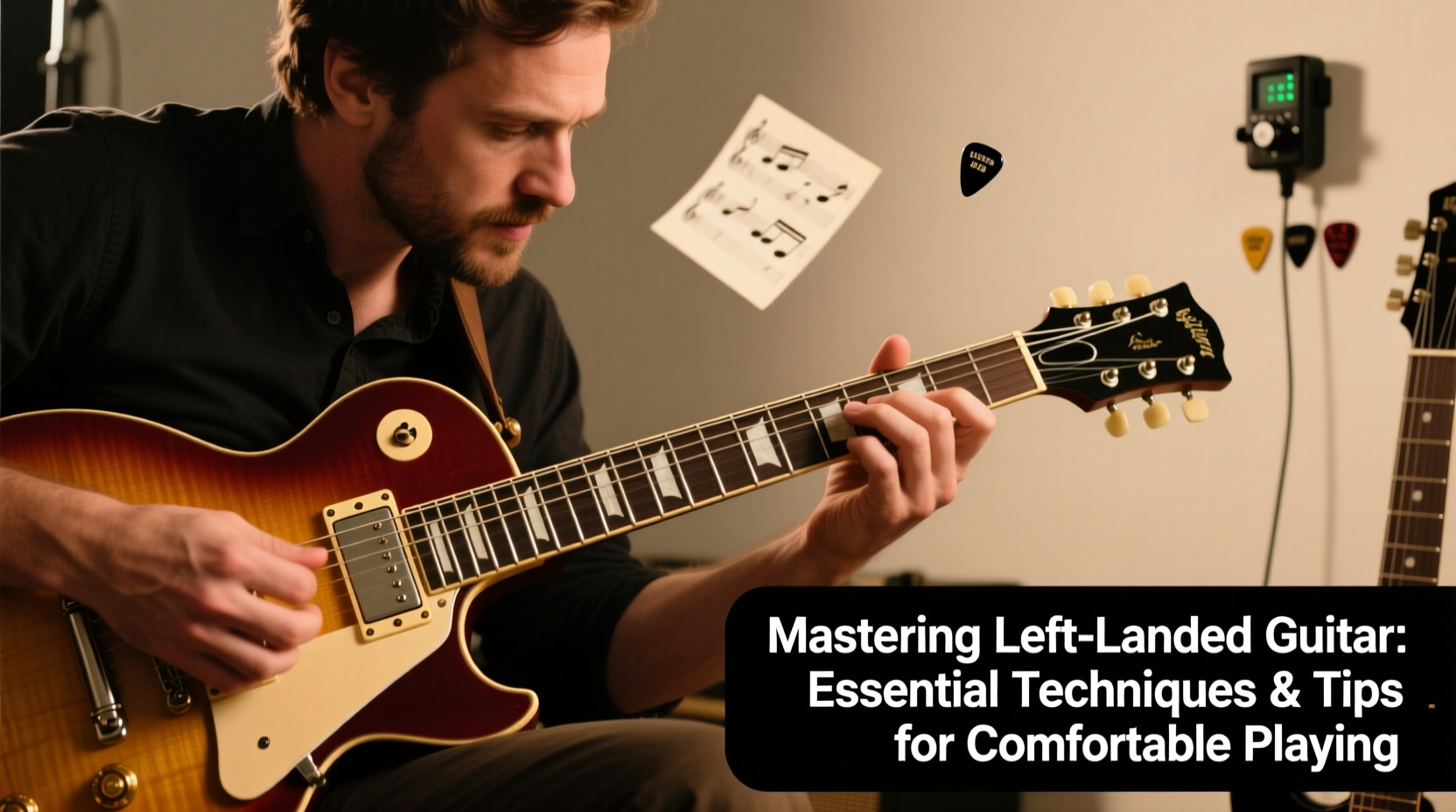
A left-handed guitar is not merely a mirror image of a right-handed model—it’s an instrument designed so the thickest string (low E) is on the top when held in playing position. This allows the left hand to fret notes while the right hand strums or picks. The nut, bridge, and control layout are all adjusted accordingly. Many left-handed players mistakenly begin by restringing a right-handed guitar upside-down, but this compromises tone, intonation, and playability.
Choosing a true left-handed guitar ensures optimal string height, pickup alignment, and ergonomic balance. Brands like Fender, Epiphone, and Ibanez now offer factory-produced lefty models, making access easier than ever.
Essential Techniques for Left-Handed Players
Left-handed playing follows the same musical principles as right-handed, but muscle memory and coordination develop differently. Prioritizing correct form early prevents bad habits and injury.
Fretting Hand Precision
The left hand (for left-handed players) must press strings firmly behind the frets without excessive force. Curved fingers help avoid muting adjacent strings. Practice chromatic scales across all six strings to build finger independence and strength.
Picking and Strumming Control
The right hand handles picking and strumming. Use a relaxed wrist and let the pick move through the strings with minimal resistance. Alternate picking—downstrokes followed by upstrokes—is crucial for speed and fluidity. Start slow with a metronome, gradually increasing tempo as accuracy improves.
Chord Transitions
Smooth chord changes are foundational. Begin with open chords like E minor, A minor, C major, and G major. Focus on lifting and placing fingers simultaneously rather than one at a time. Practice switching between two chords for two minutes daily until transitions feel automatic.
“Left-handed players often develop stronger rhythmic precision because they’re forced to think critically about setup and mechanics from day one.” — Dr. Lena Torres, Music Education Researcher, Berklee College of Music
Step-by-Step Guide to Building Comfortable Play Habits
Comfort is key to sustained progress. Poor posture or tension leads to fatigue and injury. Follow this sequence to establish a healthy playing foundation:
- Sit on the front edge of a firm chair with feet flat on the floor. Keep your back straight but relaxed.
- Rest the guitar’s upper bout on your right thigh, tilting slightly upward for clear access to the neck.
- Position your fretting elbow under the neck—don’t cradle it against your body. This allows greater reach and reduces strain.
- Keep your picking arm loose, with the forearm resting lightly on the guitar’s lower bout.
- Align your fretting wrist straight—avoid bending it excessively backward or sideways.
- Practice for 20–30 minutes daily, focusing on form before speed. Take breaks every 10 minutes to reset posture.
Common Challenges and How to Overcome Them
Left-handed guitarists face unique obstacles, from limited gear availability to reversed instructional materials. Awareness and adaptation are critical.
| Challenge | Solution |
|---|---|
| Fewer left-handed guitars available in stores | Order online from reputable brands; consider used markets like Reverb or Sweetwater Refurbished |
| Tutorials show right-handed techniques | Use mirror mode on video platforms or mentally reverse hand movements |
| Struggle with barre chords due to thumb placement | Adjust thumb position to center of the neck back; use wall exercises to build strength |
| Pickups and controls feel awkward | Verify your guitar is truly left-handed; some budget models only reverse strings, not electronics |
Mini Case Study: Jamie’s Transition to Left-Handed Playing
Jamie, a self-taught musician, began playing right-handed at 15 despite being naturally left-dominant. After years of wrist pain and slow progress, she switched to a left-handed Stratocaster at 27. Within six months of dedicated practice using proper ergonomics, her speed doubled and discomfort vanished. “It felt like unlocking a door I didn’t know was locked,” she said. “Everything—from bending strings to soloing—became intuitive.”
Checklist: Setting Up Your Left-Handed Guitar for Success
- ✅ Confirm the guitar is genuinely left-handed (strings thickest-to-thinnest from top to bottom)
- ✅ Adjust strap length so the guitar sits comfortably between hip and chest level
- ✅ Check action (string height); high action causes finger fatigue
- ✅ Intonate the guitar to ensure accurate pitch across frets
- ✅ Use medium-light gauge strings (e.g., .010–.046) for balanced tension and ease of bending
- ✅ Position amplifiers or monitors directly in front to avoid twisting your neck during practice
Frequently Asked Questions
Can I play a right-handed guitar left-handed by restringing it?
You can, but it’s not ideal. Most guitars have asymmetric bridges and nut slots designed for specific string tensions. Restringing a right-handed guitar may result in poor intonation, uneven action, and compromised tone. A purpose-built left-handed guitar offers superior performance and longevity.
Are there famous left-handed guitarists I can learn from?
Absolutely. Jimi Hendrix famously played a right-handed Fender Stratocaster flipped over and restrung—a setup that influenced generations. Other notable lefties include Paul McCartney, Kurt Cobain, Albert King, and Olivia Rodrigo. Studying their styles provides both inspiration and technical insight.
Do left-handed players learn faster?
There’s no inherent speed advantage, but left-handed players often develop heightened spatial awareness due to adapting to a right-handed world. With proper instruction and tools, learning curves are comparable. The key factor is consistency, not hand dominance.
Final Thoughts: Embrace Your Natural Strength
Mastering the left-handed guitar isn’t about overcoming a disadvantage—it’s about aligning your instrument with your innate strengths. When your hands work in harmony with your body’s natural tendencies, playing becomes effortless, expressive, and deeply personal. Invest in the right gear, prioritize posture and technique, and trust the process. Every great guitarist started where you are now: holding a guitar, wondering what comes next.




 浙公网安备
33010002000092号
浙公网安备
33010002000092号 浙B2-20120091-4
Comments
No comments yet. Why don't you start the discussion?