
Learning American Sign Language (ASL) begins with mastering the manual alphabet—a foundational skill that opens doors to communication, literacy, and cultural connection. Among the first letters taught is “A,” a deceptively simple sign that carries precise form and function. While it may appear straightforward, correct execution ensures clarity and sets the tone for accurate signing in future lessons. This guide breaks down the ASL letter A into clear, actionable steps, offering practical tips, common pitfalls, and expert insights to help beginners build confidence from day one.
The Importance of the Letter A in ASL
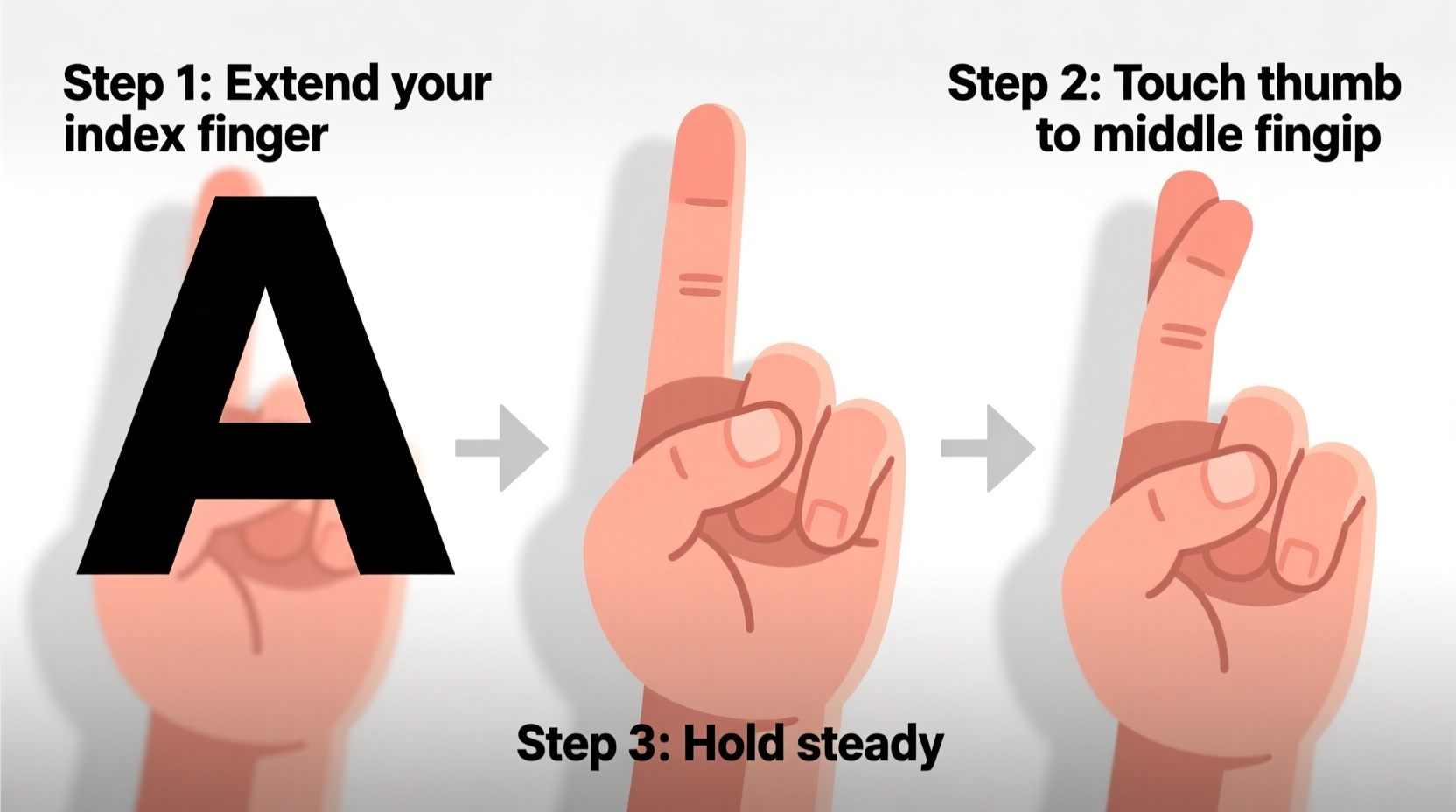
The letter A serves as a building block not only for spelling names and words but also for forming more complex signs. In ASL, fingerspelling is used when introducing new people, places, or concepts that don’t have established signs. The letter A appears frequently in everyday vocabulary—from “apple” to “America”—making its correct formation essential.
Unlike spoken language, where mispronunciation might still be understood through context, incorrect hand positioning in ASL can lead to confusion or entirely different meanings. For example, a poorly formed “A” might resemble the letter “S” or even unrelated signs like “stop.” Precision matters.
“Fingerspelling accuracy starts with attention to detail. The letter A may seem basic, but it’s the foundation of clear communication.” — Dr. Lydia Chen, ASL Linguist and Educator
Step-by-Step Guide to Forming the Letter A
Follow these six steps to correctly produce the ASL letter A:
- Start with an open hand: Hold your dominant hand in front of your body, palm facing slightly inward or forward, fingers extended and relaxed.
- Clench your thumb: Bring your thumb across your palm so it rests between your ring and middle fingers.
- Close your fingers over your thumb: Gently curl your index, middle, ring, and little fingers around your thumb, creating a loose fist.
- Maintain space between thumb and palm: Avoid pressing your thumb tightly into your palm. It should be held securely but not crushed.
- Keep knuckles aligned: Your fingertips should point forward or slightly downward, with all knuckles in a relatively straight line.
- Hold steady without movement: The letter A is static—no shaking, waving, or bouncing. Hold the shape clearly for at least two seconds when fingerspelling.
Common Mistakes and How to Fix Them
Even small deviations can alter the meaning of a sign. Below are frequent errors learners make when signing “A” and how to correct them:
| Mistake | Why It’s a Problem | Solution |
|---|---|---|
| Thumb pressed flat against palm | Hides thumb placement; looks like \"S\" | Position thumb diagonally across palm, nestled between middle and ring finger |
| Fingers too tight or tense | Causes fatigue and unclear shape | Relax grip—form a loose fist, not a rigid one |
| Wiggling or moving hand while holding \"A\" | Suggests ongoing action, not a letter | Freeze the handshape after forming the letter |
| Palm facing outward completely | May obscure thumb position | Angle palm slightly inward for better visibility |
Practice Checklist for Mastery
To internalize the correct form of the letter A, follow this daily practice routine:
- ✔️ Spend 3 minutes forming the letter A slowly, checking hand position in a mirror
- ✔️ Spell your name using fingerspelling, focusing on smooth transitions into and out of “A”
- ✔️ Record yourself signing three words starting with A (e.g., apple, aunt, ask) and review for consistency
- ✔️ Compare your handshape to official ASL resources or videos from certified instructors
- ✔️ Practice with a partner who can give feedback on clarity and form
Real Example: Maria’s First Week with Fingerspelling
Maria, a college student beginning her ASL course, struggled with distinguishing “A” from “S” during her initial assessment. She recalled clenching her fist too tightly, tucking her thumb fully into her palm, which made her signing unclear. After watching slow-motion demonstrations and practicing with a mirror, she adjusted her technique by placing her thumb between her middle and ring fingers deliberately. Within five days of focused repetition, her instructor noted significant improvement. By week two, Maria was able to fingerspell her full name accurately and even helped classmates troubleshoot their own forms.
Her breakthrough came not from speed, but from slowing down and prioritizing precision—a reminder that mastery grows from mindful repetition, not haste.
Do’s and Don’ts of Signing the Letter A
Avoid undermining your progress with preventable habits. Refer to this quick-reference table:
| Do’s | Don’ts |
|---|---|
| Keep thumb visible between middle and ring finger | Don’t hide the thumb under the palm |
| Form a relaxed, rounded fist | Don’t tense fingers unnecessarily |
| Hold the position steadily | Don’t shake or bounce the hand |
| Face palm slightly inward for clarity | Don’t turn palm fully outward or backward |
| Use consistent size and height in fingerspelling sequences | Don’t vary hand elevation between letters |
Frequently Asked Questions
Can I use the letter A as a standalone sign?
Yes, in certain contexts. While primarily part of fingerspelling, “A” can stand alone to indicate the grade “A,” rank something highly (“That performance was an A!”), or refer to blood type. However, always consider context—native ASL speakers often use facial expressions and full signs rather than isolated letters.
Is there a difference between signing “A” in isolation versus within a word?
The handshape remains identical, but transitions matter. When spelling words, move smoothly from one letter to the next without dropping your hand. For example, transitioning from “A” to “P” requires shifting hand orientation without returning to a neutral position mid-word.
Why does my hand cramp when practicing the letter A?
Cramping usually results from excessive tension. The ASL “A” is not a tight fist. Relax your fingers, keep movements minimal, and take short breaks every few minutes. Over time, muscle memory will reduce strain significantly.
Building Confidence Through Consistent Practice
Mastering the letter A is more than memorizing a gesture—it’s about cultivating awareness of hand anatomy, spatial orientation, and visual clarity. As one of the most frequently used letters in English-based fingerspelling, getting it right pays dividends across conversations, introductions, and learning milestones.
Progress doesn’t require perfection overnight. What matters is regular, deliberate practice. Set aside five minutes each day to review the form, compare it to reliable models, and integrate it into simple spelling exercises. Over time, the motion becomes automatic, freeing mental energy for comprehension and expression.
“The beauty of ASL lies in its precision and expressiveness. Start strong with the basics, and every letter you master brings you closer to fluent connection.” — Jamal Ortiz, Deaf Community Advocate
Take the Next Step Today
You now have the tools to form the ASL letter A correctly and confidently. But knowledge only transforms through action. Commit to practicing this sign daily, even if just for a few minutes. Challenge yourself to spell three new words starting with A, teach the sign to someone else, or record a short video to track your progress.




 浙公网安备
33010002000092号
浙公网安备
33010002000092号 浙B2-20120091-4
Comments
No comments yet. Why don't you start the discussion?