
Learning American Sign Language (ASL) begins with mastering the manual alphabet—a foundational skill that opens doors to communication, expression, and connection within the Deaf community. Among the 26 letters, the letter \"S\" is one of the most frequently used and often one of the first taught due to its simplicity and stability. However, even simple signs require precision to ensure clarity and accuracy. This guide walks you through the correct formation, common errors, and practical exercises to help you confidently produce the letter \"S\" in ASL.
Understanding the Role of the Letter S in ASL
The manual alphabet in ASL isn’t just for spelling names or unfamiliar words—it’s a vital tool for learning vocabulary, understanding grammar, and bridging gaps when a specific sign isn’t known. The letter \"S\" appears in countless words, from everyday terms like “school” and “sun” to names such as “Sarah” or “Sam.” Because of its frequency, mastering its form early enhances both expressive and receptive signing skills.
Unlike spoken language, where pronunciation can vary widely, ASL relies on consistent handshapes, orientation, location, and movement. The letter \"S\" is a static handshape, meaning it doesn’t involve motion. It belongs to the category of “closed fist” signs and serves as a building block for more complex signs like “sleep,” “soup,” or “six.”
Step-by-Step Guide to Forming the Letter S
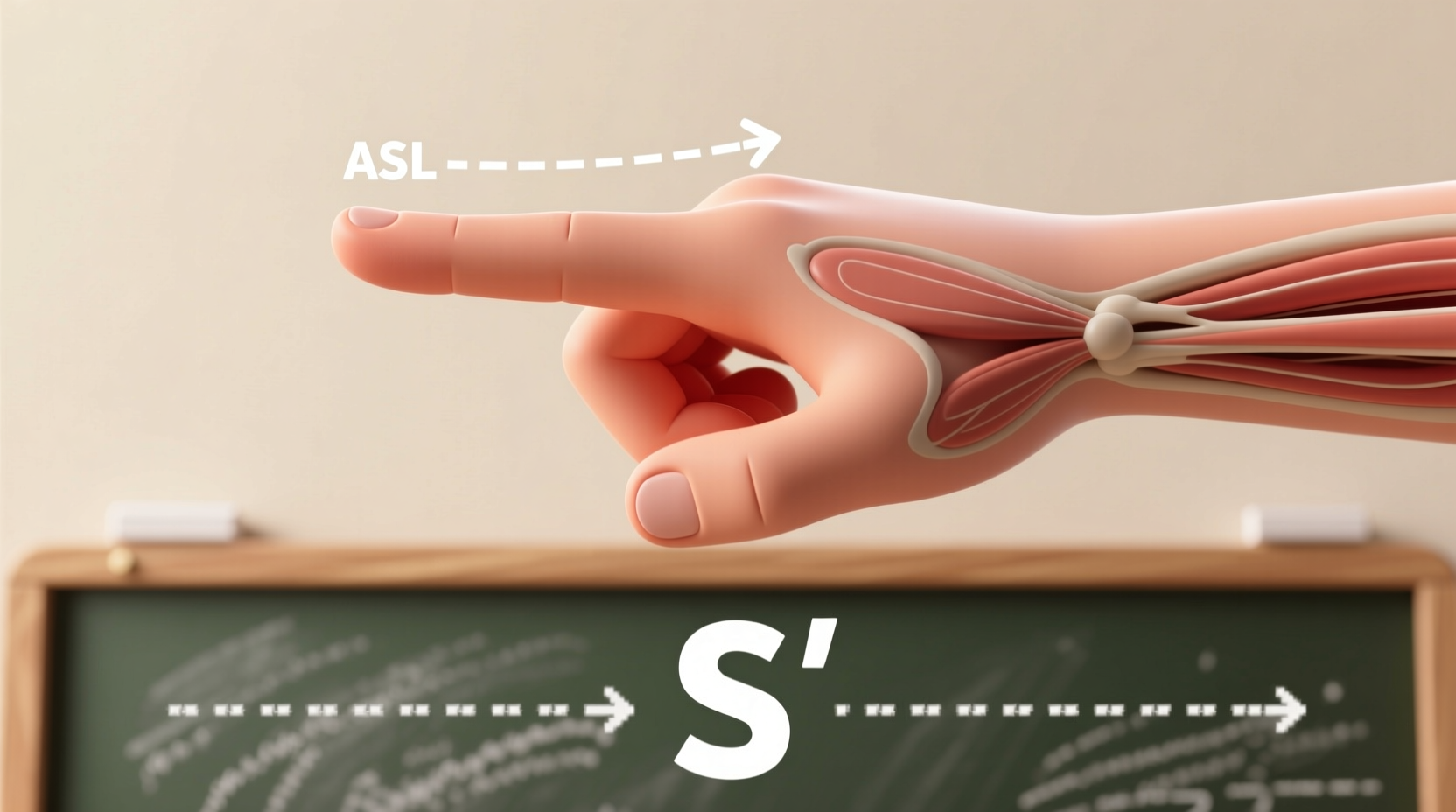
Producing the letter \"S\" correctly involves attention to detail in hand positioning and muscle control. Follow these steps to build muscle memory and ensure accuracy:
- Start with a relaxed hand: Let your dominant hand rest naturally at your side or in front of you. Avoid tension in your wrist or fingers.
- Curl your fingers inward: Bend all four fingers (index, middle, ring, and pinky) into your palm, forming a loose fist.
- Position your thumb: Place your thumb across the front of your curled fingers, resting it gently over the middle joint of the index and middle fingers. Do not tuck it inside the fist.
- Keep your knuckles aligned: The back of your hand should be relatively flat, with the fingertips pointing downward and slightly inward.
- Maintain neutral wrist position: Keep your wrist straight—neither bent up nor down—to ensure the sign is clearly visible.
- Hold steady: Since \"S\" is a static sign, hold the shape for two seconds when practicing, ensuring clarity for observers.
Common Mistakes and How to Avoid Them
Even small deviations in handshape can change the meaning of a sign or render it unclear. Here are frequent errors learners make when forming the letter \"S,\" along with corrections:
| Mistake | Why It’s Problematic | Solution |
|---|---|---|
| Thumb tucked inside the fist | Resembles the letter \"T\" or a closed \"O\" | Rest thumb across the front of fingers, not inside the palm |
| Fingers not fully curled | May look like \"U\" or \"V\" | Curl fingers completely into the palm, tips touching the base |
| Wrist bent upward | Reduces visibility and distorts shape | Keep wrist neutral; align forearm and hand in a straight line |
| Tension in fingers or thumb | Causes fatigue and unnatural appearance | Relax hand before forming the sign; use only necessary muscle engagement |
Practice Exercises for Mastery
Repetition and contextual practice solidify motor memory. Incorporate these drills into your daily routine to refine your \"S\" sign:
- Alphabet Run-Through: Sign the entire ASL alphabet slowly, focusing on smooth transitions into and out of the \"S\" shape.
- Spelling Practice: Spell common words starting with \"S\"—such as \"sun,\" \"star,\" \"sand,\" and \"sign\"—using precise handshapes.
- Partner Drills: Work with a partner or tutor who can provide real-time feedback on hand positioning.
- Slow Motion Signing: Perform the sign in exaggerated slow motion to build awareness of each component.
- Blind Mirror Test: Close your eyes and form the \"S\" sign from memory, then open them to check accuracy.
Real-World Application: A Learner’s Journey
Sophia, a college student beginning her ASL studies, struggled with consistency in forming the letter \"S.\" During her first conversational lab, she signed her name—\"Samantha\"—but her instructor paused and asked her to repeat it. Confused, Sophia did so, only to realize her thumb was tucked inside her palm, making her \"S\" resemble a \"T.\"
After targeted practice using a mirror and peer feedback, Sophia recorded herself weekly. Within three weeks, her handshape improved dramatically. More importantly, her confidence grew. She began using the \"S\" in compound signs like \"school\" and \"study,\" noticing how accurate foundational signs supported more advanced learning. Her experience underscores a key truth: precision in basics enables fluency in complexity.
Expert Insight on Foundational Signs
“Getting the manual alphabet right isn’t about perfection—it’s about consistency and clarity. The letter 'S' might seem minor, but it’s part of hundreds of signs. Nail it early, and you’ll save time later.” — Dr. Lena Torres, ASL Linguistics Professor, Gallaudet University
Checklist: Mastering the Letter S
Use this checklist to self-assess your progress:
- ✅ Fingers fully curled into the palm
- ✅ Thumb placed across the front of fingers (not inside)
- ✅ Knuckles flat, back of hand smooth
- ✅ Wrist neutral, not bent up or down
- ✅ Sign held steady without shaking
- ✅ Practiced in context (e.g., spelling words)
- ✅ Reviewed with a partner or mirror
Frequently Asked Questions
Can I use the letter S to spell fast, or should I slow down?
While fluent signers often spell quickly, beginners should prioritize accuracy over speed. Rushing leads to sloppy handshapes. Build speed gradually once your form is consistent.
Is the letter S the same in all sign languages?
No. While many sign languages use similar manual alphabets, variations exist. For example, British Sign Language (BSL) uses a two-handed alphabet, and the \"S\" differs significantly from ASL. Always confirm the system you’re learning.
Does the letter S have any variations in different ASL dialects?
The core handshape remains consistent across ASL dialects. However, regional signing communities may differ slightly in palm orientation or movement when integrating \"S\" into words. Stick to standard instructional models unless working with native regional signers.
Conclusion: Building Confidence One Sign at a Time
Mastering the letter \"S\" in ASL is more than a technical exercise—it’s a step toward meaningful communication. With deliberate practice, attention to detail, and real-world application, this simple sign becomes a reliable tool in your growing repertoire. As you refine your alphabet skills, remember that every expert signer once started exactly where you are: hands unsure, eager to learn, and committed to growth.




 浙公网安备
33010002000092号
浙公网安备
33010002000092号 浙B2-20120091-4
Comments
No comments yet. Why don't you start the discussion?