
Jewelry stacking has evolved from a trend into a personal expression of style, elegance, and intention. Among the most cherished pieces in modern wristwear are clover bracelets—symbols of luck, renewal, and timeless charm. Whether adorned with delicate charms, engraved messages, or subtle gemstones, clover bracelets offer both meaning and aesthetic appeal. But their true potential shines when thoughtfully layered with complementary accessories. Achieving a harmonious stack isn’t about piling on every bracelet you own—it’s about balance, proportion, and narrative cohesion.
A well-curated stack tells a story: one that blends texture, metal tones, symbolism, and rhythm across the wrist. When done right, it enhances your overall look without overwhelming it. This guide explores how to seamlessly integrate clover bracelets into layered ensembles, offering practical strategies, styling principles, and real-world insights to help you master the art of intentional accessorizing.
The Foundation: Understanding Clover Bracelets
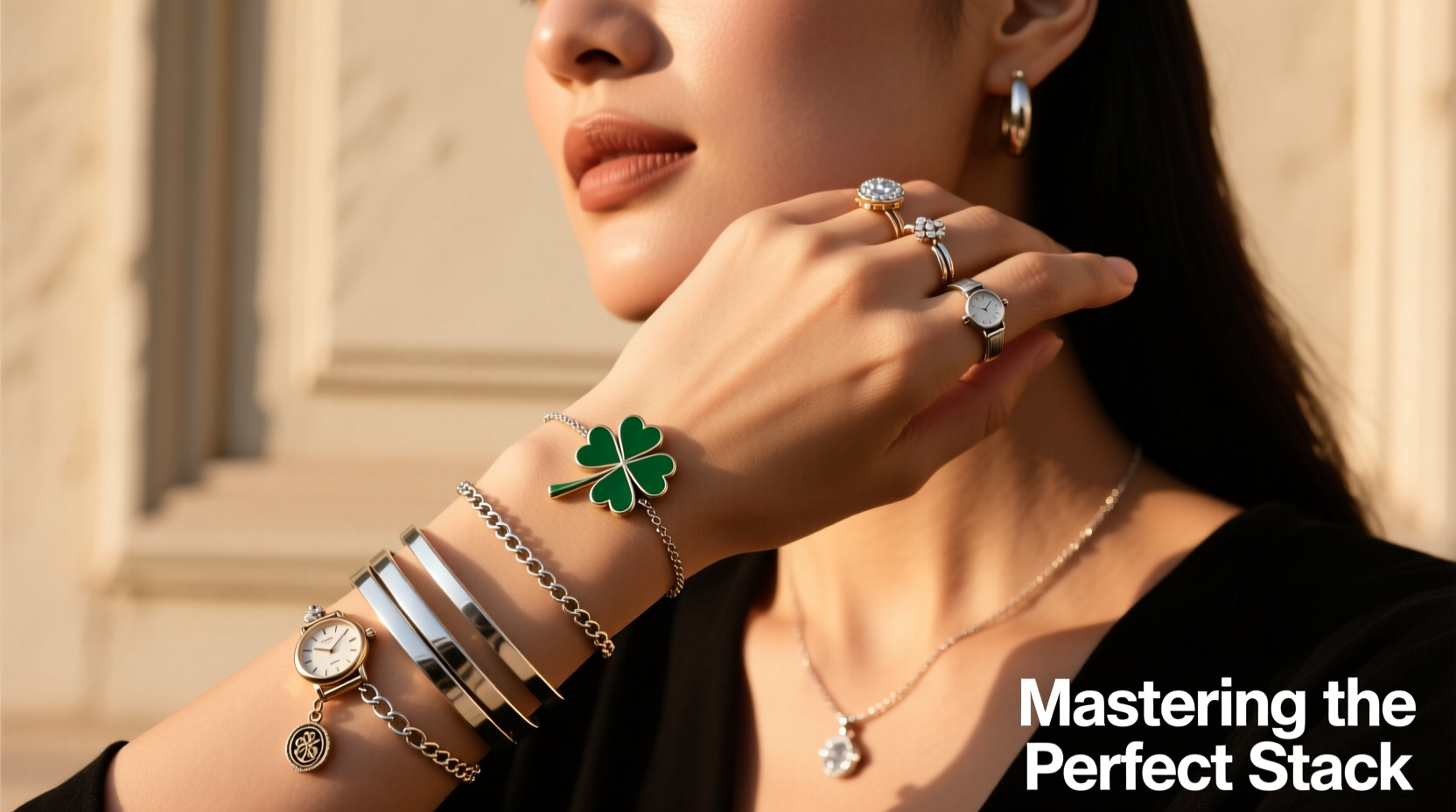
Clover bracelets, particularly those featuring the four-leaf clover motif, carry deep cultural and emotional significance. The rare four-leaf variant symbolizes hope, faith, love, and luck—a talisman passed through generations or gifted during meaningful moments. Today’s designs range from minimalist gold bands with a single clover charm to intricately detailed bangles set with diamonds or enamel accents.
Because of their symbolic weight and often compact design, clover bracelets serve as excellent anchor pieces in a stack. They’re typically smaller in scale than chunky cuffs or wide bangles, which allows them to coexist gracefully with bolder elements. However, their subtlety means they can easily get lost if not paired with intention.
Principles of Balanced Jewelry Stacking
Successful layering follows invisible rules rooted in visual harmony. These aren’t rigid formulas but guiding principles that help create cohesive combinations:
- Vary Widths: Mix thin chains with medium bangles and one statement piece to create depth.
- Play with Texture: Combine smooth surfaces (like polished gold) with hammered metals, woven links, or beaded strands.
- Control Metal Tones: Stick to two primary finishes (e.g., rose gold and silver), or embrace tonal layering within the same family (warm yellows).
- Create Rhythm: Alternate between solid and open designs—bracelet, space, charm, chain—to avoid visual clutter.
- Respect Wrist Real Estate: Leave breathing room. Overcrowding diminishes individual beauty and comfort.
When incorporating a clover bracelet, treat it as a focal point rather than background noise. Position it where it catches light—often near the center of the stack or offset slightly toward the thumb side for natural emphasis.
Step-by-Step Guide to Layering Your Clover Bracelet
Building a compelling stack is an iterative process. Follow this sequence to refine your combination with confidence:
- Select Your Anchor: Begin with your clover bracelet. Place it on your wrist first to assess its size, color, and prominence.
- Add a Complementary Base Chain: Introduce a simple cable or box chain bracelet in a matching metal tone. This grounds the clover piece and provides continuity.
- Incorporate Texture: Slide on a textured piece—perhaps a twisted rope band or a matte-finish bangle—to add contrast.
- Introduce a Statement Element: Include one bold item, such as a wider cuff or a bracelet with a meaningful pendant (initial, moon phase, etc.). Avoid placing it directly adjacent to the clover to prevent competition.
- Finalize with Delicacy: Finish with a dainty chain or a beaded strand to soften the overall effect and complete the rhythm.
- Step Back and Assess: Move your arm naturally. Do the pieces move together fluidly? Is the clover still visible? Adjust spacing or swap components as needed.
Do’s and Don’ts of Mixing Metals and Styles
One of the most common concerns in jewelry stacking is whether mixing metals disrupts cohesion. The answer: not if done intentionally. Use the following table as a reference when combining your clover bracelet with other accessories.
| Scenario | Do | Don't |
|---|---|---|
| Mixing Gold & Silver | Use a rose gold clover bracelet as a bridge between warm and cool tones | Pile on equal amounts of yellow and white gold without transition |
| Layering with Watches | Place the clover above or below the watchband, ensuring it doesn’t interfere with fit | Stack too many pieces around the watch, causing slippage or damage |
| Combining Charms | Limit to 1–2 meaningful charms total to maintain focus | Add multiple small charms that visually compete with the clover |
| Daily Wear vs. Evening | Opt for lighter chains and fewer layers during the day; amplify sparkle at night | Wear a maximalist stack to work if your environment favors minimalism |
Real Example: A Thoughtful Stack for Everyday Elegance
Sophie, a graphic designer based in Portland, wanted to honor her Irish heritage while maintaining a professional yet expressive style. She started with a petite 14K gold four-leaf clover bracelet gifted by her grandmother. To build around it, she selected:
- A slim herringbone chain in matching gold for smooth continuity
- A brushed gold bangle with a subtle wave pattern for tactile contrast
- A personalized name bracelet in a lighter gauge to add intimacy without bulk
She wears this ensemble daily, occasionally swapping in a lapis lazuli beaded strand for creative meetings. “The clover is my touchstone,” she says. “Everything else frames it, but it always feels like *me*.” Her approach reflects a deeper truth: the best stacks are emotionally anchored, not just aesthetically arranged.
“Jewelry stacking should feel like storytelling. Each piece earns its place—not by price or brand, but by meaning and synergy.” — Lena Torres, Contemporary Jewelry Curator
Frequently Asked Questions
Can I wear a clover bracelet with a smartwatch?
Absolutely. Choose a slim clover design and position it just above the watchband. Avoid thick bangles that could interfere with sensor accuracy or cause discomfort. Magnetic clasps may also pose issues with certain devices, so opt for secure lobster clasps instead.
How many bracelets should I pair with my clover?
For most wrist types, three to five bracelets create a balanced stack. Start with three—including the clover—and add one at a time until you achieve visual satisfaction without crowding. If the pieces shift excessively or make noise when moving, reduce the count.
Will layering damage my clover bracelet over time?
Potential friction exists, especially with harder metals or rough textures. To minimize wear, alternate soft materials (leather cords, silicone beads) between metal pieces, and remove stacks before sleeping or exercising. Regular polishing preserves shine and prevents micro-scratches.
Checklist: Building Your Signature Stack
- ☐ Identify your clover bracelet as the emotional or visual centerpiece
- ☐ Choose 1–2 supporting pieces in compatible metal tones
- ☐ Add one textural contrast element (hammered, braided, beaded)
- ☐ Include no more than one bold or wide bracelet per stack
- ☐ Test movement and comfort throughout the day
- ☐ Rotate pieces seasonally or for occasions to keep the look fresh
Conclusion: Craft a Stack That Speaks to You
Mastering the perfect jewelry stack isn’t about following trends—it’s about curating a collection that resonates with who you are. The clover bracelet, rich in symbolism and grace, deserves a place of honor among your accessories. By applying thoughtful layering techniques, respecting proportions, and honoring personal meaning, you transform simple adornments into wearable narratives.




 浙公网安备
33010002000092号
浙公网安备
33010002000092号 浙B2-20120091-4
Comments
No comments yet. Why don't you start the discussion?