
The Picasso 717 fountain pen is a favorite among entry-level enthusiasts for its smooth writing experience, elegant design, and affordability. While it’s built for daily use, one of the most common hurdles users face is refilling the ink correctly. Many resort to cartridges for convenience but miss out on the wider color selection and cost savings that bottled ink offers. Mastering the refill process unlocks the full potential of this reliable pen. With the right technique, refilling can be quick, clean, and repeatable—no leaks, no spills, and no frustration.
Understanding the Picasso 717 Refill System
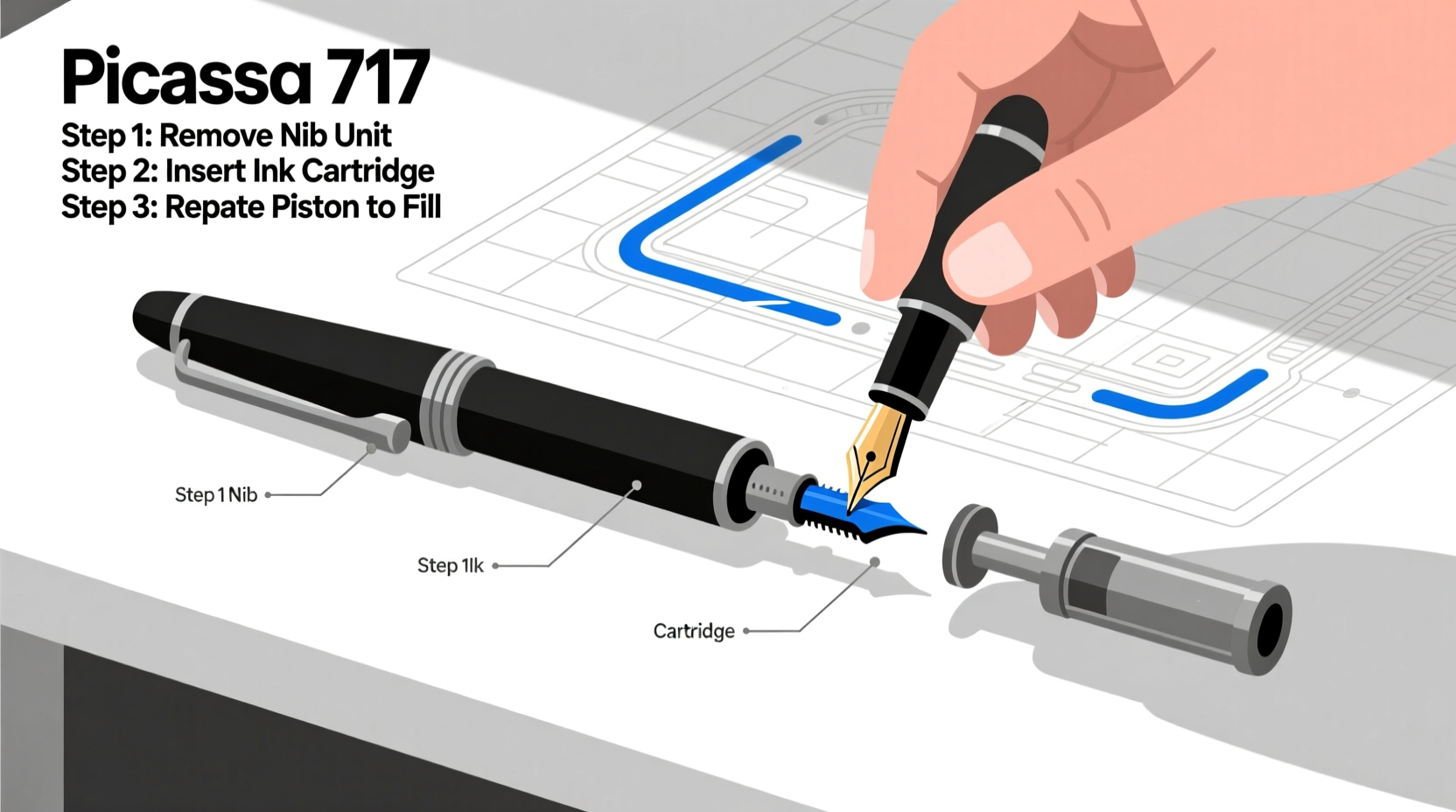
The Picasso 717 uses a standard international cartridge/converter system. Most models come with a proprietary converter—a small piston mechanism that draws ink from a bottle into the pen’s feed. Unlike sealed cartridges, converters allow you to use any bottled fountain pen ink, giving you access to hundreds of colors and formulations. However, because the converter is compact and manually operated, improper handling can lead to air bubbles, weak flow, or leakage.
It’s essential to recognize the parts involved:
- Nib and Feed: The tip of the pen where ink flows to the paper.
- Converter: A transparent tube with a plunger that draws ink when depressed and released.
- Section: The grip area where the nib screws in and the converter attaches.
- Barrel: The main body of the pen that houses the converter.
Because the Picasso 717’s converter lacks some of the precision engineering found in higher-end pens, extra care during refilling ensures consistent performance.
Step-by-Step Guide to Refilling Your Picasso 717
Refilling should take less than five minutes once you’re familiar with the process. Follow these steps carefully to maximize ink capacity and minimize mess.
- Disassemble the Pen: Unscrew the barrel from the section. Gently pull the converter out of the section. Avoid forcing it—if it feels stuck, twist slightly while pulling.
- Prepare the Ink Bottle: Use a high-quality fountain pen ink. Shake the bottle gently to mix the pigment. Place it on a stable surface, ideally over a towel in case of drips.
- Insert the Nib into the Ink: Submerge the nib and feed completely into the ink bottle. Angle it so the entire feed is covered but not so deep that ink reaches the section threads.
- Operate the Converter: Press the plunger down slowly, then release it gradually. Repeat 3–5 times to draw a full load. You should see ink rise into the converter chamber.
- Check for Air Bubbles: Hold the pen vertically with the nib up. Tap the converter gently to dislodge bubbles. Repeat the fill cycle if necessary.
- Wipe the Nib: Remove excess ink from the nib and feed using a lint-free cloth or paper towel. Wipe gently to avoid damaging the tines.
- Reassemble the Pen: Insert the converter back into the section and screw the barrel on securely. Store upright when not in use.
This method ensures optimal ink flow and prevents premature drying. It’s especially important to perform multiple draw cycles—many users stop after one press, resulting in only a partial fill.
Common Mistakes and How to Avoid Them
Even experienced users occasionally make errors that affect performance. Awareness of these pitfalls leads to better results.
| Mistake | Consequence | Solution |
|---|---|---|
| Filling too quickly | Air bubbles reduce ink capacity | Press and release the plunger slowly |
| Not submerging the feed fully | Ink starvation or skipping | Ensure feed is entirely under ink |
| Using non-fountain-pen ink | Clogging or corrosion | Only use pH-neutral, water-based inks |
| Storing the pen nib-down | Leakage onto surfaces | Store upright or horizontally |
“Many people underestimate how much air gets trapped in budget converters. Taking an extra 30 seconds to purge those bubbles makes a noticeable difference in line consistency.” — Daniel Reyes, Fountain Pen Technician & Repair Specialist
Best Practices for Long-Term Performance
Refilling is just one part of maintaining your Picasso 717. To keep it writing smoothly for years, adopt these habits:
- Flush the pen monthly: Especially if switching ink colors or after extended idle periods. Fill and empty the converter with lukewarm water several times until the runoff is clear.
- Use quality paper: Rough or fibrous paper wears down nibs faster. Opt for smooth, acid-free paper to preserve tip integrity.
- Cap the pen when not in use: Exposure to air dries the nib and feed, leading to hard starts. Always cap tightly after writing.
- Rotate inks wisely: Iron-gall or pigmented inks require more frequent cleaning. Reserve them for special-use pens unless you’re diligent about maintenance.
Real-World Example: Sarah’s Refill Routine
Sarah, a university student, uses her Picasso 717 for all her lecture notes. Initially, she relied on cartridges but grew frustrated with limited color options. After watching a tutorial, she tried bottled ink but had trouble with inconsistent flow. She realized she was only pressing the converter once and not purging air bubbles. Once she adopted the multi-cycle filling method and began flushing the pen every two weeks, her pen started performing like new. Now, she refills weekly with different ink colors to code her subjects—blue for science, green for literature—and hasn’t had a clog in months.
FAQ: Frequently Asked Questions
How often should I refill my Picasso 717?
It depends on usage. On average, a full converter lasts 3–5 days with moderate note-taking. Heavy users may need to refill daily. Monitor ink levels by checking the converter chamber through the barrel.
Can I use international cartridges instead of a converter?
Yes. The Picasso 717 is compatible with standard international short cartridges. Simply remove the converter and insert the cartridge into the section. Pierce the seal by pushing firmly—it will click into place. This is ideal for travel or quick swaps.
Why does my pen skip after refilling?
Skip usually occurs due to air pockets in the feed or insufficient priming. Try writing on scrap paper for 10–15 seconds after refilling. If the issue persists, flush the feed and re-fill slowly, ensuring the nib stays submerged during the entire process.
Final Checklist: Mastering the Refill Process
Before you put your pen away or start writing, run through this checklist to ensure everything went smoothly:
- ✅ Converter fully inserted and secure in the section
- ✅ Nib and feed wiped clean of excess ink
- ✅ No visible air bubbles in the converter
- ✅ Pen writes consistently on test paper
- ✅ Ink bottle sealed and stored properly
- ✅ Workspace cleaned of any ink spills
Conclusion: Write with Confidence
Mastering the refill process transforms the Picasso 717 from a simple writing tool into a personalized instrument of expression. With proper technique, you gain freedom—freedom to choose vibrant inks, save money over time, and maintain your pen like a pro. The steps are simple, but consistency is key. Whether you're journaling, taking notes, or writing letters, a well-maintained pen enhances every word. Take a moment today to refill with care, and feel the difference in every stroke.




 浙公网安备
33010002000092号
浙公网安备
33010002000092号 浙B2-20120091-4
Comments
No comments yet. Why don't you start the discussion?