
Walking your dog should be a joyful experience—for both of you. Yet many pet owners unknowingly compromise their dog’s comfort and safety by attaching the leash incorrectly to a harness. A poorly secured leash can lead to chafing, restricted movement, or even accidental escapes. With so many harness designs on the market, knowing where and how to clip the leash is essential. This guide breaks down best practices, common mistakes, and expert-backed techniques to ensure every walk is secure, stress-free, and enjoyable.
Understanding Dog Harness Types and Their Attachment Points
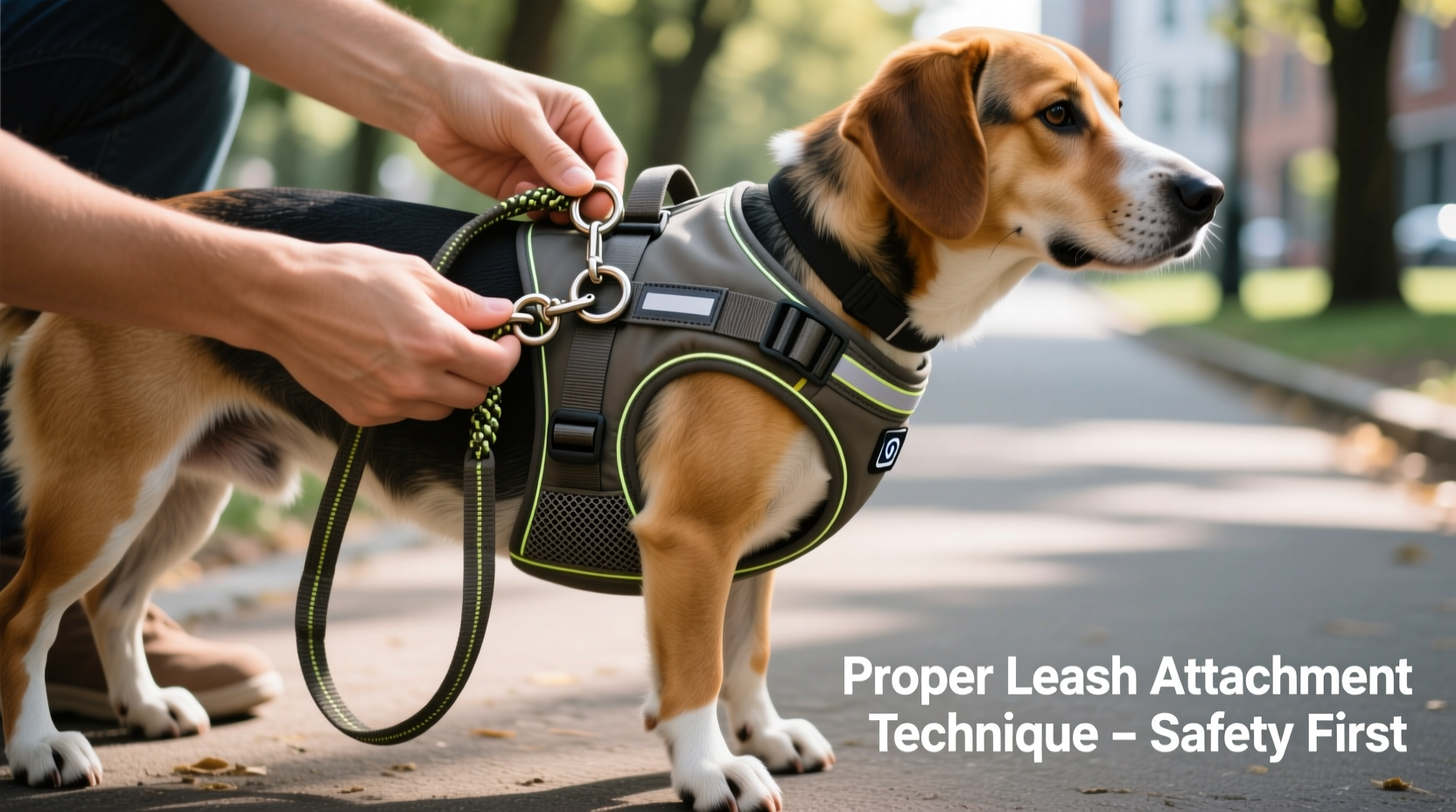
Dog harnesses are not one-size-fits-all, nor are their leash attachment points. The design of the harness determines where the leash should connect—and getting it wrong can affect posture, breathing, and control.
The three most common harness types include:
- Back-clip harnesses: Feature a D-ring located at the top center of the back, between the shoulder blades. Ideal for well-trained dogs who don’t pull.
- Front-clip harnesses: Have a ring positioned on the chest, near the sternum. These redirect pulling behavior by turning the dog gently when tension is applied.
- Dual-clip harnesses: Combine both front and back rings, offering flexibility depending on walking conditions or training goals.
Attaching the leash to the correct point ensures balanced pressure distribution and enhances communication between dog and handler.
Step-by-Step Guide: How to Properly Attach a Leash to Any Harness
Follow this sequence to ensure your dog is safely and comfortably harnessed before each walk.
- Put the harness on correctly: Slide your dog’s head through the neck loop (if applicable), then fasten the belly strap snugly but not tightly. You should be able to fit two fingers beneath any strap.
- Locate the designated leash ring: For back-clip harnesses, find the metal D-ring centered on the back. For front-clip models, locate the ring on the chest plate.
- Inspect the hardware: Ensure all buckles are secure and the stitching around the rings shows no signs of wear.
- Clip the leash: Open the snap hook on the leash and firmly attach it to the D-ring. Give it a gentle tug to confirm it’s locked in place.
- Test mobility: Allow your dog to move naturally. Watch for rubbing, pinching, or restricted motion, especially during turns.
If using a dual-clip harness, choose the appropriate ring based on your dog’s behavior. Use the front clip when managing strong pullers; switch to the back clip once your dog walks calmly beside you.
Do’s and Don’ts When Attaching a Leash to a Harness
| Do’s | Don’ts |
|---|---|
| Do adjust straps so they’re snug but allow room for two fingers underneath. | Don’t leave loose straps that could tangle or allow escape. |
| Do use a lightweight, shock-absorbing leash for better control. | Don’t use ropes or chains that increase jerking force. |
| Do inspect the D-rings monthly for cracks or corrosion. | Don’t attach leashes to decorative loops or fabric handles. |
| Do train your dog gradually to accept the harness and leash. | Don’t rush outdoor walks before indoor acclimation. |
Expert Insight: Why Proper Leash Attachment Matters
Veterinary professionals emphasize that incorrect leash use contributes to long-term musculoskeletal strain in dogs. Dr. Lena Peterson, a certified canine rehabilitation therapist, explains:
“Traction forces from a leash attached improperly—especially on sensitive areas like the neck or armpits—can cause spinal misalignment, tracheal damage, and chronic shoulder pain. A properly fitted harness with correct leash placement distributes force evenly and supports natural gait.” — Dr. Lena Peterson, DVM, CCRT
This is particularly important for breeds prone to respiratory issues (like Bulldogs) or joint problems (such as Labradors and larger breeds). Even small dogs benefit from proper load distribution across the torso rather than concentrated pressure on the neck.
Real Example: From Pulling to Polite Walks
Sarah adopted Max, a high-energy Australian Shepherd mix, who would lunge unpredictably on walks. She initially used a back-clip harness, which only encouraged forward momentum. After consulting a trainer, she switched to a front-clip model and began attaching the leash to the chest ring.
Within two weeks of consistent training, Max learned that pulling turned him toward Sarah instead of away. The redirection technique reduced strain on both ends of the leash. More importantly, Max appeared more relaxed, his shoulders less stiff after walks. The simple change in attachment point transformed their daily routine from stressful to harmonious.
Checklist: Pre-Walk Safety Verification
Before heading out, run through this quick checklist to ensure everything is secure:
- ✅ Harness fits snugly—two fingers fit under each strap
- ✅ Leash is clipped to the correct D-ring (front for pullers, back for trained dogs)
- ✅ Snap hook is fully closed and won’t slip off
- ✅ No frayed stitching or damaged hardware visible
- ✅ Dog moves freely without rubbing or squeaking sounds
- ✅ Collar and ID tags are still on (as backup identification)
Frequently Asked Questions
Can I attach two leashes to a dual-clip harness at once?
Only if specifically designed for it. Simultaneous use of front and back clips may confuse your dog or create unsafe leverage. Use one attachment point at a time unless following professional guidance for specific training scenarios.
Is it okay to use a carabiner instead of a standard snap hook?
Carabiners can work if they are locking-type and made for pet gear. However, traditional spring-loaded snap hooks are generally safer due to their predictable release mechanism and ease of one-handed use.
Why does my dog scratch at the harness after I clip the leash?
This may indicate irritation from improper fit, a tag rubbing against skin, or an ill-placed leash connection. Recheck positioning and ensure the leash doesn’t dangle or press against the dog’s legs. Some dogs also need time to adjust psychologically—short indoor sessions help build positive associations.
Final Thoughts: Small Details, Big Impact
The way you attach a leash might seem trivial, but it directly influences your dog’s physical health, emotional comfort, and behavioral responses. Taking a few extra seconds to verify the attachment point and harness fit pays dividends in safety and enjoyment. Whether you're managing a puppy’s first walk or retraining a seasoned puller, precision matters.




 浙公网安备
33010002000092号
浙公网安备
33010002000092号 浙B2-20120091-4
Comments
No comments yet. Why don't you start the discussion?