
The Sign of the Cross is one of the most recognizable and frequently performed gestures in Christian tradition, especially within Catholic, Orthodox, and many Anglican and Lutheran communities. More than a ritualistic motion, it is a profound declaration of faith—a physical affirmation of belief in the Trinity and the redemptive power of Christ’s crucifixion. Yet, despite its ubiquity, many recite it habitually without fully engaging its spiritual depth. When practiced with intention, the Sign of the Cross becomes a moment of reverence, protection, and personal connection with God.
This guide explores not only the correct method but also the historical roots, theological significance, and practical ways to transform this ancient gesture into a meaningful act of devotion.
The Historical Roots of the Sign of the Cross
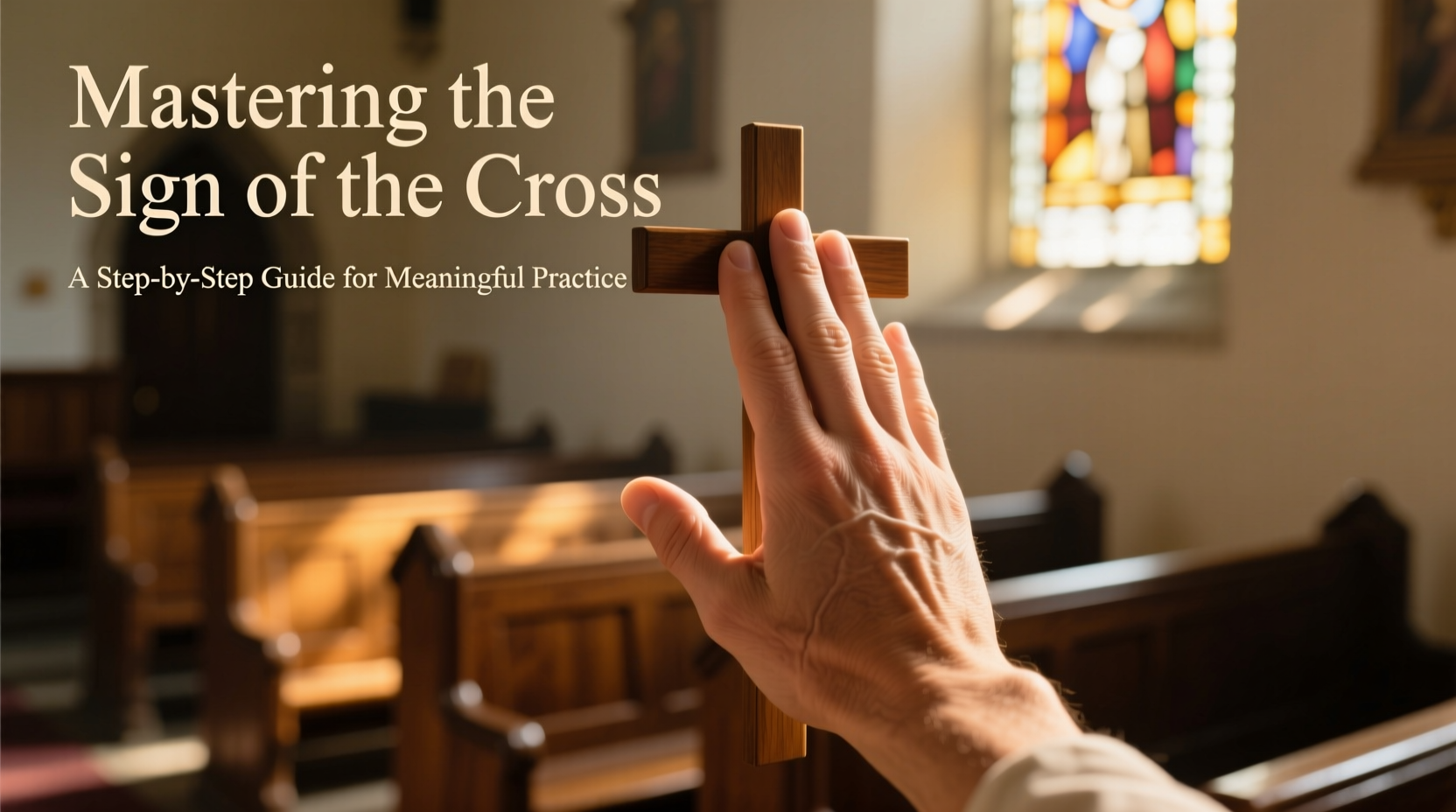
The practice dates back to the early centuries of Christianity. Tertullian, a theologian from the late second century, wrote that Christians “mark their foreheads with the sign” during daily activities. Early believers traced a small cross on their foreheads as a private act of faith, a quiet defiance in a world often hostile to their beliefs.
By the fourth century, following Emperor Constantine’s conversion and the legalization of Christianity, the gesture evolved. The larger, full-body Sign of the Cross—touching forehead, chest, and shoulders—became standard, particularly in liturgical settings. It was both a personal prayer and a communal symbol of identity.
Over time, regional variations emerged. Eastern Orthodox Christians typically move from right to left, while Roman Catholics move from left to right—a subtle difference reflecting deeper theological and cultural distinctions. Despite these variations, the core meaning remains consistent: an invocation of the Holy Trinity and a remembrance of salvation through the Cross.
“Every time we make the Sign of the Cross, we preach the Gospel to ourselves.” — Dr. Scott Hahn, Theologian and Author
Step-by-Step Guide to Performing the Sign of the Cross
Performing the Sign of the Cross correctly involves more than muscle memory—it invites mindfulness. Follow these steps to ensure both form and intention align:
- Bless yourself with holy water (optional but traditional). Before making the sign, dip your fingers in holy water if available, especially upon entering a church. This adds a layer of purification and preparation.
- Position your hand. Use your right hand. Bring your thumb, index, and middle fingers together—symbolizing the Trinity—while folding your ring and little fingers into your palm, representing the two natures of Christ (divine and human).
- Touch your forehead. As you say, “In the name of the Father,” touch your forehead, asking God the Father to bless your mind and thoughts.
- Move to your chest or stomach. Say, “and of the Son,” and bring your hand down to your chest or upper abdomen, inviting Christ into your heart and emotions.
- Touch your left shoulder, then your right. Say, “and of the Holy Spirit,” moving from left to right. In Western tradition, this movement signifies the Holy Spirit flowing from Christ (on the right) to the believer (on the left). Some traditions reverse this order.
- Conclude with “Amen.” Clasp your hands or fold them in prayer position, affirming your agreement with the prayer just made.
Deepening the Meaning: Beyond the Motion
The physical gesture gains power when paired with internal reflection. Consider what each part of the prayer represents:
- “In the name of the Father”—acknowledges God as Creator, source of all life and love.
- “and of the Son”—recalls Jesus’ sacrifice, His obedience unto death, and our redemption.
- “and of the Holy Spirit”—invites divine guidance, comfort, and transformation in daily living.
To elevate the practice, pair the Sign of the Cross with a brief aspiration. For example:
- Before meals: “Bless this food and nourish us in body and soul.”
- During anxiety: “Lord, calm my heart and fill me with peace.”
- Upon waking: “Renew my spirit and guide my steps today.”
This transforms a routine gesture into a micro-prayer—brief, focused, and deeply personal.
Common Mistakes and How to Avoid Them
Habitual repetition can lead to mechanical performance. Recognizing common pitfalls helps restore intentionality.
| Mistake | Why It Matters | How to Improve |
|---|---|---|
| Rushing through the gesture | Loses spiritual focus; becomes automatic | Pause briefly before beginning; breathe deeply |
| Incorrect hand formation | Misses symbolic richness of Trinity and Christology | Practice joining three fingers, folding two |
| Omitting “Amen” | Leaves the prayer incomplete | Treat “Amen” as essential closure |
| Only performing it in church | Misses opportunities for grace in daily life | Use it at home, work, before sleep, in trials |
Real-Life Application: A Day Practicing with Intention
Sarah, a schoolteacher and lifelong Catholic, found herself going through the motions every morning as she rushed her children out the door. She’d make the Sign of the Cross at Mass but rarely elsewhere. After attending a retreat on sacramentals, she decided to integrate the gesture meaningfully throughout her day.
She began by placing a small bottle of holy water by her bedside. Each morning, she dipped her fingers and made the Sign of the Cross slowly, whispering, “Father, help me be patient. Son, teach me humility. Spirit, give me joy.” During lunch, before eating, she paused and blessed her meal with renewed gratitude. When overwhelmed by a difficult parent conference, she excused herself to the restroom, made the sign quietly, and asked for peace.
Within weeks, Sarah noticed a shift—not in her circumstances, but in her inner posture. The gesture had become an anchor, a return point to her faith amid chaos. “It’s like resetting my soul,” she said.
Checklist: Making the Sign of the Cross Meaningfully
Use this checklist to cultivate a richer practice:
- ✅ Begin with a breath—pause and center yourself.
- ✅ Use the proper hand formation (three fingers extended).
- ✅ Move deliberately from forehead to chest to shoulders.
- ✅ Speak the words aloud or silently with attention.
- ✅ Add a short personal intention or petition.
- ✅ Conclude with “Amen” and a moment of stillness.
- ✅ Practice multiple times a day, not just in church.
Frequently Asked Questions
Can I make the Sign of the Cross if I’m not feeling spiritual?
Absolutely. Just as physical exercise strengthens the body even when motivation is low, performing the Sign of the Cross reorients the soul even in dry or distracted moments. It is an act of faith, not dependent on emotion.
Is it necessary to use holy water every time?
No, holy water enhances the ritual but is not required. The blessing comes from the invocation of the Trinity, not the water itself. However, keeping a small supply at home can deepen the experience.
What if I’m in public and feel self-conscious?
Your faith is not confined to private spaces. If uncomfortable with a full gesture, trace a small cross discreetly on your forehead or heart. What matters most is the interior act of devotion.
Cultivating a Lifelong Habit of Sacred Gesture
The Sign of the Cross is more than an opening and closing act for prayers. It is a portable sanctuary—a way to carry the presence of God into every situation. When done with awareness, it sanctifies ordinary moments: starting the car, answering a stressful email, tucking a child into bed.
Like any spiritual discipline, its power grows with consistency. Each repetition retrains the heart to turn toward God. Over time, the gesture becomes instinctive—not in a careless way, but as a reflex of faith, as natural as breathing.




 浙公网安备
33010002000092号
浙公网安备
33010002000092号 浙B2-20120091-4
Comments
No comments yet. Why don't you start the discussion?