
Every time you unlock your phone, a small but powerful world opens up—one filled with symbols that guide navigation, signal status, and control functionality. Among these, one stands out not by size, but by mystery: the symbol that appears in notifications, settings, or connectivity bars, often leaving users guessing. Whether it’s a crescent moon, a lock, a gear, or an unfamiliar icon near your battery percentage, understanding what it means—and how to use it—can transform your mobile experience. This guide demystifies that symbol, offering clear, actionable insights applicable across iOS, Android, and even lesser-known operating systems.
What Is “The Symbol” Everyone’s Talking About?
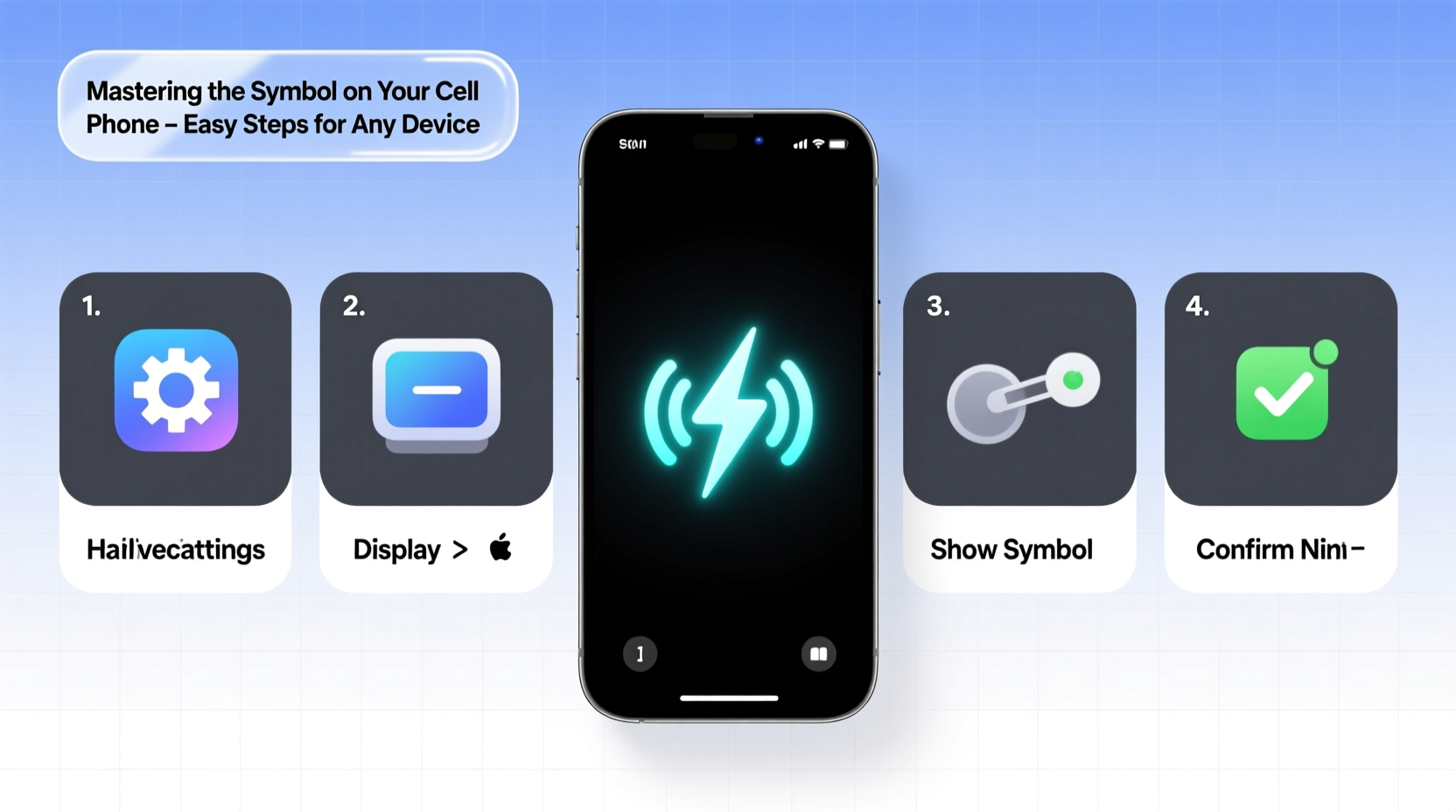
The term “the symbol” has become shorthand in online forums and tech support circles for any recurring icon that confuses users despite its frequent appearance. It might be the airplane mode indicator, the do-not-disturb crescent, or even the new privacy indicators showing camera or microphone usage. These symbols are designed to communicate quickly, but their minimalist design sometimes sacrifices clarity.
Apple and Google both follow Human Interface Guidelines emphasizing simplicity, which means icons often lack text labels. As Jakob Nielsen, co-founder of the Nielsen Norman Group, puts it:
“Icons are only effective if users can accurately guess their meaning. When they fail, usability suffers.” — Jakob Nielsen, UX Researcher
This gap between design intent and user understanding is exactly where confusion arises. The good news? Most symbols follow consistent logic across platforms, making mastery possible with just a few key principles.
Step-by-Step Guide to Identifying and Using Any Symbol
Follow this five-step process to decode and control any symbol on your phone—regardless of brand or OS.
- Locate the symbol: Is it in the status bar (top), notification panel, or within an app? Note its color and shape.
- Pull down the notification shade: On Android, swipe down once to see active notifications and icons. Swipe twice for Quick Settings. On iPhone, swipe down from the top-right (or up from bottom on older models) to access Control Center and notifications.
- Check contextual behavior: Tap or long-press the symbol. Many icons reveal labels or menus when interacted with.
- Visit Settings > Accessibility or Support: Both iOS and Android offer visual dictionaries. In iOS, go to Settings > General > About > Legal & Regulatory. On Android, try Settings > System > Help & Feedback.
- Use built-in diagnostic tools: iPhones have a “Status Icons” section under Settings > Battery or Settings > Airplane Mode. Android users can search “icons” directly in the Settings search bar.
Common Symbols Decoded: A Universal Reference Table
Below is a comparison of frequently misunderstood symbols across major platforms.
| Symbol | iOS Meaning | Android Meaning | Action Required? |
|---|---|---|---|
| 🌙 (Crescent Moon) | Do Not Disturb enabled | Do Not Disturb or Priority mode | No—unless silence was unintended |
| ✈️ (Airplane) | Airplane Mode active | Airplane Mode on | Yes—disable if connectivity lost |
| 📍 (Arrow in Circle) | Location Services in use | GPS/Location active | Only if concerned about battery or privacy |
| 🔊➡️❌ (Speaker with Slash) | Ring switch off (iPhone 7+) | Mute or vibrate mode | Adjust via volume buttons or Settings |
| 🟢 (Green Dot) | Camera in use | App accessing camera | Review permissions if unexpected |
| 🟣 (Purple Dot) | Microphone in use | App using mic | Check background apps if suspicious |
Note: With iOS 14+ and Android 10+, privacy indicators (green/purple dots) appear whenever the camera or microphone is accessed—even by benign apps like voice memos. These are security features, not malfunctions.
Real Example: How Sarah Fixed Her Mysterious Notification Issue
Sarah, a freelance photographer, noticed a small green dot appearing randomly on her iPhone while editing photos. Initially alarmed, she assumed a hacker had accessed her camera. After reading a tech blog post, she recalled enabling a voice-to-text feature in her notes app. The green dot wasn’t a threat—it was her phone transcribing spoken ideas while she worked. Once she understood the symbol, she felt reassured and even began using it intentionally during shoots to log metadata hands-free.
This case illustrates a broader truth: symbols aren’t problems—they’re signals. Misinterpreting them leads to stress; mastering them leads to smarter usage.
Essential Tips for Ongoing Symbol Mastery
- Update your OS regularly—new symbols may appear with software changes.
- Enable screen recording temporarily to capture fleeting icons.
- Use manufacturer-specific help apps: Samsung Members, Apple Support, or Google Phone Info.
- Disable rarely used features (e.g., NFC, Bluetooth) to reduce background symbols.
- Customize Quick Settings (Android) or Control Center (iOS) to remove ambiguity.
Checklist: Master Any Symbol in Under 5 Minutes
Keep this checklist handy for future reference:
- ✅ Observe where the symbol appears (status bar, lock screen, app interface)
- ✅ Swipe down/up to open notifications or control panel
- ✅ Tap or long-press the symbol for details
- ✅ Search “What does [symbol] mean” in device Settings
- ✅ Check battery, network, or privacy settings based on symbol location
- ✅ Restart the phone—if the symbol disappears, it may have been temporary
- ✅ Consult official support site (support.apple.com or support.google.com/android)
Frequently Asked Questions
Why does a lock symbol appear on my screen sometimes?
The lock symbol typically indicates screen rotation lock (iOS) or secure input mode (Android). On iPhones, it appears when the side switch or Control Center toggle locks portrait orientation. On Android, it may show during password entry or banking apps to prevent screenshots.
Is a triangle with an exclamation mark a serious warning?
Not always. On Android, this often appears in the notification area when there’s a Wi-Fi connection without internet access (e.g., captive portals in hotels). It’s a connectivity hint, not a system error. Try forgetting and rejoining the network.
Can I turn off privacy indicators like the green dot?
No—and for good reason. These indicators are mandatory in modern OS versions to promote transparency. However, you can manage which apps access the camera or microphone via Settings > Privacy, reducing unnecessary triggers.
Take Control of Your Device Today
Understanding the symbol on your cell phone isn’t about memorizing every icon—it’s about building confidence in navigating your device. With the right approach, what once seemed cryptic becomes second nature. You don’t need technical expertise, just curiosity and a few proven strategies.
Start today: pick one symbol you’ve ignored or feared, and use the steps above to decode it. Then, customize your settings to reflect your habits. Over time, you’ll find yourself reacting less to alerts and controlling them more—turning passive usage into intentional interaction.




 浙公网安备
33010002000092号
浙公网安备
33010002000092号 浙B2-20120091-4
Comments
No comments yet. Why don't you start the discussion?