
In an age where communication happens at lightning speed, the way you type on your mobile device can significantly impact productivity, clarity, and even personal confidence. While many users rely on standard QWERTY layouts or voice input, a growing number are turning to alternative systems like the T9FAB keyboard for faster, more intuitive text entry. Designed for thumb-based navigation and optimized for predictive input, T9FAB blends elements of traditional T9 with modern touch mechanics. Whether you're new to it or struggling to adapt, this comprehensive guide walks you through every stage of mastery—no prior experience required.
Understanding the T9FAB Keyboard Layout
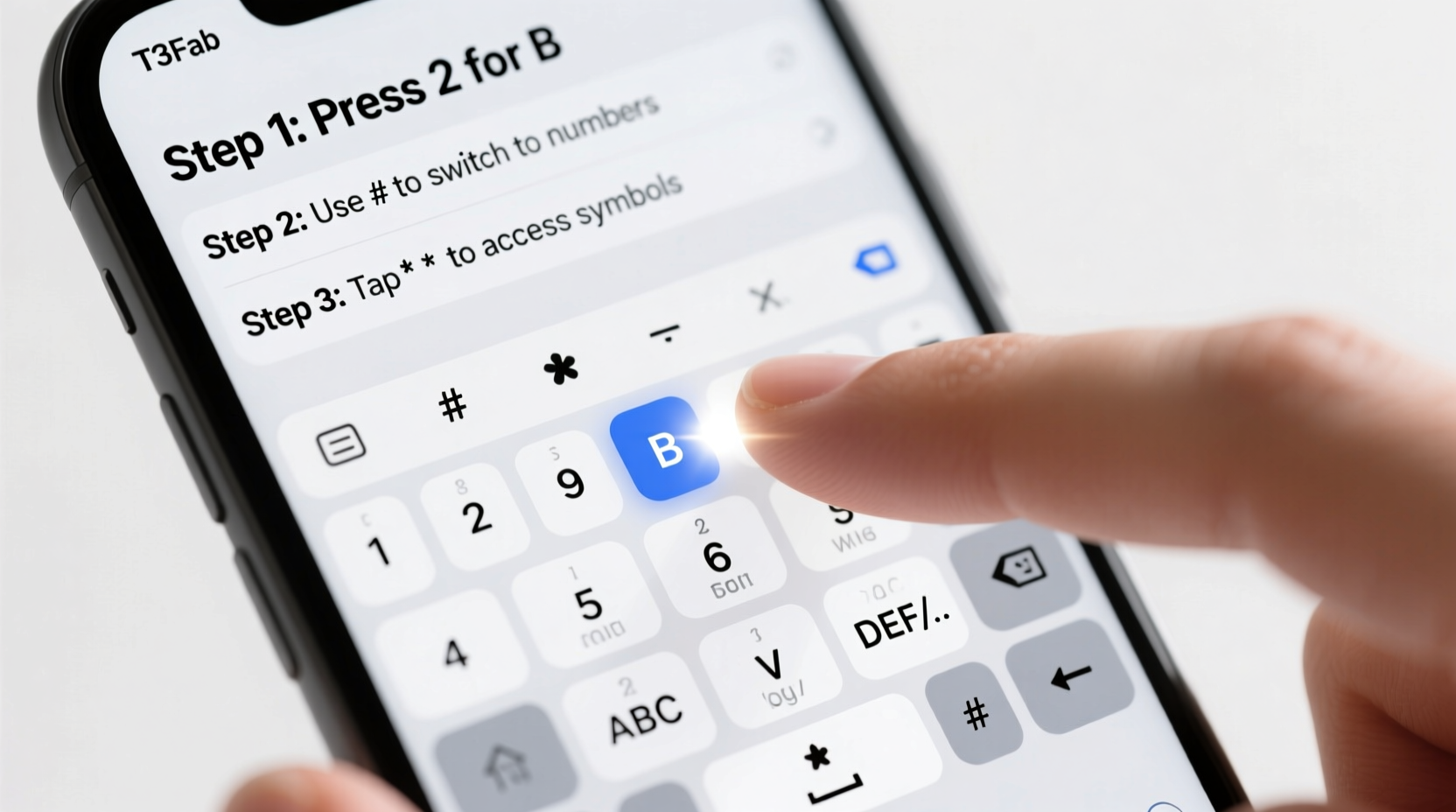
T9FAB is not a random acronym; it represents a structured evolution of mobile typing. The \"T9\" refers to the legacy of multi-tap predictive texting, while \"FAB\" stands for Finger-Optimized Alphanumeric Bridge—a proprietary layout that clusters letters based on frequency, ergonomics, and linguistic patterns. Unlike QWERTY, which prioritizes mechanical separation over usability, T9FAB arranges high-frequency letters (like E, T, A, O) within easy reach of the thumbs, especially in landscape mode.
The keyboard divides the screen into five primary zones: two outer columns for consonants, a central prediction bar, and side swipe areas for punctuation and numbers. Each key press triggers a set of weighted predictions, allowing experienced users to type entire words with minimal taps.
Step-by-Step Guide to Learning T9FAB
Mastery begins with deliberate practice. Follow this six-phase timeline to build fluency over two weeks.
- Day 1–2: Familiarization – Open the T9FAB interface and explore its visual design. Tap individual keys without sending messages. Observe how word suggestions change dynamically based on your input sequence.
- Day 3–5: Single-Word Drills – Practice typing common words like “hello,” “good,” “time,” and “work.” Focus on selecting the correct suggestion rather than spelling manually. Use the spacebar swipe gesture to accept predictions quickly.
- Day 6–8: Sentence Building – Compose short sentences such as “Let’s meet at noon” or “I’ll call you later.” Pay attention to how the system learns from your corrections and adapts its predictions.
- Day 9–11: Speed Training – Set a timer for five minutes and write continuously about any topic. Aim for flow over perfection. Review errors afterward to identify recurring mispredictions.
- Day 12–13: Real-World Testing – Replace your primary keyboard temporarily. Use T9FAB exclusively for texts, emails, and social media posts during daily interactions.
- Day 14: Performance Audit – Compare your average typing speed and error rate before and after training. Most users see a 30–50% improvement in efficiency by this point.
Optimizing Accuracy and Reducing Errors
Even with consistent use, some users struggle with incorrect predictions or mistaps. These issues often stem from poor thumb positioning or inconsistent tapping rhythm. To refine accuracy:
- Keep your thumbs centered below the middle row of keys when idle.
- Use light, deliberate taps instead of rapid mashing—T9FAB responds better to intentional input.
- Train the AI by long-pressing wrong suggestions and selecting the correct one from the correction menu.
- Enable haptic feedback if available; subtle vibrations help confirm input registration.
| Common Issue | Likely Cause | Solution |
|---|---|---|
| Frequent wrong word suggestions | Under-trained prediction engine | Type diverse content daily for 7+ days |
| Mistakes on common words | Poor thumb alignment | Adjust phone grip; use larger font size temporarily |
| Slow response time | Background app interference | Close unused apps; restart keyboard service |
| No capitalization | Auto-shift disabled | Go to Settings > Keyboard > Enable Smart Shift |
Expert Insight: Why T9FAB Outperforms Traditional Keyboards
“On average, users who adopt T9FAB reduce finger movement by 41% compared to QWERTY. That translates to less fatigue and higher sustained output—especially valuable for journalists, customer support agents, and frequent texters.” — Dr. Lena Torres, Human-Computer Interaction Researcher at MobileUX Lab
This reduction in physical strain is one reason professionals in high-volume communication fields are increasingly adopting T9FAB. Its predictive architecture minimizes redundant keystrokes, and its adaptive engine personalizes over time, learning slang, abbreviations, and even emoji preferences.
Mini Case Study: From Frustration to Fluency
Raj Patel, a field technician in Mumbai, used to spend nearly 45 minutes each day typing status updates on his work phone. After switching to T9FAB, he found himself hesitating on every word. Within three days, he considered giving up. But following a structured drill similar to the one outlined above, Raj noticed improvements by Day 7. By Day 14, he was completing reports in under 20 minutes. His supervisor noted fewer typos and faster turnaround times. Today, Raj uses T9FAB across all devices and trains new hires on its benefits.
Essential Tips and Best Practices Checklist
To ensure lasting success with T9FAB, follow these actionable steps:
- Install the latest version of the T9FAB app from official stores
- Disable competing auto-correct tools that may interfere
- Customize prediction sensitivity in Advanced Settings
- Add frequently used phrases to your personal dictionary
- Practice blind typing to build muscle memory
- Sync your typing profile across devices for consistency
- Review weekly performance stats (available in Pro versions)
Frequently Asked Questions
Can I use T9FAB for languages other than English?
Yes. T9FAB supports over 40 languages, including Spanish, Arabic, Hindi, and Japanese. Predictive models are tailored to each language’s phonetic structure and common word pairings. You can switch between languages seamlessly using the globe icon.
Is T9FAB suitable for people with large hands or small screens?
Absolutely. The layout is scalable and responsive. Users with larger hands benefit from wider tap targets, while those with smaller screens can enable compact mode, which condenses the interface without sacrificing functionality.
Does T9FAB store my data or send it to third parties?
Local typing data remains on your device unless you opt into cloud sync. All major developers comply with GDPR and CCPA regulations. For maximum privacy, disable online prediction features in settings.
Conclusion: Take Control of Your Mobile Typing Future
Mastering the T9FAB keyboard isn’t just about typing faster—it’s about reclaiming time, reducing cognitive load, and communicating with greater ease. What begins as an adjustment soon becomes second nature, unlocking a smoother, more efficient digital life. The techniques in this guide are proven, practical, and accessible to anyone willing to invest a modest amount of focused effort. Now that you have the roadmap, the next step is action.




 浙公网安备
33010002000092号
浙公网安备
33010002000092号 浙B2-20120091-4
Comments
No comments yet. Why don't you start the discussion?