
Filing taxes begins with one essential document: the W-2 form. Issued by employers to employees, this form reports annual wages and taxes withheld. While it may appear straightforward, inaccuracies on a W-2 can delay refunds, trigger IRS notices, or even lead to audits. Whether you're an employee reviewing your form for the first time or a seasoned filer double-checking details, understanding how to read and verify your W-2 accurately is crucial. This guide breaks down each section of the form, highlights common pitfalls, and provides actionable steps to ensure your information is correct and complete.
Understanding the Structure of the W-2 Form
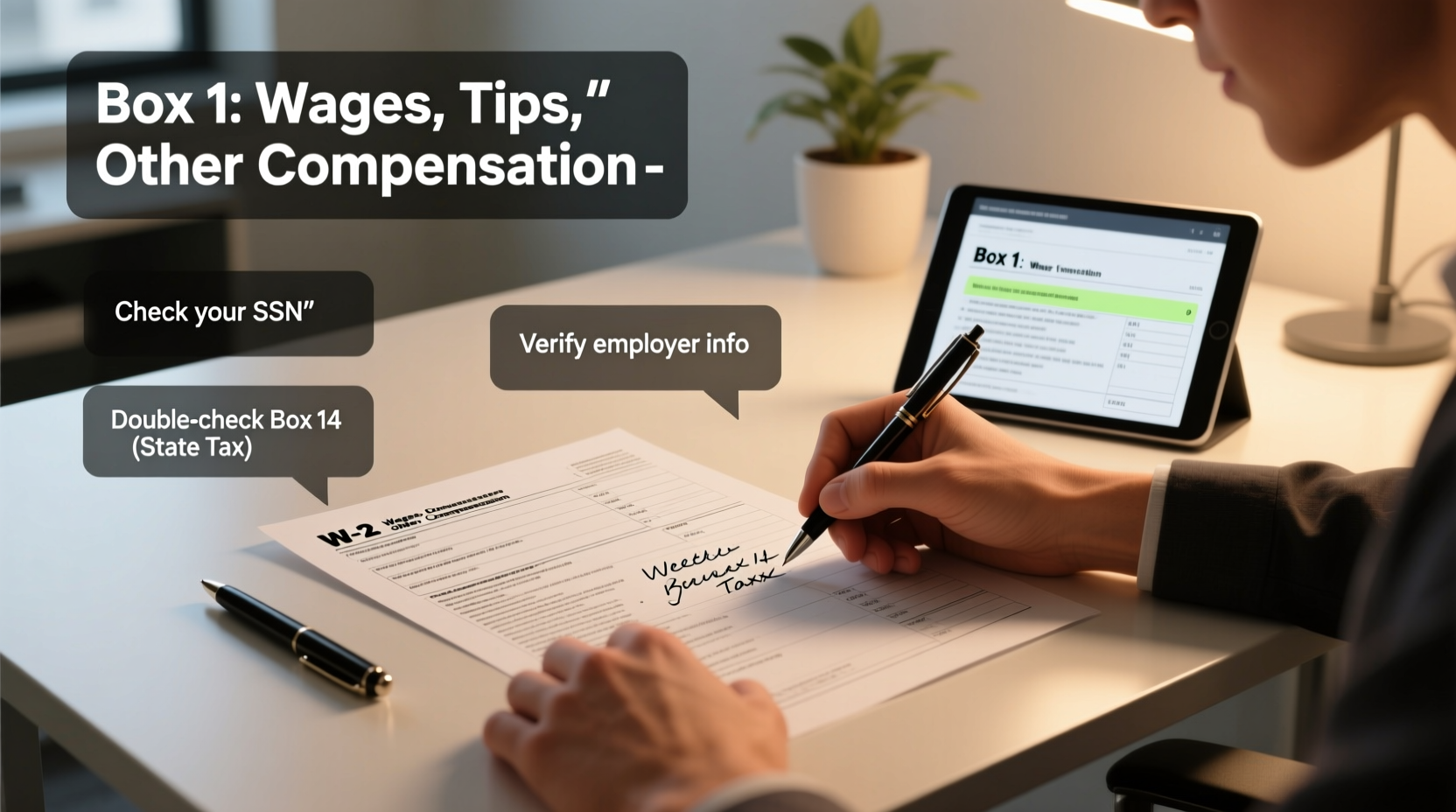
The W-2 form contains 20 key boxes, each serving a specific purpose in reporting your income and tax contributions. The IRS uses this data to verify that you’ve paid the correct amount of federal, state, and local taxes. Employers are required to issue W-2s by January 31st each year, giving taxpayers ample time to file before the April 15 deadline.
Here’s a breakdown of the most important boxes:
| Box Number | Description | What to Verify |
|---|---|---|
| 1 | Wages, tips, and other compensation | Matches your final pay stub; includes bonuses and taxable benefits |
| 2 | Federal income tax withheld | Total amount taken from paychecks for federal taxes |
| 3 | Social Security wages | Limited to the annual wage base ($168,600 in 2024) |
| 4 | Social Security tax withheld | 6.2% of Social Security wages (up to the cap) |
| 5 | Medicare wages and tips | No cap—includes all earnings |
| 6 | Medicare tax withheld | 1.45% of Medicare wages; additional 0.9% if over threshold |
| 16 | State wages | May differ from Box 1 due to pre-tax deductions |
| 17 | State income tax withheld | Verify against pay stubs and residency rules |
Accuracy in these fields ensures alignment between your personal records and what the IRS receives from your employer.
Step-by-Step Guide to Verifying Your W-2
Receiving your W-2 is only the beginning. Follow this timeline to ensure everything checks out before filing:
- January 31 – February 5: Receive and organize all W-2 forms from current and previous employers.
- February 6 – 10: Gather your final pay stubs and any year-end summaries provided by HR or payroll.
- February 11 – 15: Compare each W-2 box-by-box with your pay records, focusing on Boxes 1, 2, 16, and 17.
- February 16 – 20: Contact your employer’s payroll department immediately if discrepancies are found.
- February 21 – March 1: Request corrections (Form W-2c) if necessary and confirm receipt.
- March onward: Proceed with tax preparation using verified documents.
This structured approach prevents last-minute scrambles and gives employers time to respond before tax season peaks.
Common Errors and How to Avoid Them
Even small mistakes on a W-2 can have big consequences. Here are frequent issues and how to prevent them:
- Name and SSN mismatches: If your legal name changed due to marriage or court order but wasn’t updated with HR, the IRS may flag your return.
- Duplicate W-2s: Some workers receive multiple W-2s from the same employer due to mid-year system changes or reissuance after corrections.
- Incorrect state codes: Remote workers who moved states during the year might see outdated state withholding info.
- Omitted tips or commissions: In service industries, unreported cash tips can cause underreporting in Boxes 1 and 7.
“Over 2 million W-2 corrections are filed annually, many due to avoidable data entry errors.” — Internal Revenue Service, Tax Processing Report 2023
Real Example: Correcting a Costly Oversight
Sarah, a marketing consultant in Colorado, received her W-2 in early February. Her job transitioned to remote work in July when she relocated from Texas to Oregon. When preparing her taxes, she noticed that Box 17 listed Texas state tax withheld—but she had never worked in Texas during the tax year.
She reviewed her December pay stub and confirmed that Oregon taxes were being deducted. After contacting her employer’s payroll office, she learned that the company’s HR system hadn’t been updated to reflect her new address. As a result, the W-2 incorrectly reported zero state tax for Oregon and listed an old jurisdiction.
Sarah requested a corrected W-2 (Form W-2c), which arrived within 10 business days. With the updated form, she filed both federal and Oregon state returns without penalty. Had she not caught the error, she might have faced interest charges and late fees from the Oregon Department of Revenue.
Checklist: Ensuring W-2 Accuracy Before Filing
Use this checklist to verify your W-2 is complete and correct:
- ✅ Employer’s name, address, and EIN match official records
- ✅ Your full name and Social Security number are spelled correctly
- ✅ Box 1 (wages) aligns with your final annual pay statement
- ✅ Federal income tax withheld (Box 2) matches total withholdings from pay stubs
- ✅ Social Security and Medicare wages (Boxes 3 & 5) reflect correct taxable earnings
- ✅ State and local wage and tax entries (Boxes 16–20) correspond to where you worked
- ✅ Any non-cash benefits (e.g., dependent care, health insurance) are properly excluded or included
- ✅ You have received a W-2 from every employer you worked for in the tax year
If any item fails verification, initiate contact with your employer promptly. Do not assume the IRS will reconcile minor differences automatically.
Frequently Asked Questions
What should I do if I haven’t received my W-2?
If you haven’t received your W-2 by February 14, contact your employer directly. If they fail to provide it by February 28, call the IRS at 800-829-1040. You can use Form 4852 (Substitute for Form W-2) to file your return based on your pay records.
Can I file taxes with an incorrect W-2?
You can file with an incorrect W-2, but doing so risks errors, audits, or refund clawbacks. It’s better to wait for a corrected form (W-2c). If you must proceed, note the discrepancy and be prepared to amend later using Form 1040-X.
Why does Box 1 sometimes differ from my total gross pay?
Box 1 reflects taxable wages only. Pre-tax deductions like 401(k) contributions, health insurance premiums, and commuter benefits reduce your taxable income and thus lower the amount in Box 1 compared to gross pay.
Final Steps and Moving Forward
Mastering the W-2 form isn’t about memorizing every box—it’s about developing a habit of careful review. Treat your W-2 as a financial statement, just like a bank statement or credit report. Cross-referencing its data with your own records protects you from errors beyond your control.
Going forward, consider maintaining a digital folder each year containing all W-2s, final pay stubs, and tax returns. This archive simplifies future filings and supports documentation if the IRS ever requests proof of income.




 浙公网安备
33010002000092号
浙公网安备
33010002000092号 浙B2-20120091-4
Comments
No comments yet. Why don't you start the discussion?