
Cats are natural predators, wired to stalk, chase, pounce, and capture prey. Even well-fed indoor cats retain these instincts, and without appropriate outlets, they may develop behavioral issues or become lethargic. One of the most effective tools for satisfying a cat’s hunting drive is the humble wand toy. When used correctly, it doesn’t just entertain—it fulfills a deep psychological need. Yet many cat owners wave the toy aimlessly, missing opportunities to truly engage their feline companions. Mastering the wand toy means understanding feline behavior, refining movement patterns, and building interactive routines that mimic real prey.
Understanding Your Cat’s Natural Hunting Behavior
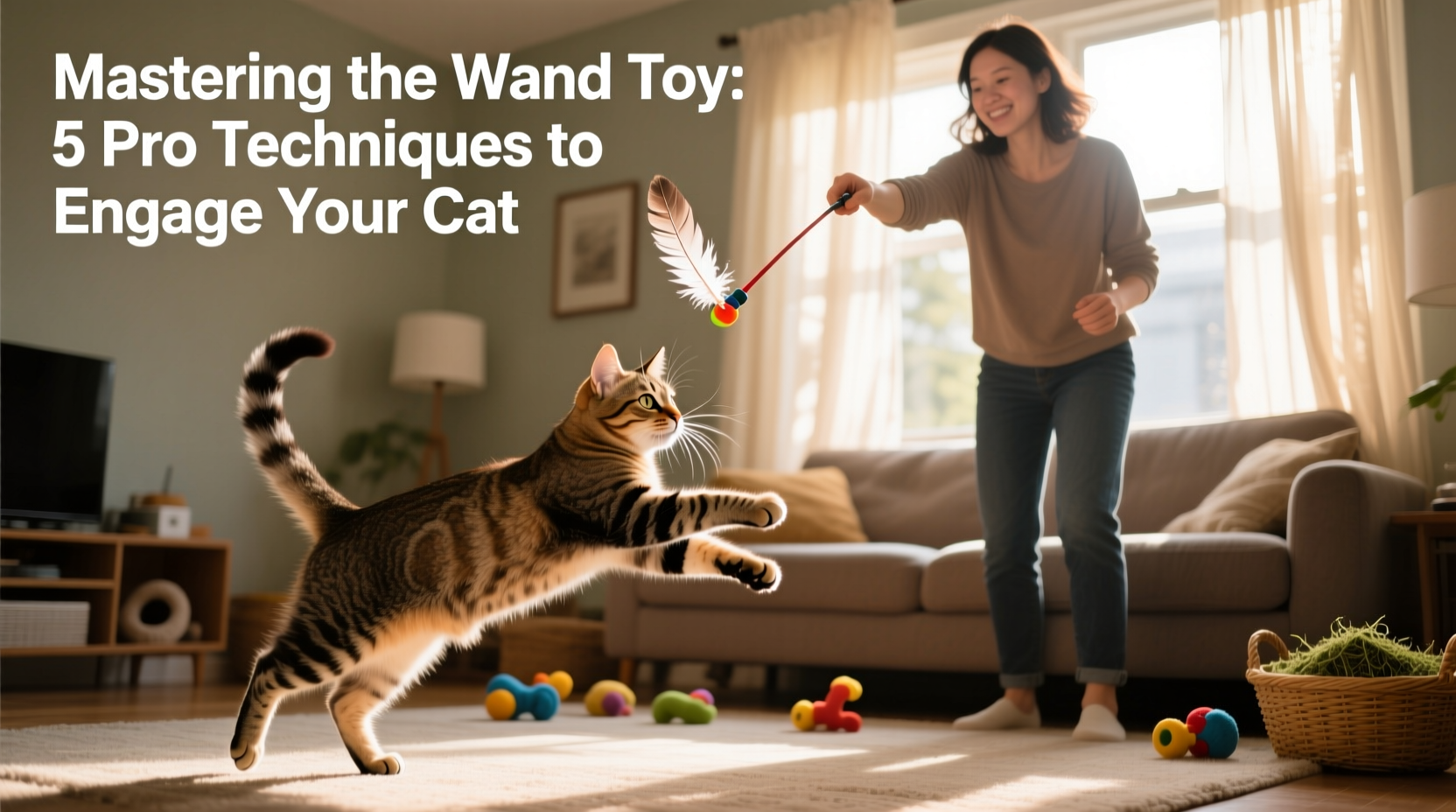
To use a wand toy effectively, you must first understand how cats hunt in the wild. Domestic cats descend from solitary hunters who rely on stealth, surprise, and short bursts of speed. Their ideal prey—birds, mice, and insects—moves unpredictably: darting, freezing, fluttering, and zigzagging. A successful wand session replicates this rhythm, not constant motion. Cats lose interest when toys move too predictably or too fast without variation.
The key phases of feline predation are:
- Orientation: The cat notices movement and locks onto the target.
- Stalking: Slow, deliberate approach with body low to the ground.
- Chasing: Sudden sprint to close the distance.
- Pouncing: The leap and capture attempt.
- Killing bite simulation: Shaking or “killing” the toy, often seen as vigorous biting or tossing.
A well-executed wand session guides your cat through each of these stages, making the experience mentally and physically fulfilling.
Techniques for Realistic Prey-Like Movement
The magic of the wand toy lies in how you move it. Instead of sweeping it across the floor like a feather duster, focus on mimicking natural prey behavior. Here are proven techniques:
- The Skitter: Drag the toy erratically across the floor, pausing every few inches. This simulates a mouse darting between cover points.
- The Flutter: Hold the wand high and make small, rapid up-and-down motions with slight side-to-side wobbles. Ideal for imitating birds or moths.
- The Hide-and-Seek: Let the toy disappear behind furniture or under a blanket, then reappear seconds later. Builds anticipation and triggers stalking.
- The Zig-Zag Sprint: Make sudden directional changes mid-chase, forcing your cat to pivot and engage fully.
- The Freeze: After intense movement, stop completely. Many cats pounce only after prey appears vulnerable.
Vary your techniques within a single session to keep your cat guessing. Start slow to draw attention, build intensity during the chase, then allow moments of rest before reigniting the action.
Step-by-Step Guide to a High-Impact Wand Session
- Choose the right time: Play when your cat is naturally alert—typically after waking or before meals.
- Select an appropriate toy: Use feathers for birds, furry attachments for rodents. Rotate toys weekly to prevent habituation.
- Begin with subtle movement: Gently drag the toy just within sight to spark curiosity.
- Encourage stalking: Move slowly, allowing your cat to crouch and focus.
- Trigger the chase: Suddenly increase speed and unpredictability.
- Allow the pounce: Let your cat make contact. If they miss, pause briefly before resuming.
- End with a \"kill\": Once caught, let them bite and shake the toy for 10–20 seconds.
- Conclude positively: End the session before your cat loses interest, ideally after a successful catch.
“Interactive play isn’t just exercise—it’s mental enrichment. A five-minute wand session that mimics real hunting can be more satisfying than hours of passive lounging.” — Dr. Sarah Thompson, Feline Behavior Specialist
Common Mistakes That Reduce Engagement
Even experienced cat owners fall into traps that diminish play effectiveness. Avoid these pitfalls:
| Mistake | Why It’s Problematic | Better Approach |
|---|---|---|
| Moving the toy too fast from the start | Overwhelms the cat; skips stalking phase | Begin slow, build momentum gradually |
| Never letting the cat catch the toy | Frustrates instinct; leads to disinterest | Allow capture at least once per session |
| Using the same motion repeatedly | Becomes predictable and boring | Vary speed, height, and direction |
| Playing near distractions (TV, people) | Dilutes focus and engagement | Choose a quiet, distraction-free space |
| Ending mid-action | Leaves hunting sequence incomplete | Finish after a successful catch or kill simulation |
Creating a Sustainable Play Routine
Consistency matters. Cats thrive on routine, and regular interactive play reduces stress, prevents obesity, and strengthens the human-animal bond. Aim for two 5–10 minute sessions daily—one in the morning and one in the evening—to align with your cat’s crepuscular nature (most active at dawn and dusk).
Rotate three to four different wand attachments weekly to sustain interest. For example:
- Monday & Thursday: Feather teaser (bird simulation)
- Tuesday & Friday: Furry mouse-on-a-string (rodent mimicry)
- Wednesday & Saturday: Crinkle-tail wand (insect-like movement)
- Sunday: Free choice—let your cat select by showing options
Mini Case Study: Reviving Luna’s Energy
Luna, a 4-year-old indoor domestic shorthair, had become increasingly sedentary and irritable. Her owner, Mark, reported she spent most days napping and occasionally swatted at passing feet. A feline behavior consultant recommended structured wand play twice daily using varied movements. Within two weeks, Mark noticed Luna stretching before sessions, crouching behind furniture during hide-and-seek sequences, and even bringing her favorite wand toy to him in the evening. After a month, her nighttime zoomies returned, and her irritability vanished. The change wasn’t due to diet or environment—it was consistent, instinct-driven play.
FAQ
How long should a wand toy session last?
Most cats benefit from 5 to 10 minutes of focused play. Quality matters more than duration. Watch for signs of disengagement—looking away, grooming, walking off—and end the session promptly.
My cat ignores the wand toy. What am I doing wrong?
Try adjusting the timing (play when they’re alert), changing the attachment (some prefer fur, others feathers), or altering movement patterns. Also, ensure the toy isn’t associated with overstimulation or punishment (e.g., being waved in their face unexpectedly).
Can I use a laser pointer instead?
Laser pointers can be fun but should never replace physical toys. Since cats can never \"catch\" the dot, they lack the satisfaction of completing the hunt. If you use a laser, always finish the session by directing the light onto a tangible toy they can capture.
Conclusion
Mastering the wand toy goes beyond waving a string with a feather. It’s about empathy—seeing the world through your cat’s predatory lens and providing experiences that fulfill their innate needs. With thoughtful technique, realistic movement, and consistent practice, you transform playtime from a casual activity into a cornerstone of feline well-being. The result? A healthier, happier cat and a deeper bond built on trust, stimulation, and shared instinct.




 浙公网安备
33010002000092号
浙公网安备
33010002000092号 浙B2-20120091-4
Comments
No comments yet. Why don't you start the discussion?