
A well-organized pencil case isn’t just about neatness—it’s a productivity tool. For students, artists, professionals, or anyone who relies on quick access to writing instruments and small accessories, the structure of your pencil case can make the difference between smooth workflow and daily frustration. The three-layer pencil case, with its tiered compartments, offers exceptional potential for smart organization—but only if used intentionally. When poorly managed, even the most advanced design becomes cluttered and inefficient. This guide breaks down how to fully leverage the three-layer system to create a streamlined, functional, and sustainable setup.
Understanding the Three-Layer Design
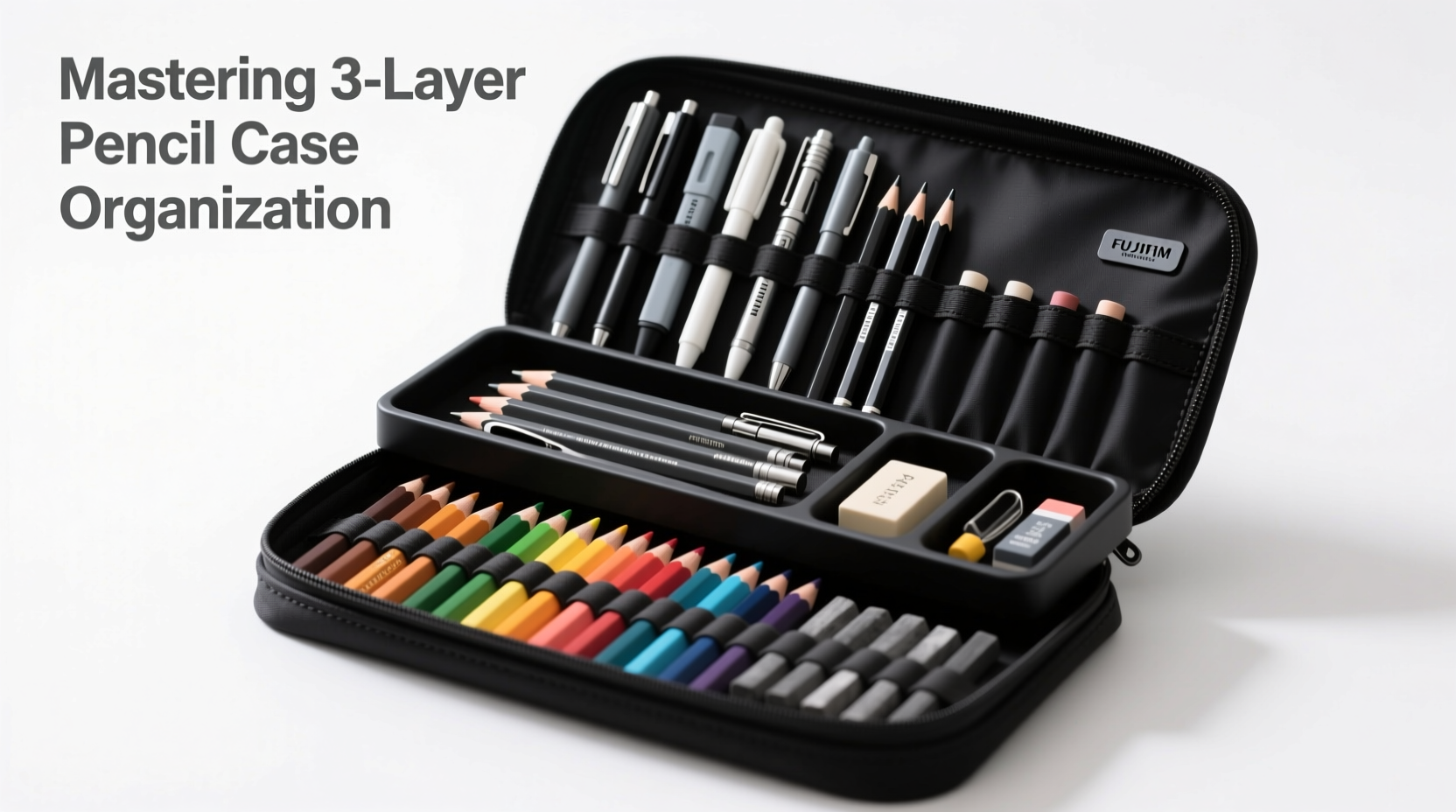
Three-layer pencil cases typically feature stacked compartments separated by zippers or elastic dividers. Each layer serves a distinct purpose:
- Top Layer: Designed for immediate-access items—frequently used pens, highlighters, or erasers.
- Middle Layer: Ideal for moderately used tools like mechanical pencils, colored pens, or rulers.
- Bottom Layer: Best suited for backup supplies, less-used items (e.g., spare lead, sticky notes), or bulkier tools like compasses or mini staplers.
The vertical layout maximizes storage without increasing footprint, making it perfect for backpacks, desks, or travel. However, the real advantage comes from intentional categorization—not just stacking items randomly.
Step-by-Step Guide to Optimizing Your Layers
Transforming your pencil case into an efficient system requires deliberate planning. Follow this sequence to build a personalized, high-functionality setup.
- Empty and Audit: Remove everything. Lay out all contents and assess what you actually use. Discard dried-out markers, broken leads, or duplicate items.
- Categorize Tools: Group items by function—writing, drawing, correcting, measuring, etc. This helps assign logical homes within layers.
- Assign Layers by Priority: Map each category to a layer based on usage frequency. Top = daily drivers; middle = secondary tools; bottom = backups or seasonal items.
- Use Internal Organizers: Add slim zip pouches, silicone holders, or foam inserts inside layers to prevent shifting and improve separation.
- Label if Needed: For shared cases or complex setups, use small label tags or color-coded stickers to identify sections quickly.
- Test and Refine: Use the case for 3–5 days. Adjust placements based on real-world access patterns.
Smart Storage Strategies for Maximum Efficiency
Efficiency isn’t just about arrangement—it’s also about sustainability. A system that works today should still work in three months. Consider these long-term strategies:
- Limit Quantity: Enforce a “one in, one out” rule. Adding a new pen means removing an unused one.
- Vertical Zoning: Within each layer, organize left-to-right by frequency or alphabetically by type (e.g., blue pens before black).
- Tool Consolidation: Replace multiple single-function items with multi-tools (e.g., a 4-in-1 pen with ballpoint, gel, highlighter, and stylus).
- Seasonal Rotation: Swap out items based on needs—exam season might require extra highlighters; art projects may need fine liners.
| Layer | Best For | Avoid Storing Here |
|---|---|---|
| Top | Daily-use pens, erasers, pencil sharpener | Bulk items, loose paper scraps |
| Middle | Colored pens, mechanical pencils, rulers | Sharp objects without sheaths, liquids |
| Bottom | Spare leads, sticky notes, correction tape | Frequently needed items |
Real Example: How a Student Transformed Her Study Routine
Sophie, a university biology major, struggled with disorganized supplies during lab sessions. She owned a sleek three-layer pencil case but kept everything jumbled—leading to lost pens, delayed note-taking, and constant rummaging. After auditing her tools, she restructured her case:
- Top Layer: Blue and black rollerballs, red pen for corrections, mini sticky pad.
- Middle Layer: Mechanical pencil, fine-tip marker, small ruler.
- Bottom Layer: Spare lead, eraser, highlighters (stored in a tiny fabric sleeve).
Within a week, Sophie reported faster note-taking, fewer distractions, and improved focus during lectures. “I’m not wasting time digging anymore,” she said. “Everything has a place, and I know exactly where to reach.”
“Organization isn’t about perfection—it’s about reducing friction. A well-laid pencil case saves micro-decisions that add up over time.” — Dr. Lena Torres, Productivity Researcher at Urban Workflow Institute
Checklist: Building Your Optimized Three-Layer System
Action Plan:
- ☐ Empty your pencil case completely
- ☐ Sort items into categories (writing, drawing, correcting, etc.)
- ☐ Identify top 5 most-used tools
- ☐ Assign each category to a layer based on frequency
- ☐ Add internal organizers if needed (pouches, bands)
- ☐ Test the setup for 3–5 days
- ☐ Adjust based on real-world use
- ☐ Set a monthly refresh reminder
Common Pitfalls and How to Avoid Them
Even thoughtful systems fail when undermined by subtle habits. Watch for these common mistakes:
- Overfilling the Top Layer: Just because it’s accessible doesn’t mean it should hold everything. Keep it minimal—only essentials.
- Neglecting Maintenance: Reorganize every 4–6 weeks. Dust accumulates, needs change, and clutter creeps in.
- Mixing Incompatible Items: Don’t store leaking glue sticks next to erasers. Separate wet and dry materials.
- Ignoring Ergonomics: If opening the case requires two hands or full unpacking, the design isn’t working. Optimize for one-handed access where possible.
Frequently Asked Questions
Can I use a three-layer pencil case for non-writing items?
Absolutely. Many people adapt them for tech accessories (USB drives, earbuds), makeup (lipsticks, brushes), or first-aid supplies (bandages, antiseptic wipes). Just maintain clear categorization and avoid mixing incompatible materials.
How do I clean a layered pencil case without disrupting organization?
Remove contents layer by layer, clean one compartment at a time, then return items immediately. Use a dry microfiber cloth for interiors; for stains, lightly dampen a corner and wipe gently. Let air-dry fully before reuse.
What if my tools don’t fit neatly in the layers?
Consider downsizing or switching to compact alternatives. Alternatively, use slim organizers—like foldable mesh pockets or elastic loops—that conform to the case’s shape without wasting space.
Final Thoughts: Turn Routine Into Ritual
Mastering three-layer pencil case organization is more than a cleaning chore—it’s an investment in daily efficiency. By assigning purpose to each level, respecting spatial limits, and maintaining consistency, you transform a simple container into a precision instrument. The goal isn’t just tidiness, but seamless access that supports your goals, whether acing an exam, finishing artwork, or managing a busy schedule.
Start today. Empty your case, rethink your priorities, and rebuild with intention. Small changes compound: a few minutes of organization now can save hours of searching later.




 浙公网安备
33010002000092号
浙公网安备
33010002000092号 浙B2-20120091-4
Comments
No comments yet. Why don't you start the discussion?